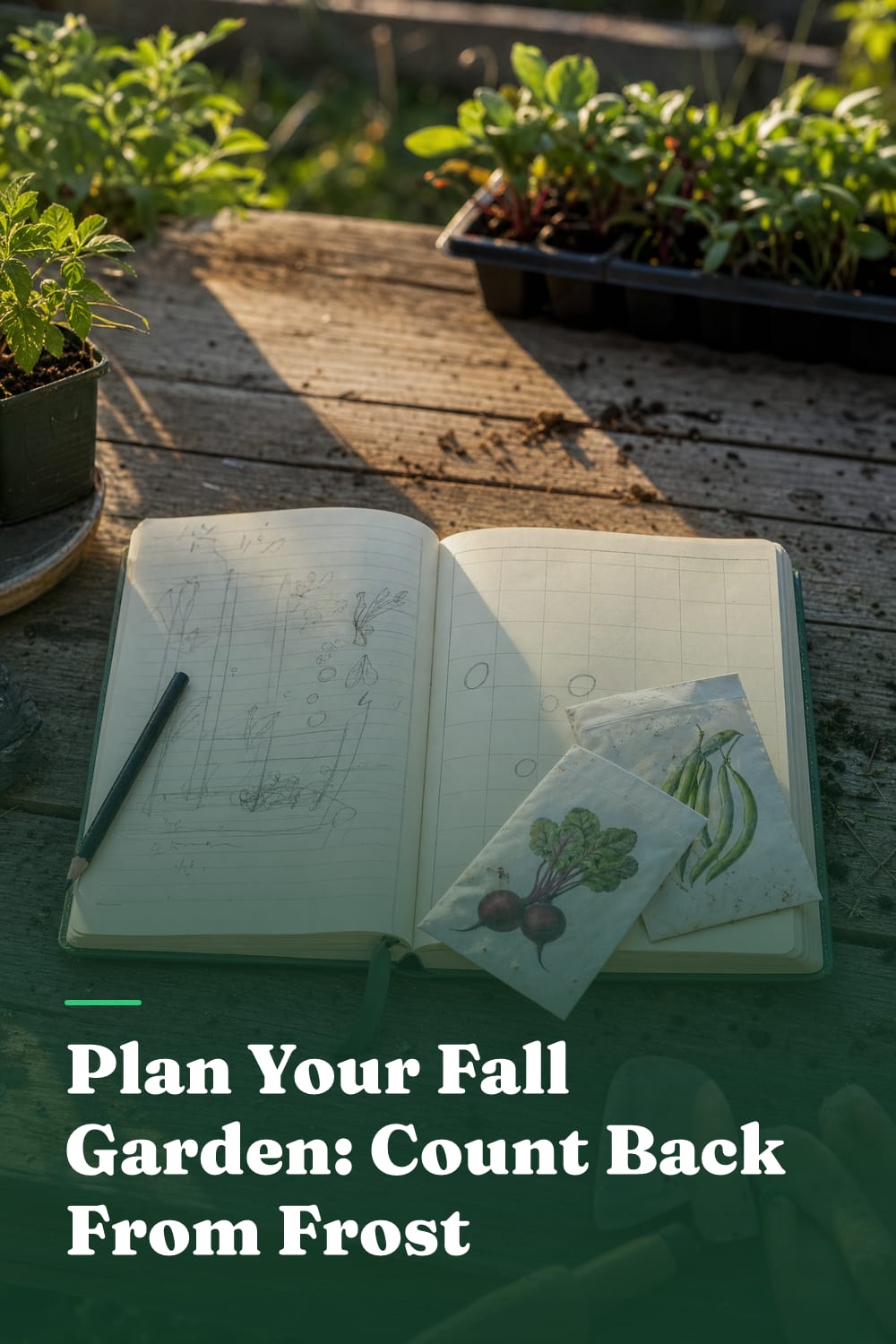
How to Plan a Fall Vegetable Garden by Counting Backward From Frost
- Fall Garden
- Planning
- Frost Dates
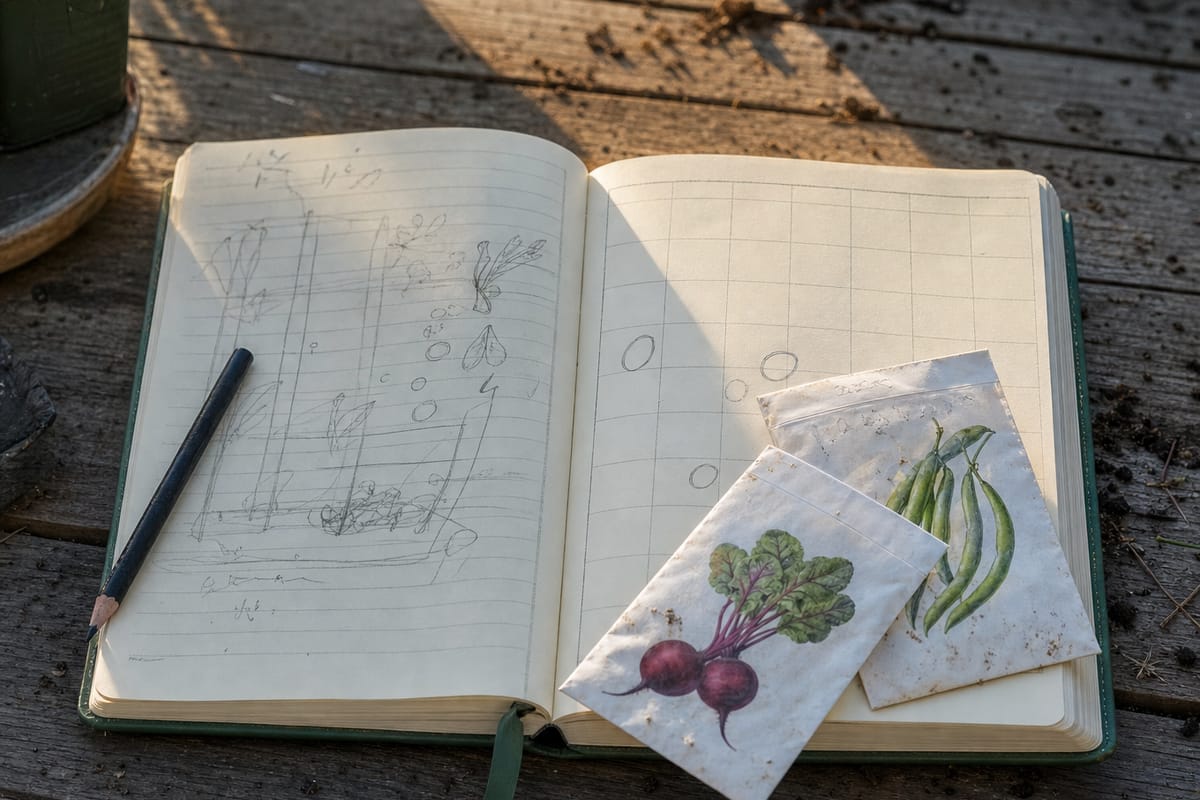
Nobody puts “plan the fall garden” on a July to-do list. The tomatoes are still coming in by the bucket, the beans need picking every other day, and the idea of starting anything new feels backward when half the yard is already a jungle. But this is the week the fall garden gets decided, whether you sit down and do the math or not. Skip it, and you’ll be standing in a nursery in late August wondering why nothing on the seed rack has time left to grow.
The math itself is simple. It’s just running in the opposite direction from what you’re used to.
Read the seed packet backward
Every seed packet lists days to maturity, and all spring you use that number to look forward: plant now, harvest in sixty days. For fall crops, you flip it. Start with your first frost date and count backward.
Say your first frost lands around October 15. A bush bean that needs 55 days to produce, sown August 1, is ready around September 25 with three weeks to spare before frost gets it. A pumpkin that needs 100 days sown the same day isn’t finishing until November 9, which is not a real date on your calendar, it’s a plant that dies before it pays you back. Same soil, same sunshine, same gardener. Only the arithmetic is different, and it doesn’t care how much you want the pumpkin to work out.
I add a two-week buffer on top of the packet number, always. Fall days are shorter and the light is weaker even when the temperature is still summer-warm, and everything slows down more than the packet accounts for. A “50 day” fall crop, for me, is really a 64 day crop. I learned this the hard way with a bed of fall carrots that were still pencil-thin the week frost took them, because I’d trusted the number printed on the packet instead of the light falling on the bed that week.
What still has time from here
Late July into the first couple weeks of August is the window for most of these, working backward from a typical first-frost date in the second half of October:
| Crop | Days to maturity | Latest sow (roughly) |
|---|---|---|
| Bush beans | 50–55 | Early August |
| Beets | 50–60 | Early August |
| Bush summer squash | 50–55 | Early August |
| Carrots | 60–75 | Late July |
| Broccoli (transplants) | 55–70 from transplant | Early-mid August |
| Lettuce, loose-leaf | 45–55 | Mid-late August |
| Spinach | 40–45 | Late August-September |
| Radishes | 25–30 | September, repeatedly |
Your actual first frost date is the number that makes this table mean anything, and it’s worth knowing precisely rather than roughly, since a week either way changes what fits. I check mine every year in Garden Pro Planner, which pulls it from your location rather than a regional average, and the fall planting suggestions shift automatically once it knows your dates.
The crops that don’t wait for you to catch up
Radishes and loose-leaf lettuce are the forgiving ones here, worth sowing again every couple of weeks through late summer, since they’re fast enough to slot into whatever bed frees up next. That’s the real advantage of a short days-to-maturity number: it buys you the right to be a little late and still come out fine.
Garlic is the one crop on this list that isn’t about frost math at all. You’re not racing the first frost with garlic, you’re planting it after, usually next month or in October depending on your climate, so it can sit through winter and bulb up next summer. Order it now anyway. The good varieties sell out weeks before anyone’s ready to plant them, and by the time you remember in September, what’s left is whatever nobody wanted.
Where the July garden helps
Every bed that clears out this month is available for one of these instead of sitting empty until spring. Pulled the garlic in July? Beans or beets fit before frost. Bolted lettuce finally gone to seed and yanked? A fresh sowing of the same thing, plus a bit of shade for the first week, usually outgrows the heat that killed the first round.
That’s the part that makes fall planting worth the trouble in the middle of a summer this busy. You’re not starting a second garden from scratch. You’re just refusing to let the space that already exists go idle for the next ten weeks.