Every Way to Protect Fall Crops From a Hard Freeze, Ranked
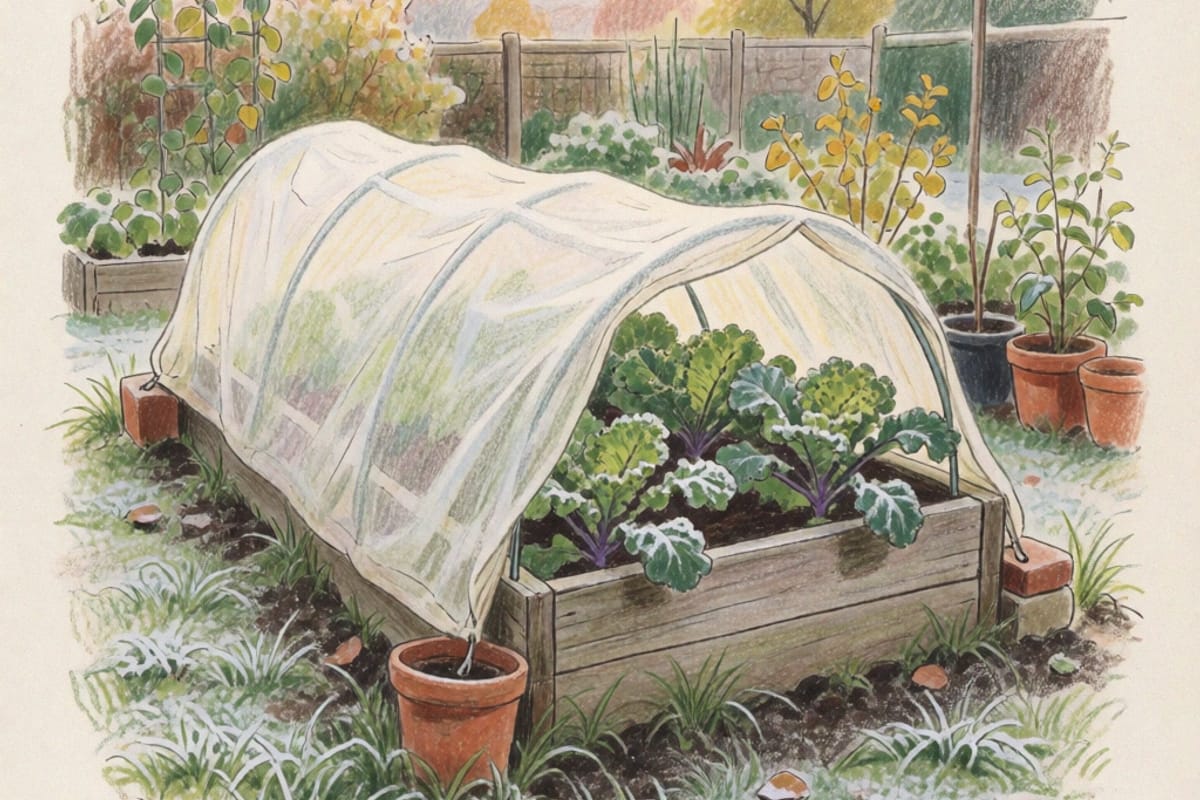
The forecast says 26 on Thursday night, and there’s a bed out back with kale, a patch of carrots, two kinds of lettuce and some chard that has been the best thing in the garden since September. Most of it is food you’d otherwise be paying for at the store all winter, so it’s worth a bit of effort.
A light frost, the kind that whitens the grass at 33 or 34 on a still morning, is mostly a nuisance for fall crops. A hard freeze is different. The usual definition is around 28°F (-2°C) or colder for several hours, and that’s when lettuce, chard and the softer Asian greens turn to slime unless you’ve done something. Kale, collards, leeks, spinach and Brussels sprouts usually come through a hard freeze uncovered, and many of them taste sweeter for it.
Below is everything I know of that stands between a bed and a freeze, ranked from the least protection to the most. I’ve only put degrees on the one where the number is well established. The rest I’ve ranked by how they’ve done in my garden and by how they work, and I’ll say where I’m unsure.
| Rank | Method | Roughly what it buys |
|---|---|---|
| 10 | Watering the bed that afternoon | Takes the edge off a light frost |
| 9 | Sheets, blankets, buckets | A light frost, one night |
| 8 | Lightweight row cover | A few degrees F |
| 7 | Heavier row cover | Several degrees more than the light stuff |
| 6 | Deep mulch over root crops | Keeps the ground from freezing hard |
| 5 | Clear plastic low tunnel | Warmer soil going into the night |
| 4 | Row cover inside a plastic tunnel | Two layers of trapped air |
| 3 | Cold frame | A sealed box over warm soil |
| 2 | Incandescent lights under a cover | An actual heat source |
| 1 | Picking it | Everything |
10. Watering the bed the afternoon before
Moist soil holds more of the day’s heat than dry soil and gives it back slowly through the night. Water a dry bed in the early afternoon before a frost and the air right at plant level stays a touch warmer. It costs nothing and it’s worth doing under any of the covers below. On its own, against a real hard freeze, it won’t save lettuce.
9. Sheets, old blankets, upturned buckets
What everyone reaches for at nine at night. They work for a light frost if they go on before dusk and don’t rest on the leaves. Their trouble in a hard freeze is that they soak up dew, freeze stiff, and press down on the plants they were meant to protect. Buckets and upturned pots are better for single plants because they hold a pocket of air. Either way, they come off in the morning or the plants sit in the dark.
8. Lightweight row cover
The thin spun fabric sold for insect protection. It buys a few degrees Fahrenheit, which is enough for a frost and not much against a hard freeze. It lets most light through, so it can stay on for days. If this is all you own, put it over hoops so it isn’t touching the leaves and weigh every edge down. There’s more on the weights in the row cover post from August.
7. Heavier row cover, or two layers of the light stuff
Heavier fabric holds more heat, and so does a second layer, because each one traps its own layer of air. I fold my lightweight cover double on the nights that matter, which is cheaper than buying a second weight. The cost is light: the heavy fabric dims things a lot, so take it off once the cold spell is over.
6. Deep mulch over carrots, parsnips and leeks
This one is out of order in a sense, because it does nothing for leaves. What it does is keep the ground under it from freezing solid. Carrots and parsnips themselves are hardy, but frozen soil means you can’t dig them, and roots that freeze and thaw near the surface can be damaged. A foot of straw or shredded leaves over the row, laid on after the first hard frost, keeps the ground workable well into winter in a lot of places. For a root crop, I’d rank it nearer the top. It’s also nearly free if you rake leaves.
5. A clear plastic low tunnel
Plastic sheeting over hoops, edges buried or weighted. During the day it warms the soil much more than fabric does, so the bed goes into the night holding more heat. I’m honestly not sure a single layer of plastic holds heat better than heavy fabric once the sun is down. Where it wins is the daytime. It also needs venting. A closed tunnel on a sunny November afternoon can get hot enough to wilt the greens inside, so open the ends on bright days.
4. Row cover inside a plastic tunnel
This is how people grow greens through winters much colder than mine. Fabric laid over the plants on low hoops, then a plastic tunnel over that. Two layers, two pockets of still air, and soil that warmed under the plastic all day. It takes a weekend and a couple of rolls of material to set up. Of the methods that don’t need a lid or a plug, this is the strongest I’ve used.
3. A cold frame
A bottomless box with a clear lid, sitting on soil that’s been warming under glass for weeks. It does the same job as the tunnel, with solid walls instead of flapping plastic. If you built one in the summer, this is the week it pays for itself. If you haven’t, here’s what one involves. Lettuce in a closed frame has come through freezes for me that flattened the same variety outside.
2. Old-style Christmas lights under the cover
The only thing on this list that adds heat instead of keeping it. A string of the old incandescent bulbs, the big C7 or C9 kind, run along the bed under row cover gives off real warmth. LED strings give off almost none and won’t help. Use outdoor-rated lights and an outdoor extension cord, and keep the bulbs from resting directly on the fabric. I keep one string for the worst night of the autumn and that’s all.
1. Picking it
Nothing protects lettuce like the crisper drawer. If the forecast is well below the hard-freeze line and the crop is tender, or you’re not going to get the covers on in time, cut it in the afternoon and bring it in. Same for the last of the chard and any Chinese cabbage. Kale and collards can stay.
Which crops are worth this much fuss depends on how much season they’ve got left where you live. Garden Planner Pro’s planting calendar works from your own frost dates, so you can see whether that lettuce has two weeks to go or was already on borrowed time.
And whichever method you use, don’t go out at 7am the next morning and start cutting. A frozen leaf is full of ice, and handling it bruises it in a way the cold alone often wouldn’t have. Kale that looks glassy and stiff at dawn is usually fine by eleven. Wait until it has thawed and gone soft and green again, then pick.