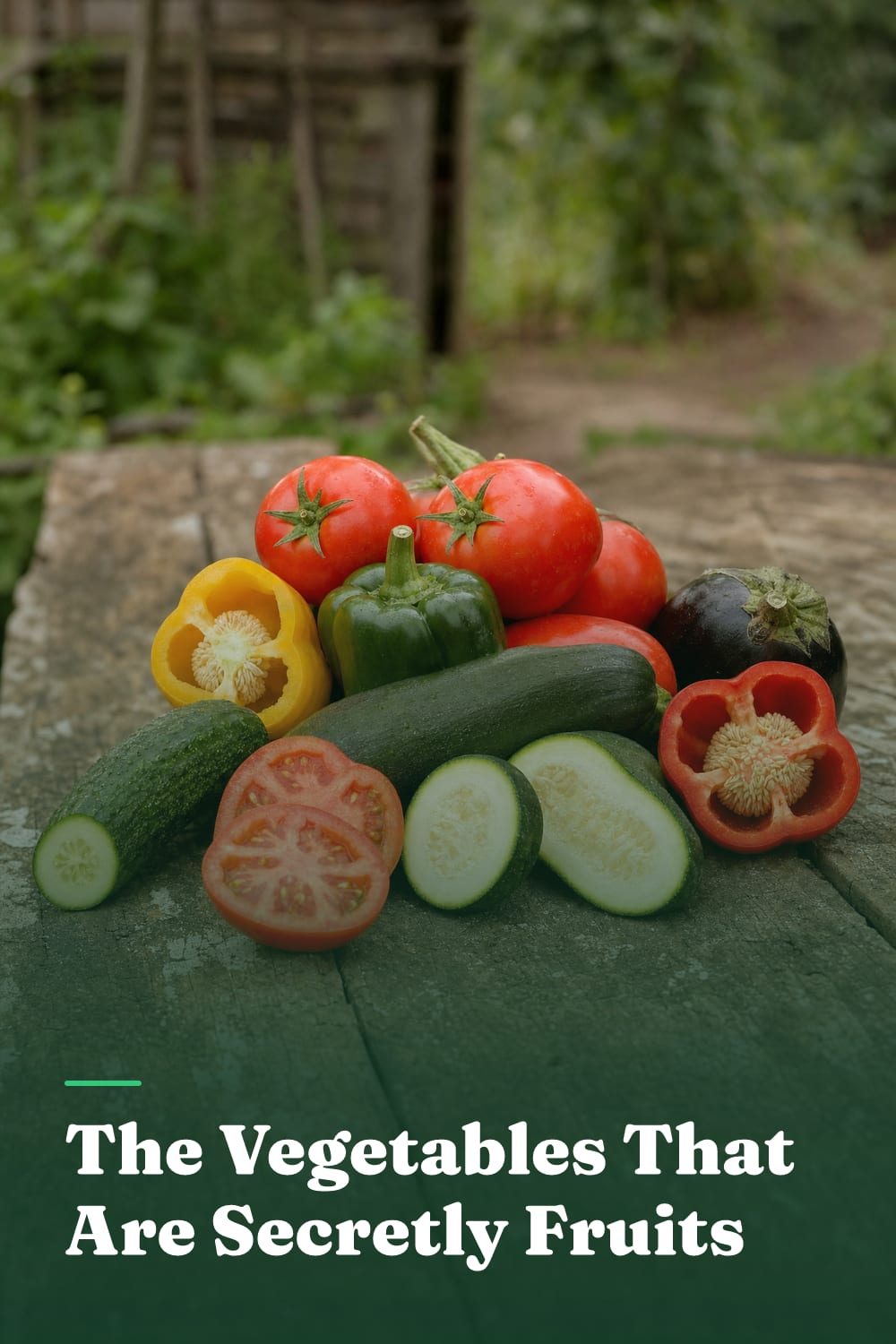
Tomatoes Are Fruit, Zucchini Is Too: The Produce Aisle Has Been Lying to You
- Plant Science
- Fun Facts
- Vegetables
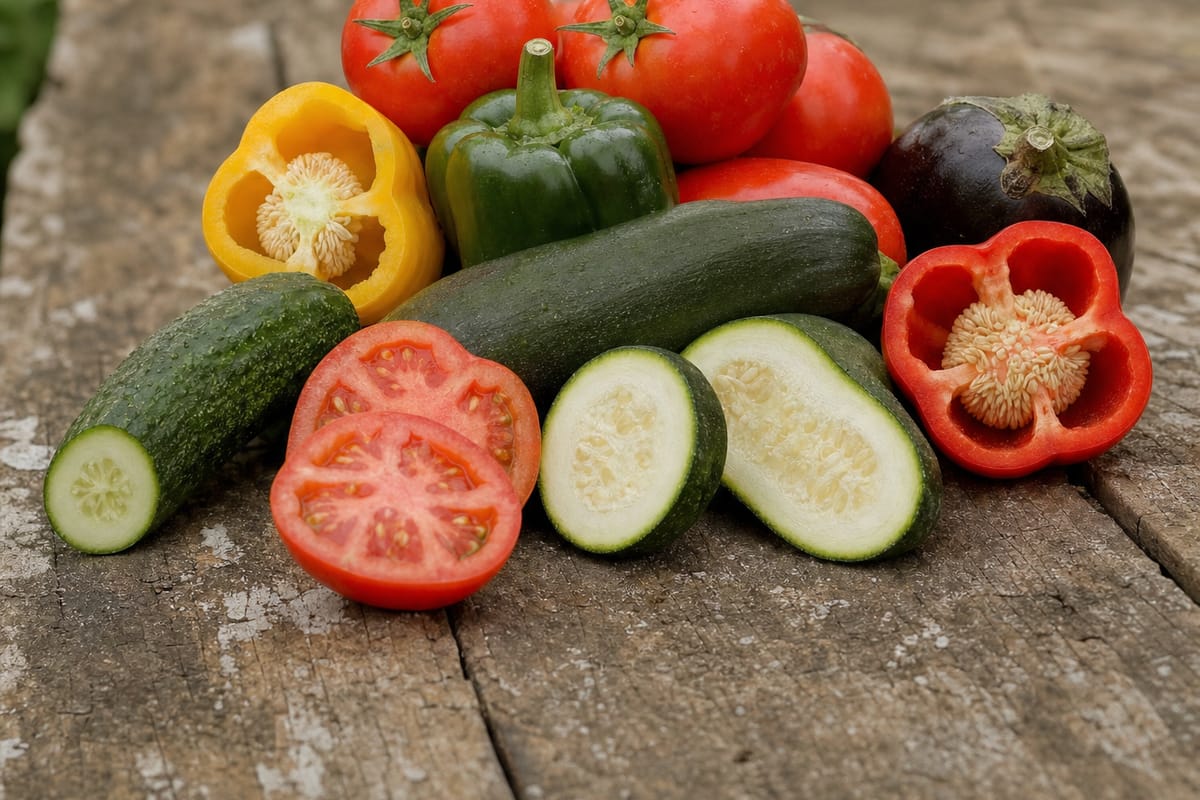
The rule is one sentence long, and once I learned it I couldn’t stop applying it to everything in the garden. If it grew out of a fertilized flower and it’s carrying the seeds, it’s a fruit.
That’s the whole test. Sweetness doesn’t come into it. Neither does what you put it on, or which aisle it lives in at the store. A bell pepper is a fruit. Rhubarb, which almost everybody cooks into pie, isn’t.
I filed this under trivia for years. It isn’t, quite. The same rule tells you which plants in your beds can produce entirely on their own, and which ones are completely at the mercy of whether the bees show up.
Where the word “vegetable” comes from
Fruit is a botanical category with a hard definition: the mature, seed-bearing structure that develops from a flower’s ovary after fertilization.
Vegetable isn’t a botanical category at all. It’s a kitchen word. It covers every edible plant part that isn’t a fruit, which works out to roots, stems, leaves and unopened flower buds. There’s no botanist anywhere who can tell you what makes something a vegetable, because the question doesn’t have a scientific answer. It only has a culinary one.
So the useful question about anything you’re growing isn’t what it tastes like. It’s whether it came out of a flower.
The ones that catch people out
Apply the test and a good chunk of the vegetable garden turns out to be fruit.
| Sold as a vegetable | Why it’s really a fruit |
|---|---|
| Tomatoes | Develop from the flower, seeds held in the flesh |
| Cucumbers | Grow from a fertilized flower, seeds throughout |
| Zucchini and summer squash | Squash flowers become squash |
| Peppers, sweet and hot | Form from the flower, seeds clustered inside |
| Eggplant | A berry, botanically speaking |
| Pumpkins and winter squash | Fruits of a type called a pepo |
| Green beans and peas in the pod | The pod develops from the flower and holds the seeds |
| Okra | A seed pod, straightforwardly |
| Avocado | A single-seeded berry |
Corn counts too, which still catches me off guard. Each kernel is its own tiny fruit, called a caryopsis, and it’s the same structure as a grain of wheat or rice.
The genuine vegetables are the parts that never went through a flower at all. Roots: carrots, beets, radishes, turnips. Stems: celery, asparagus, kohlrabi. Leaves: lettuce, spinach, kale, cabbage. Unopened flower buds: broccoli, cauliflower, artichokes.
The part that changes how you garden
Fruits need pollination. Vegetables mostly don’t. That one consequence explains an enormous amount of garden frustration.
A zucchini plant can flower hard for three weeks and set nothing, because every female flower opened, went unvisited, and shriveled off. A cucumber will do the same. Tomatoes usually manage on their own, since tomato flowers self-pollinate and only need a bit of vibration to shake the pollen loose, which is why you’ll see people flicking the flower trusses or running an electric toothbrush against the stem during a still, humid stretch.
Then look at lettuce. You eat the leaf. The plant never has to flower at all, and if it does you’ve already lost, because bolting turns it bitter. Carrots are the same story underground. A shaded courtyard where bees hardly ever visit will grow you excellent lettuce, chard, kale and radishes, and will break your heart if you plant it with squash.
The harvesting pattern splits along exactly the same line. Fruiting crops keep producing as long as you keep picking, because taking the mature fruit off tells the plant to flower and set again. Leave one zucchini on the vine to turn into a marrow and the whole plant noticeably slows down. Root and leaf crops don’t work like that. You get what you get, once, and then you sow again.
Garden Pro Planner’s plant library covers pollination needs crop by crop across 225+ plants, which is worth a look before you commit a low-bee balcony to cucumbers.
The Supreme Court weighed in and got it wrong on purpose
In 1893, in Nix v. Hedden, the US Supreme Court ruled unanimously that tomatoes should be taxed as vegetables under the Tariff Act. The Court’s own opinion admitted that tomatoes are botanically a fruit. It ruled the other way regardless, on the grounds that tariff law follows ordinary usage rather than botany, and in ordinary usage tomatoes turn up at dinner and not for dessert.
So the produce aisle isn’t lying exactly. It’s running an older system, one organized around how food gets cooked rather than how it grows. Both systems work perfectly well right up until you try to plan a garden using the kitchen one, at which point you’re standing in front of a zucchini plant wondering why it won’t fruit.
Sort your beds by the botanical rule instead. The flower-grown crops need pollinators and regular picking. Everything else just wants decent soil and water.