Next Year's Thanksgiving Sides Start in the Seed Catalogue
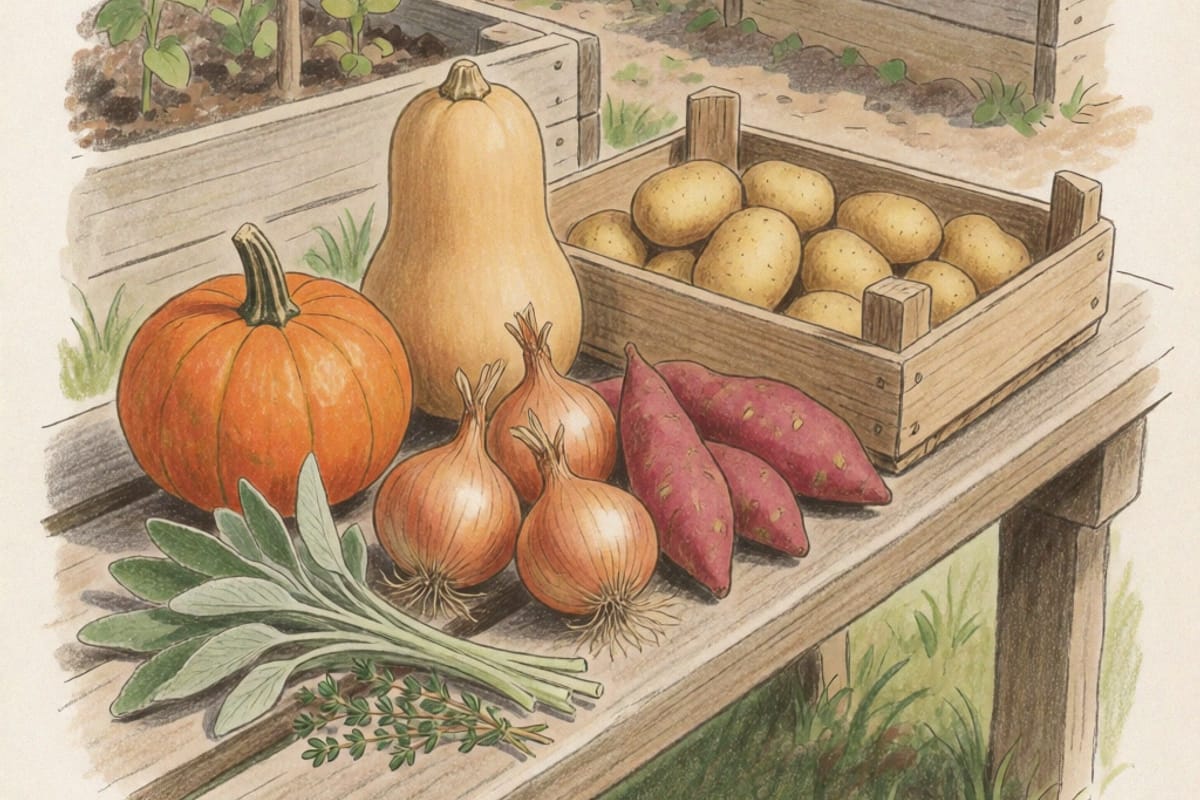
If you’re reading this on Thanksgiving morning with the oven already on and a pile of potatoes waiting to be peeled, look at what’s on the counter. Most of it could have come out of a back garden. Potatoes, onions, the squash or pie pumpkin, sweet potatoes, green beans, Brussels sprouts, the sage for the stuffing. All of it grows in an ordinary vegetable bed.
The catch is that this dinner happens in late November, months after most gardens have stopped producing. So the real question for a Thanksgiving garden is what keeps until the fourth Thursday of November, and that’s decided long before the summer, when you pick varieties out of a seed catalogue in January. Get the varieties wrong and you’ll grow a fine crop that’s gone soft, sprouted or been eaten by Halloween.
I learned this with onions. I grew a big, lovely crop of sweet onions one summer, very pleased with myself, and by the end of October the last of them had gone soft in the basket. They were never going to make it. Sweet onions are for eating in summer. I’d simply picked the wrong kind.
The sides that keep
Potatoes are the easy one. Main-crop potatoes, dug once the vines have died back and left to dry and toughen their skins for a week or two before going into storage, will keep for months somewhere cool, dark and humid. Early potatoes, the quick ones you dig in midsummer, won’t. When the catalogue comes, look for varieties described as main-crop or good keepers, and plant some of those alongside the early ones.
Onions have the same split. Look for storage onions, usually described as long-keeping, and pick the right day length for where you live: long-day types for northern gardens, short-day types for the South, and intermediate types for the band in between. A storage onion that’s dried down properly in late summer will still be firm and sharp on Thanksgiving.
Winter squash and pie pumpkins are the reason most people try this. Butternut keeps well for months after a few weeks of curing in a warm spot. Acorn squash is lovely but doesn’t keep as long, so eat those first and save the butternuts. For pie, grow a small sugar or pie pumpkin. A carving pumpkin will technically make a pie, but it’s watery and stringy, and you’ll wish you hadn’t. If yours have rotted before the holiday in past years, there’s a whole post on why winter squash rots before Thanksgiving, and nearly all of it comes down to curing and how they’re stored.
Sweet potatoes need a long, warm summer, so northern gardeners should look for short-season varieties. They also need curing in warmth after digging, and then they keep best somewhere moderate, not in the fridge. The good news is they get sweeter for a few weeks after harvest, which is exactly why freshly dug sweet potatoes aren’t sweet. Dug in early fall, they’re at their best by late November.
The sides that stay in the garden
Brussels sprouts don’t need storing at all. They stand in the garden into late autumn, and frost makes them sweeter. In a lot of gardens you can walk out on Thanksgiving morning and snap them off the stalk, which is about as smug as a gardener can get. The planning part is timing. They’re a long crop, so they need to go in by late spring or early summer to be ready by late fall, depending on your climate. Very cold winters can finish them off before late November, so in the coldest areas pick them before the deep freeze and keep them in the fridge.
Sage and thyme are the other freebies. Both are perennial in many gardens and you can often pick them straight off the plant in November. If yours die back or get buried in snow, dry a bunch in late summer and it’ll do the job.
The one you have to freeze
Green beans won’t keep fresh until Thanksgiving, and they don’t grow in November. If you want your own on the table, the work happens in summer: pick them young, blanch them briefly, cool them fast and freeze them. A couple of bags tucked at the back of the freezer in August is all it takes, and they’re far better than the ones that come in a can.
Doing it on purpose
None of this is hard. It just has to be decided early, because every one of these crops is planted in spring or early summer, and the varieties that keep are often not the ones that catch your eye on the front of the catalogue.
So when the catalogues arrive, read the descriptions for words like storage, keeper and long-keeping. Pick an onion for your day length. Plant main-crop potatoes as well as earlies. Choose butternut over acorn for the ones you’d like to keep. Get the Brussels sprouts in on time. And put “freeze some beans” on a calendar for August, where you’ll actually see it.
If you’re the sort of grower who likes to know whether all this was worth it, Garden Planner Pro logs each harvest as it comes in and keeps a seasonal total of what it would have cost to buy. Next November, you’ll know exactly how much of the dinner was yours.
For today, though, enjoy the meal. Somewhere in the pile of catalogues that will land in the mailbox next month is next year’s version of it.