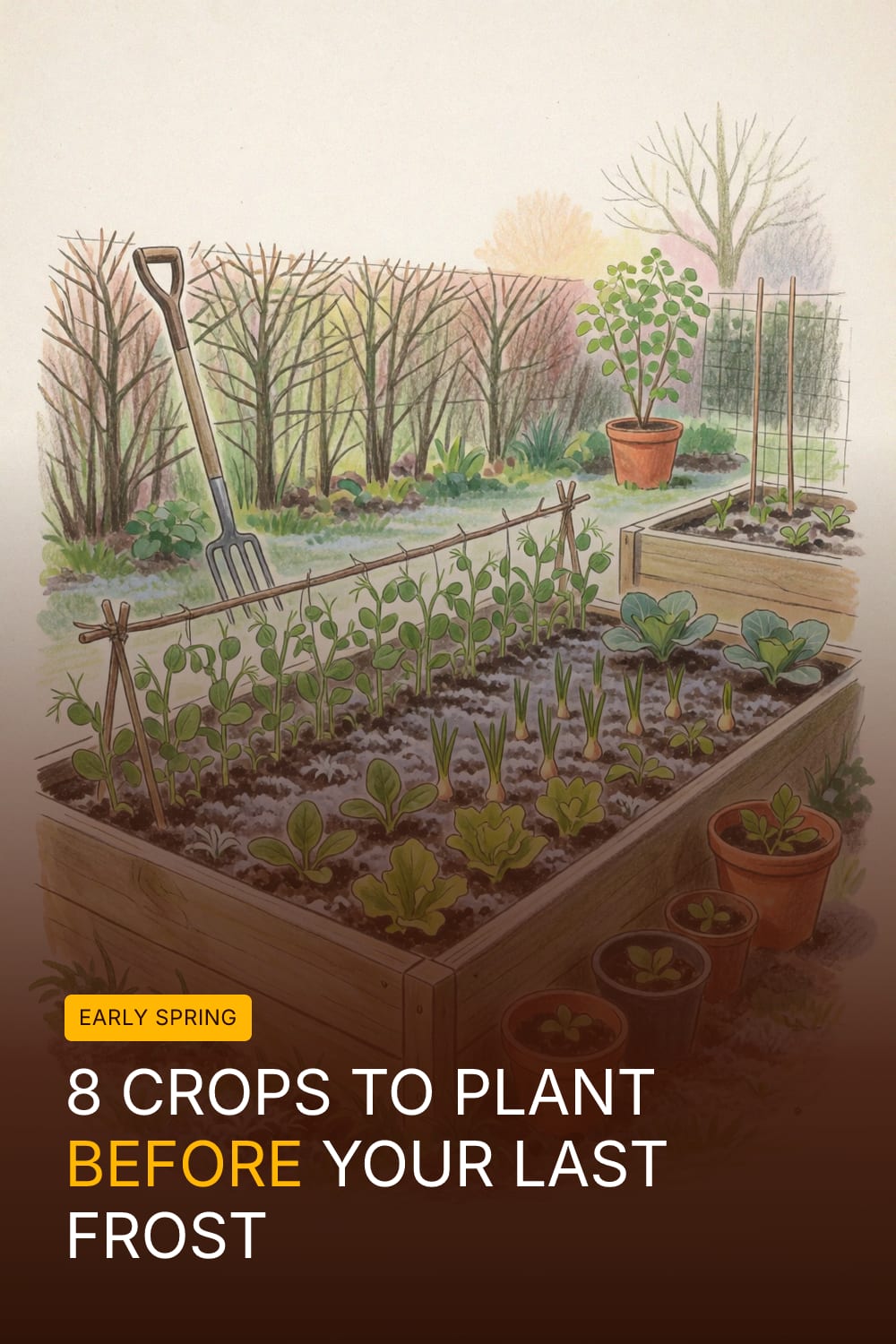
8 Crops You Can Plant Weeks Before Your Last Frost
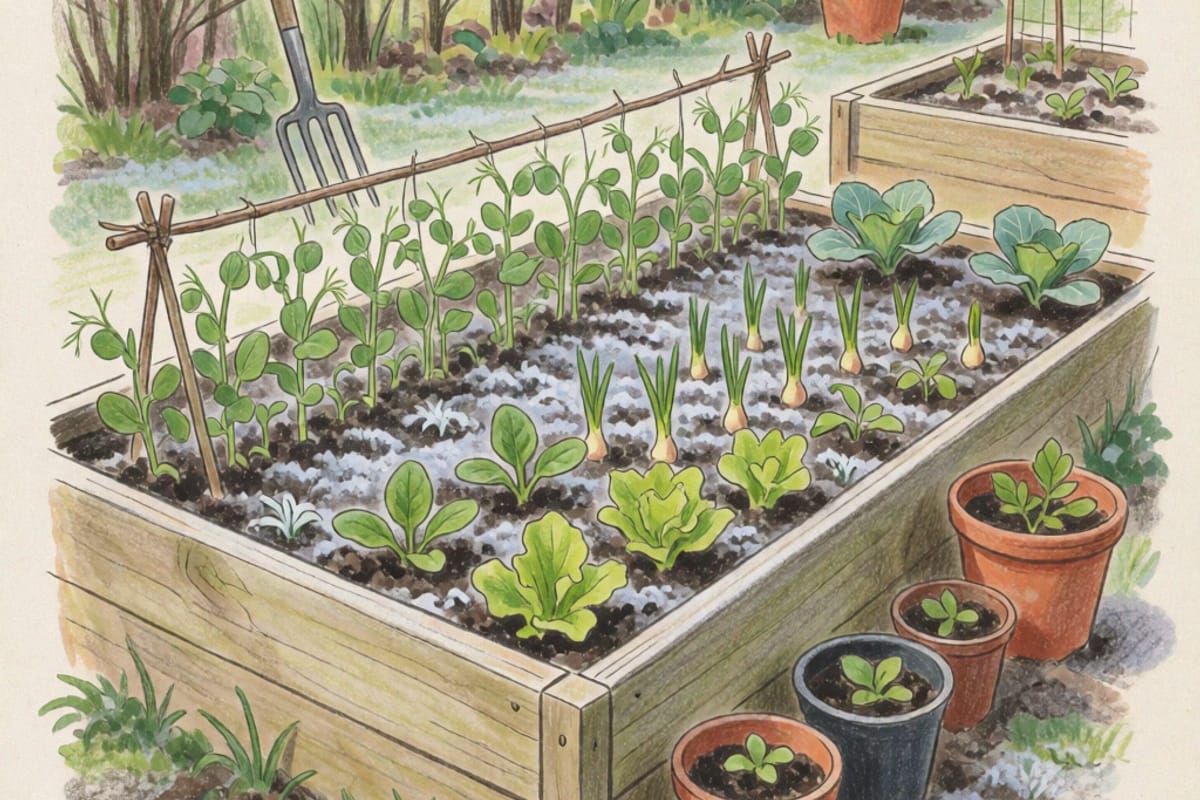
Most people treat the last frost date as the day the garden opens. It is really the day the second half of the garden opens. A whole group of crops doesn’t just survive a few frosty nights, it grows better for having been planted into cold soil, and by the time the tomatoes go out those beds should already be green.
I’m writing this at the end of October on purpose. When the seed catalogue arrives in January and you sit down to plan, these are the eight whose dates come first, and it’s easy to miss them because they fall at a time of year that still feels like winter. Each one below has its usual window in weeks before your average last frost. Count back from your own date.
One thing governs all of them: the soil has to be workable. Squeeze a handful. If it holds together as a sticky ball, wait. If it crumbles when you poke it, you’re on.
The eight
1. Peas, 4 to 6 weeks before
Peas are the traditional first sowing, and for good reason. They germinate in cold soil (slowly, but they do it) and they hate heat, so every week you plant later is a week less of picking before summer shuts them down.
The risk with very early peas is rot rather than frost. A seed sitting in cold, waterlogged ground for three weeks can just give up. A raised bed, or a row you’ve mounded a little, drains faster and warms sooner, and that’s where my first peas go every year.
2. Spinach, 4 to 6 weeks before
Spinach will come up in soil that feels like it’s straight out of the fridge. It’s one of the most cold-tolerant things you can sow in spring, and it bolts the moment days get long and warm, so early is the whole game.
If you sowed spinach this autumn and let it overwinter, you’ll be cutting leaves before the spring sowing is even up. The early spring sowing is for everyone else, and it’s still worth doing.
3. Radishes, 4 to 6 weeks before
Radishes are the reassurance crop. Sown this early they’re ready in about a month, which means you’re eating something from the garden while it still looks bare.
They go woody and hot fast in warm weather, so the early sowings are usually the best ones of the year. Sow a short row every week or two instead of one long row. Nobody needs forty radishes on the same Tuesday.
4. Fava beans, 4 to 6 weeks before
Fava beans (broad beans, if you’re in the UK) are hardier than any other bean by a long way. They’ll take frost that would kill a green bean outright, and they want to flower before real heat arrives.
Sow them as soon as the soil can be worked. A late sowing tends to flower into warm weather and get covered in black aphids, which is the main reason people decide they don’t like growing them.
5. Onion sets and transplants, 2 to 4 weeks before
Onions go out early because bulbing is triggered by day length, not by how big the plant is. Every leaf the onion grows before the days get long enough is a ring of bulb later, so a late planting means small onions no matter how well you look after them.
Sets and hardened-off transplants both handle a light frost. If you started onions from seed indoors in January, this is where they go.
6. Potatoes, 2 to 4 weeks before
Seed potatoes can go in a few weeks before the last frost, once the soil has warmed a little. Planted into very cold, wet ground they just sit there, and sometimes they rot.
The tubers are safe underground. What frost can hurt is the leafy growth once it’s up, so if a hard frost is forecast after the shoots appear, pull soil up over them or throw a sheet over the row for the night. They usually regrow from below even if the tops get nipped, but it sets them back.
7. Lettuce, 2 to 4 weeks before
Lettuce seed germinates in cool soil and the plants handle light frost well. Hardened-off transplants can go out around the same time as direct sowings.
Lettuce is like spinach here: it runs to seed and turns bitter as the heat builds, so the early crop is usually the sweetest one. A light row cover on the coldest nights keeps the leaves from getting that translucent, frostbitten look.
8. Broccoli and cabbage transplants, 2 to 4 weeks before
Brassica transplants that have been properly hardened off will shrug off a light frost. Broccoli in particular wants to head up while the weather is still cool; if it heads in the heat, you get small loose heads that bolt within days.
Two warnings. The plants have to be hardened off, not taken straight from a warm windowsill to cold ground. And if they sit through a long spell of cold while they’re young, broccoli can form tiny premature heads and stop. Planting at the right point in the window, not at the very front of it, is what avoids that. A collar round each stem at planting also keeps the root maggot fly off.
Counting it back
All of these windows are relative to your average last frost, and that date is an average rather than a promise. A bed of peas and spinach doesn’t care much. Broccoli and potatoes care a bit more, so plant them in the later half of their range if your spring tends to swing.
If working the dates out by hand sounds tedious, Garden Planner Pro takes your own frost dates and lays out when each of these goes in, so in January you’re looking at a calendar rather than doing arithmetic on the back of a seed packet.
And if you only take one thing from this list into spring, make it the peas. They’re the crop people most often plant too late, and the first warm spell of June ends them regardless of when you started.