Should You Put Wood Ash on Your Garden?
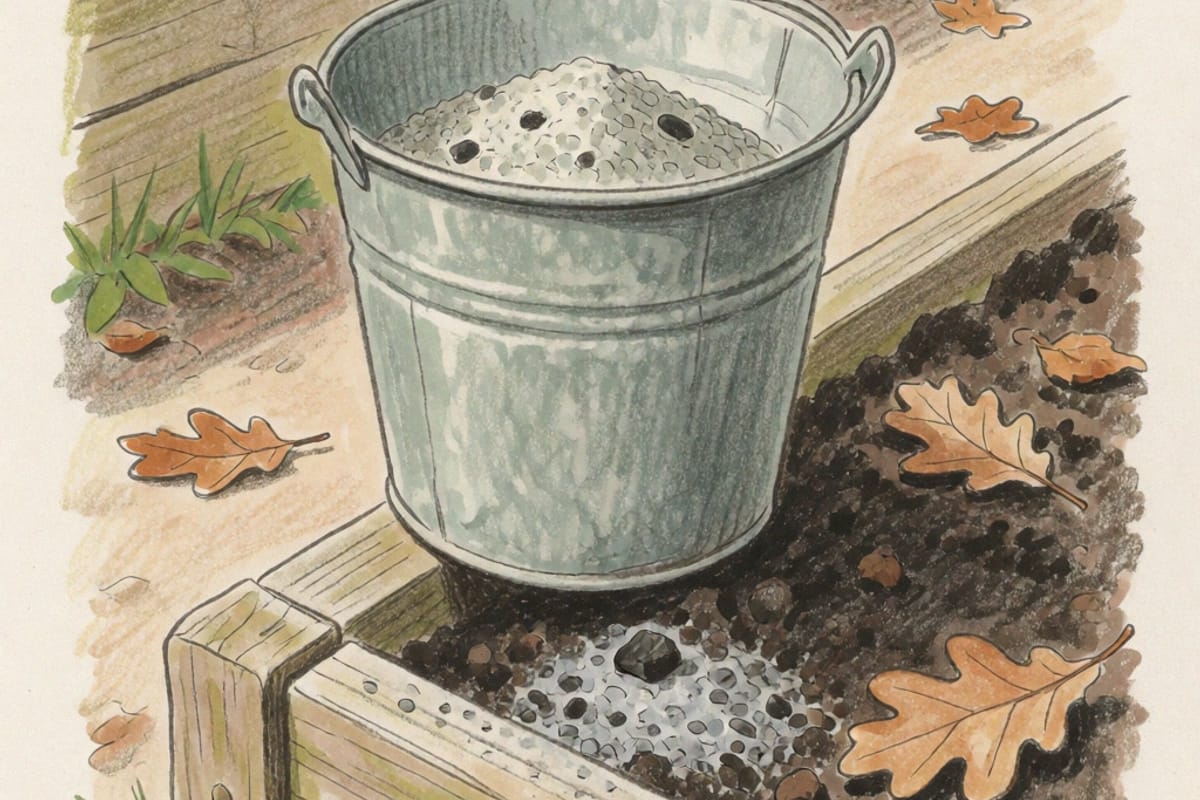
The first fires of the season have been lit, and by now there’s a bucket of grey ash by the back door with nowhere in particular to go. Someone has told you it’s good for the garden. Someone else has told you it’ll ruin it.
Both of them are partly right. Wood ash can be good for a garden, in small amounts, on soil that needs what it has. It works like a mild lime, so it raises your soil’s pH, and it carries a fair amount of potassium plus some calcium and magnesium. That makes it useful on acidic soil and unhelpful on soil that’s already neutral or alkaline. So test your pH before any of it goes down, keep it well away from blueberries and from wherever next year’s potatoes are going, and never use ash from charcoal briquettes.
What’s in the bucket
Burned wood leaves behind the minerals the tree pulled out of the ground. Most of what’s left is calcium in forms that neutralise acid, which is why ash behaves like lime. There’s potassium too, which is where the old word “potash” comes from: people used to leach it out of wood ash in pots. There’s a little phosphorus and magnesium, and no nitrogen at all, since that goes up the chimney.
Ash from hardwoods like oak and maple generally carries more of all this than ash from pine and other softwoods. The exact figures swing a lot with the wood and how hot it burned, so I wouldn’t put much faith in any precise analysis you see quoted.
What matters for your garden is the lime part. Ash is a weaker liming material than ground garden lime, but it acts faster, and it’s very easy to overdo because it’s free and there’s always more of it.
When it helps
If a soil test comes back acidic, somewhere well under the 6.0 to 7.0 range most vegetables are happiest in, ash is a reasonable way to nudge it up. Plenty of gardens in high-rainfall, wooded country sit there naturally, and some bagged composts and peat-heavy raised bed mixes start out on the acidic side too.
On soil like that, a light dusting worked into the top couple of inches does some good. The potassium is a bonus for fruiting crops and root crops, and cabbages and their relatives don’t like soil that’s too acidic.
How light is light? A common ceiling is roughly 10 to 15 pounds per 1,000 square feet a year. For a 4-by-8 raised bed that comes out to something like a couple of cupfuls a year. Not a bucket. Spread it thin on a still day, rake it in, and don’t come back with more until you’ve tested again.
I used to tip the whole winter’s ash onto one bed every March, because it was the bed closest to the house. That bed grew worse spinach every year for three years before I bought a test kit and found out why.
When it doesn’t
If your soil is already at 7.0 or above, ash pushes it further toward alkaline, and at high pH several nutrients (iron and manganese among them) get harder for plants to take up. Chalky soils, much of the arid West, and any bed that’s been limed regularly don’t need it. Test before you assume.
Blueberries and other acid lovers
Blueberries want soil around 4.5 to 5.5, far more acidic than most vegetables like, and getting a bed down there is slow work. A season of casual ash can undo a lot of it. Keep ash away from blueberries, and from rhododendrons, azaleas, and anything else you’ve gone to trouble to keep acidic.
Wherever the potatoes are going
Potato scab, the rough corky patches on the skins, comes from soil bacteria that do better as pH rises. Slightly acidic soil keeps it in check, which is why liming a bed right before potatoes go in is a reliable way to give yourself a scabby harvest. If you rotate your crops, find out which bed the potatoes are moving into before the ash goes out. Laying next year’s beds out on Garden Planner Pro’s square-foot grid over the winter gives you that answer before you need it.
Charcoal briquettes, painted wood, and the rest
Ash from barbecue briquettes is a different thing. Briquettes are made with binders and other additives, and the quick-light kind carries lighter fluid. That ash goes in the trash. So does ash from painted, stained or pressure-treated lumber, from plywood, or from anything else you burned that wasn’t plain wood.
A few cautions that catch people out
Ash is caustic when it’s wet. Wear gloves to spread it and keep it out of your eyes. Don’t put it right around seedlings or on top of a row you’ve just sown, and don’t let it sit on leaves.
Don’t spread it at the same time as a nitrogen fertiliser like ammonium sulfate or urea, or with fresh manure. The alkaline ash can turn some of that nitrogen into ammonia gas that drifts off before the plants get any. Leave a few weeks between them.
Ash can hold live embers for days after the fire looks dead. Keep it in a metal bucket with a lid, away from the house, the shed and the leaf pile, until it’s completely cold.
And the slug barrier trick, a ring of ash around a lettuce, works only while the ash stays dry. One dewy night and it’s a grey smear. I wouldn’t bother.
What to do with the rest of the winter’s ash
Most of us burn far more wood than a garden can sensibly take. A thin sprinkle between layers in the compost heap is fine. The rest can go in the bin, or to a neighbour whose soil test came back sour.
If you do one thing this week, test the soil in the bed you were planning to ash, while you can still get a trowel into it. That one number decides whether the bucket by the back door is a soil amendment or just something to get rid of.