Is It Too Late to Plant Garlic?
You meant to plant the garlic in October. Then it rained, then it was Halloween, and now it’s the middle of November and the bag of seed garlic is still sitting on the counter looking at you.
Plant it. If the ground isn’t frozen and you can still get a trowel a few inches down, it is not too late, and garlic going in this week will very likely give you a harvest next summer. It may be a bit smaller than it would have been from an October planting. That’s the whole of the penalty in most gardens, and it’s a lot better than a bag of cloves going soft in the kitchen.
Why “plant in October” isn’t a deadline
The usual advice is to plant garlic a few weeks after your first frost and before the ground freezes hard. That window is about giving the clove time to grow roots while the soil is still workable. It isn’t a date, and it moves a long way depending on where you garden.
In colder areas, where the ground locks up by early December, mid-November is late but often still possible. In a lot of milder areas mid-November is right on time, and in the mildest places people plant into December. If you’re reading this in one of those, you’re fine, and you can stop worrying now.
What a late clove loses is root-growing time. Garlic keeps making roots in cold soil for as long as the ground isn’t frozen, so even a few weeks in the bed before the hard freeze gives it a start. A clove that goes into winter with fewer roots may come up a little later in spring and make a slightly smaller bulb. That’s the realistic downside.
How to give a late planting its best chance
Plant the biggest cloves. Bigger cloves tend to make bigger bulbs, and with a late planting you want every advantage. The small inner cloves can go in the kitchen.
Don’t split the bulbs until the day you plant. Separated cloves dry out and the base, where the roots come from, can get damaged. Pull them apart on the bed edge and put them straight in.
Set each clove pointed end up, with the tip an inch or two below the surface, and firm the soil over it. This is the same as an October planting. You don’t need to plant deeper to make up for the cold.
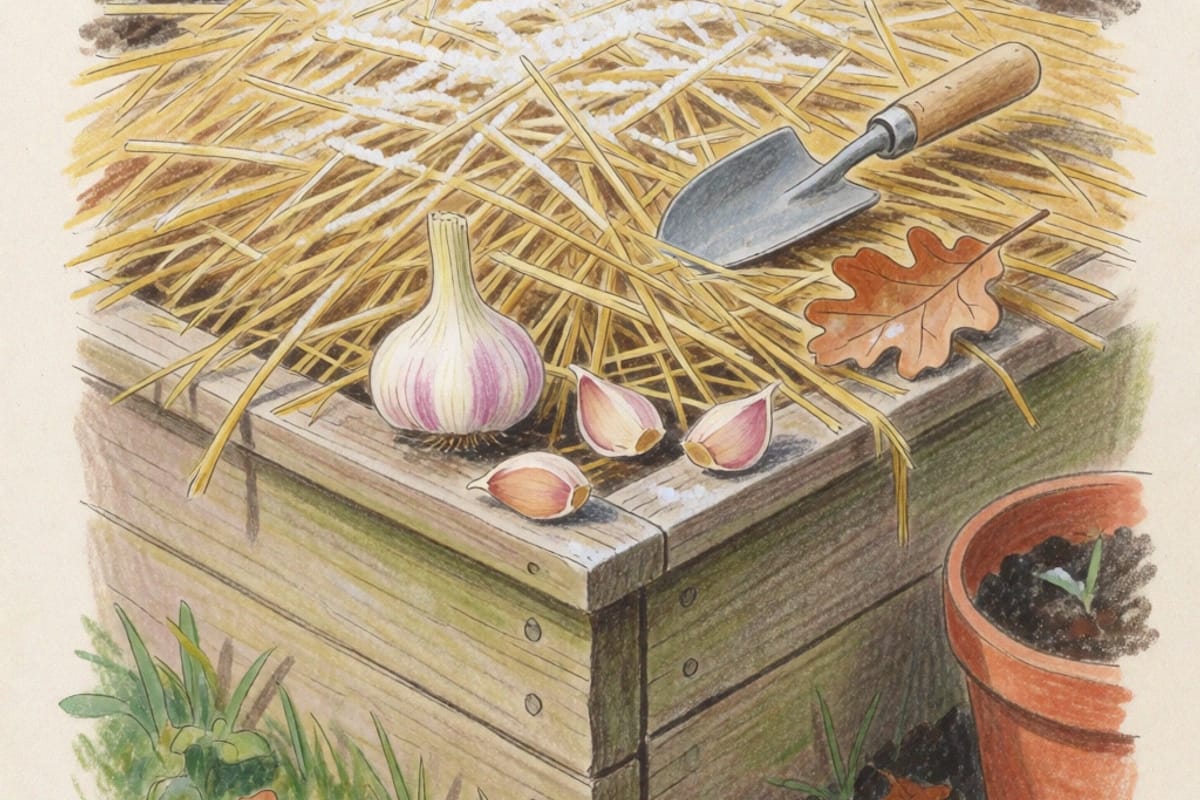
Then mulch straight away. With an October planting you’d often wait for the soil to cool before mulching. With a late one, I’d put three or four inches of straw or shredded leaves on the day you plant. It keeps the soil from freezing quite as soon, which buys the cloves a few more days of root growth, and it stops the freeze-thaw cycle from heaving them out of the ground over winter.
Pick the best-drained bed you’ve got. Late cloves sit in cold, wet soil for longer before they’re growing strongly, and a waterlogged bed is how garlic rots. A raised bed is ideal.
If the ground has frozen
Check first. A frozen crust after a cold night often thaws by the afternoon, and plenty of areas get a mild spell in late November or December. If you can dig on a warmer day, plant on that day.
If the ground is frozen solid and staying that way, you’ve got two options.
The first is to plant in spring, as soon as the soil can be worked. Garlic needs a stretch of cold to split into separate cloves, which is why we plant it in autumn in the first place, so spring garlic is more of a gamble. Keep the bulbs somewhere cool and dry over the winter, and if they’ve been stored warm, give the cloves several weeks in the fridge before planting to stand in for the winter they missed. Softneck types tend to cope with spring planting better than hardnecks.
Expect smaller heads from spring garlic. Some may come up as rounds, single solid bulbs with no separate cloves. They’re perfectly good to eat, and if you replant a round in autumn it will usually grow into a proper divided head the following summer.
The second option is to eat it. Seed garlic is good garlic, and if the bulbs are firm, you’ll have the best garlic bread of the winter. That isn’t the worst outcome, though you’ll need to order again next year.
Don’t panic about the ones you planted early
If you’re reading this because some of your garlic went in on time and the rest didn’t, the early cloves may already have green shoots. That’s normal, and shoots in autumn are a separate thing entirely from a late planting. Both rows will be fine. The late row may just be ready a little after the early one.
For next autumn
The reason garlic ends up planted late is usually that October gets away from people. The cloves arrive, the weather’s nice, there are still tomatoes to deal with, and the right week slides past without anyone noticing.
If you add garlic to your plants in Garden Planner Pro, the planting calendar works its dates out from your local frost dates and can sync them to your phone’s calendar, which is a lot harder to ignore than a bag on the counter. The full year-round routine is in how to grow garlic.
For now, though, go and see whether you can get a trowel in. If you can, the garlic goes in today.