Do You Need to Soak Seeds Before Planting?
No, most seeds don’t need soaking. Lettuce, tomatoes, peppers, carrots, cabbage, basil and the rest of the small-seeded crowd germinate perfectly well sown dry into damp seed-starting mix or soil, and soaking them mostly makes them harder to handle.
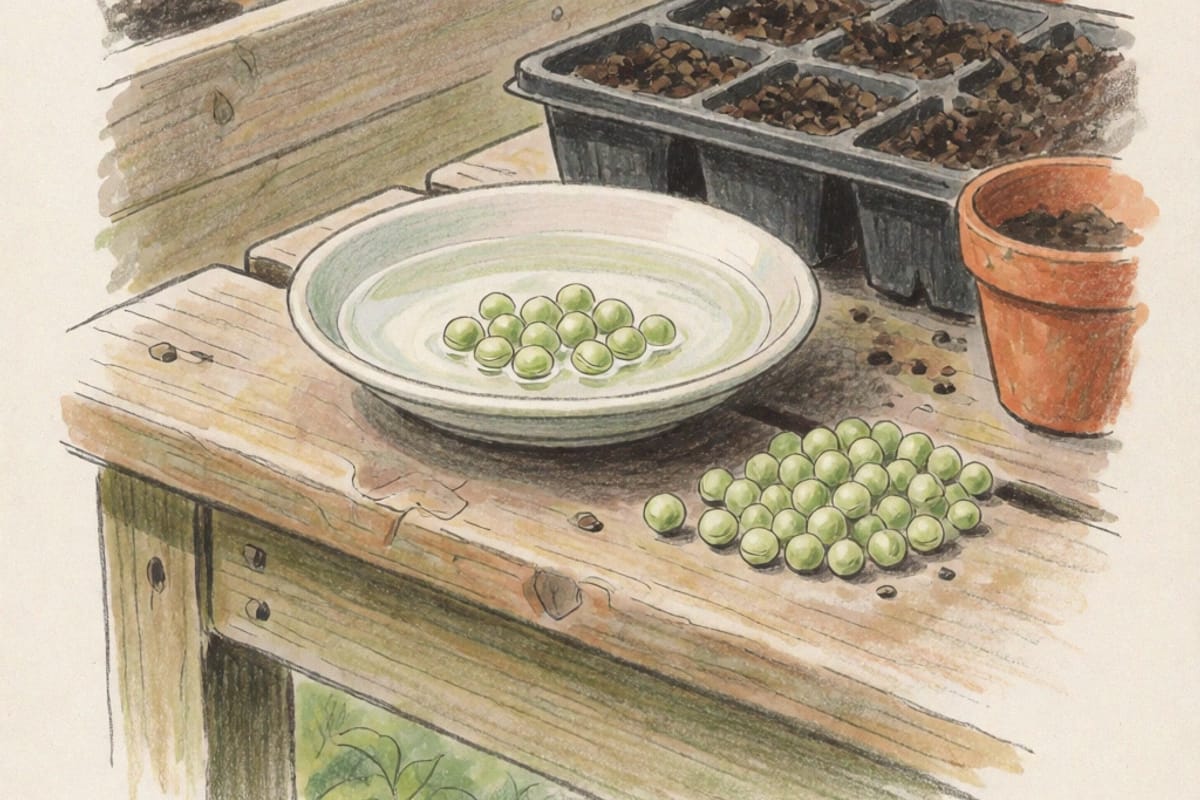
A short list of big, hard seeds do come up faster and more evenly after a few hours in water: peas, beans, beet and chard, parsley, and sometimes squash. A couple of flowers with very hard coats, sweet peas and morning glories, do better if you nick them too. That’s most of what there is to it, and the rest of this is about which seeds, how long, and how people get it wrong.
I’m writing this at the end of November, when it can wait. Come back to it the night before you sow your first peas, which for most of us is somewhere in early spring.
Why soaking works at all
A seed starts to germinate when it takes up water. A big seed with a thick coat takes a while to do that from damp soil, especially cold spring soil, and while it sits there swelling slowly it’s open to rot and to whatever is digging around in the bed. A few hours in a bowl gets that first drink done indoors, where it’s warm.
A tiny seed doesn’t have that problem. It’s so small that it takes up water from moist mix in no time, so soaking gains you almost nothing and leaves you with a clump of wet seeds stuck to your fingers.
The seeds worth soaking
Peas
Peas are the classic one. They go into cold soil early, and a dry pea in a cold wet bed can sit for a long time before it does anything. Soaking them for a few hours, or overnight, gives you swollen seeds that are ready to go. I do this every spring and I’m never sure how much it helps in a warm year. In a cold, slow one I think it does.
Beans
Bush and pole beans can be soaked for a few hours before sowing. Keep it short. Beans can split along the seed coat if they take on water too fast or stay in too long, and a split bean often doesn’t come up. Plenty of good growers never soak beans at all and wait for warm soil instead, which matters far more.
Beet and chard
The rough, knobbly “seed” of a beet or chard is a cluster of several seeds held together in a corky casing, which is why you often get two or three seedlings from one. That casing is slow to soften. An overnight soak helps it along, and you’ll still need to thin the little clumps once they’re up.
Parsley
Parsley is famously slow to germinate, slow enough that first-timers often give up and dig the pot over. Soaking it overnight before sowing is the usual advice, and in my experience it shortens the wait a bit. It won’t make parsley fast. Nothing does.
Squash, sometimes
Squash, pumpkin and cucumber seeds come up fine without soaking in warm soil. Some people soak them for a few hours anyway, and if your spring is cool and you’re sowing direct, it does no harm. If you’re starting them indoors in a warm room, I wouldn’t bother.
The hard ones that need a nick first
Sweet peas and morning glories have coats hard enough that water struggles to get in at all, so some seeds sit in the soil for weeks while their neighbours come up. The fix is to break the coat a little before soaking. Rub one side of the seed on a piece of sandpaper until you see a lighter colour underneath, or take a tiny nick out of it with nail clippers. Do it on the side away from the small scar where the seed was attached to the pod, since that’s where the sprout comes from.
Then soak them for a few hours. A nicked seed visibly swells in water, and it’s oddly satisfying to watch the ones you treated plump up next to the one you missed.
The seeds you should leave dry
Lettuce, carrots, tomatoes, peppers, onions, brassicas, herbs like basil and thyme, and flower seed fine enough to pinch. None of these need soaking. Carrots in particular are a problem of moisture at the surface after sowing. Keep the top of the soil from drying out for the week or two they take, and they’ll come up.
If you’ve tried soaking tiny seed you’ll know the other reason: you end up with a wet paste of seeds that won’t separate, and sowing it thinly becomes nearly impossible.
How long is too long
Overnight is a sensible ceiling for almost everything here. A few hours is plenty for beans and squash. Leave seeds sitting in water for a day or more and they can run short of oxygen and start to rot, and some, beans especially, split.
Use water at room temperature or slightly warm to the touch, never hot. Pour it off when the time is up and sow the seeds that day. A soaked seed has started the process, and if it dries out again before it’s in the ground it can die.
The other limit is the soil itself. Soaking gets the first drink done. It does nothing for soil that’s too cold or waterlogged for the seed to grow in. A soaked pea in a sodden March bed will rot just as surely as a dry one, maybe faster. When you sit down in the new year to plan the early sowings, the date for peas comes from your last frost and from soil you can crumble in your hand. That counting is what the planting calendar in Garden Planner Pro does from your own frost dates.
One small test if you’re unsure
If you have old seed of something big and you don’t know whether it’s worth sowing, soaking does double duty. Put a few in water overnight, then wrap them in a damp paper towel in a bag somewhere warm and check after a few days. The ones that sprout tell you roughly what share of the packet is alive. Seeds that float are not reliably dead, by the way. Plenty of perfectly good seed floats, so judge by sprouting, not by the bowl.