7 Herbs Worth Buying as Plants and 3 You Should Grow From Seed
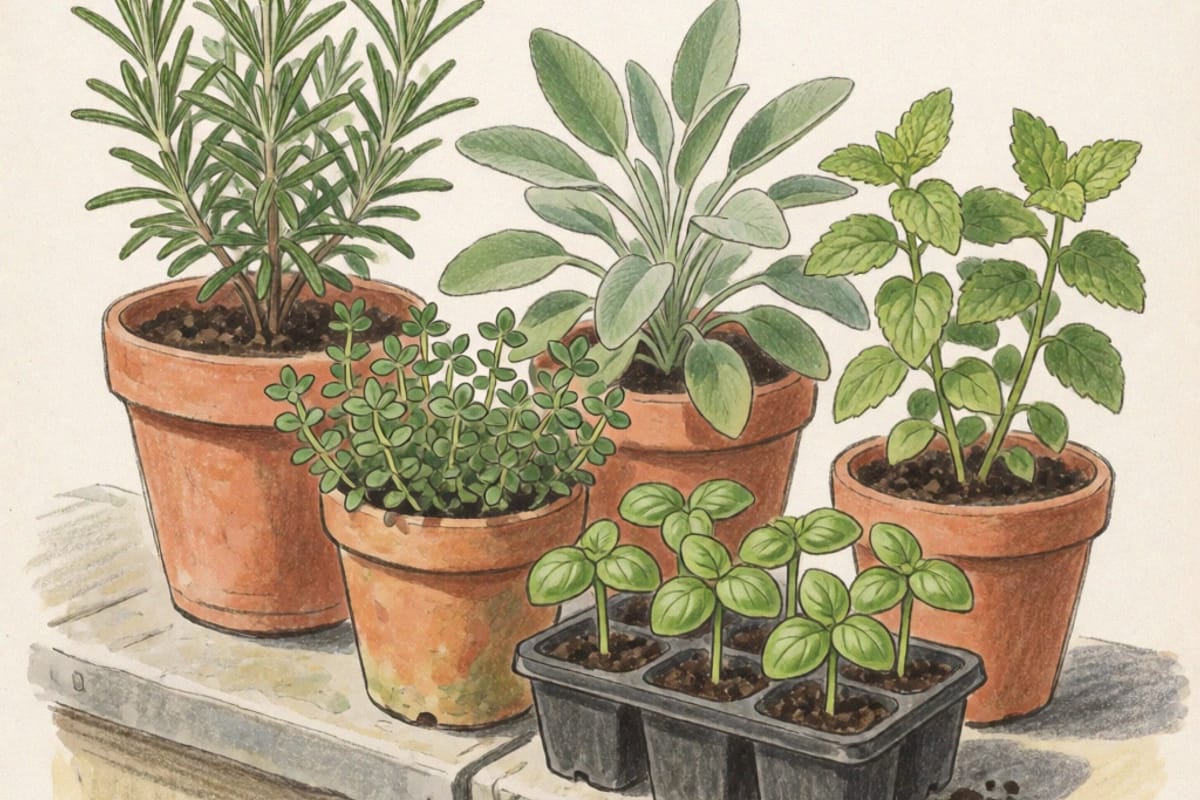
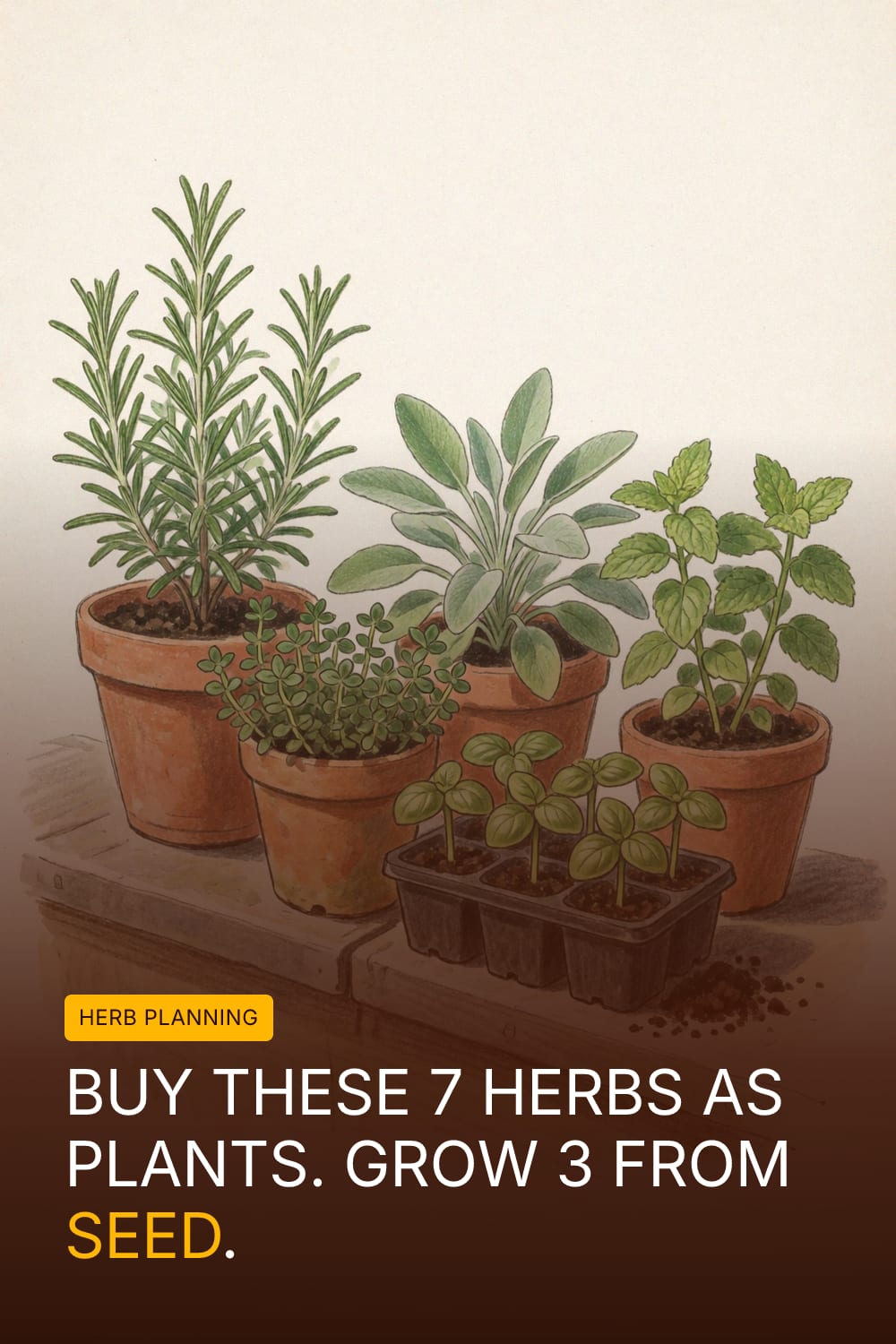
Most of the herbs you’ll want next spring split cleanly into two piles, and the split has little to do with price. A packet of rosemary seed costs less than a rosemary plant. It’s still the worse deal, because of how long it takes and what you end up with.
So while it’s late November and the balcony pots are empty or close to it, this is the sorting I’d do before the seed catalogues land. The first seven are herbs where one good plant from a nursery beats a whole packet. The last three go the other way: herbs you use by the fistful, that grow fast from seed and sulk as bought plants.
Seven to buy as plants
1. Rosemary
Rosemary seed germinates slowly and patchily, and the seedlings take a long time to become anything you’d cut from. You can be most of a season in before a seed-grown plant gives you a decent sprig. A small nursery plant in spring is usable the week you pot it.
Seedlings also vary. The named upright and trailing types you see for sale are grown from cuttings, which is why they look the way the label says. Buy one, give it the sunniest corner and a pot that drains fast, and let it get a bit dry between waterings.
2. Thyme
Thyme seed is tiny and slow, and a balcony only needs one or two plants anyway. A single bought thyme will give you more than you can use within a couple of months.
The flavoured thymes are the other reason. Lemon thyme and most of the named varieties are propagated from cuttings because they don’t come true from seed. If you want a particular one, the plant is the only way to be sure of getting it.
3. Sage
Sage is the one herb on this half of the list that grows perfectly well from seed. I’ve done it. The trouble is you’ll get a tray of twenty seedlings and need one, and that one won’t be big enough to pick properly until later in the season.
The purple, golden and variegated sages are cuttings-only. A seed packet will give you plain green.
4. Oregano
Oregano from seed is a lottery for flavour. A lot of what’s sold as oregano seed grows into a pleasant, leafy plant that tastes of very little.
Buy this one in person if you can. Rub a leaf at the garden center and smell it. If it’s sharp and peppery, that’s the plant. If it smells faintly green, put it back. A plant labelled Greek oregano is usually the safer bet for cooking.
5. Mint
Mint doesn’t come true from seed. Peppermint is a sterile hybrid and barely sets seed at all, so a packet labelled peppermint is unlikely to give you the real thing.
Mint is also the easiest herb in the world to get for free. Ask anyone who grows it for a rooted piece and they’ll be glad to be rid of it. Either way, give it a pot of its own. Its runners will take over any container they share.
6. French tarragon
French tarragon, the one with the anise flavour cooks want, very rarely produces viable seed. When you see tarragon seed for sale, it’s almost always Russian tarragon, a coarser plant with far less flavour.
So this one is plants or nothing. Check the label says French, and if you can, nibble a leaf. The real one leaves your tongue slightly numb.
7. Bay
Bay is a tree. Its seeds take a long time to germinate and plenty of them never do, and even a successful seedling takes years to become a plant you’d strip leaves from without feeling guilty.
A small potted bay grows slowly and lives for years in a container, which makes it one of the better long-term buys for a balcony. Bay isn’t hardy where winters get properly cold, so if yours do, plan on bringing it in, and pick a pot you can lift.
Three to grow from seed
8. Basil
Basil is the herb people most often buy as plants, and it’s the one I’d least want to. Look closely at a supermarket basil pot and it’s usually a dozen or more seedlings crammed together, which is a big part of why it collapses a week after you get it home.
From seed, basil comes up within days in warm conditions and grows quickly. Start it indoors a few weeks before your last frost, or sow it straight into pots once the weather has warmed. It hates cold, so don’t put it out until the nights stay reliably above about 50°F (10°C). Sow a fresh pot every few weeks through early summer and you won’t run short.
9. Dill
Dill grows a taproot and resents being moved. Nursery dill in a small pot has often sat with its roots circling long enough that it bolts not long after you plant it out.
Sow it where it’s going to grow, in a deep pot, around your last frost date. It comes up quickly. Plants run to flower within a couple of months, so sow a little every three or four weeks rather than a lot at once.
10. Cilantro
Cilantro is the herb that most often goes straight to seed on people, and a bought plant makes that worse. It also has a taproot, it bolts when it’s stressed, and being moved from a nursery pot into a bigger one is stress. Warm weather and long days push it the same way.
Grow it from seed in the cool parts of the year. Sow in early spring around your last frost, and again as the heat breaks in late summer or early autumn. A short row or a pot every two or three weeks gives a steady supply. The seed is coriander, the same thing that’s in your spice drawer, so a plant that does bolt still gives you a crop of something.
What this does to the spring order
It turns a long garden center bill into a short one. Seven plants, bought once. Most of them are perennials that will carry on in their pots for years, as long as the rosemary and bay get some shelter where winters bite. Then three packets of seed that keep you in the herbs you use most all summer.
The seed half is the part with dates attached, and they move with your frost dates rather than the calendar. If you’d rather not count weeks back from your last frost by hand, Garden Planner Pro works out the basil, dill and cilantro sowing dates from your own frost dates and puts them on the calendar for you.
When you do buy the seven plants in spring, buy them small. A four-inch pot of thyme or sage costs a fraction of a gallon pot and fills out quickly in a container with good drainage. Spend the difference on a bigger pot for the rosemary.