
Why Your Seedlings Keep Stretching Tall and Falling Over
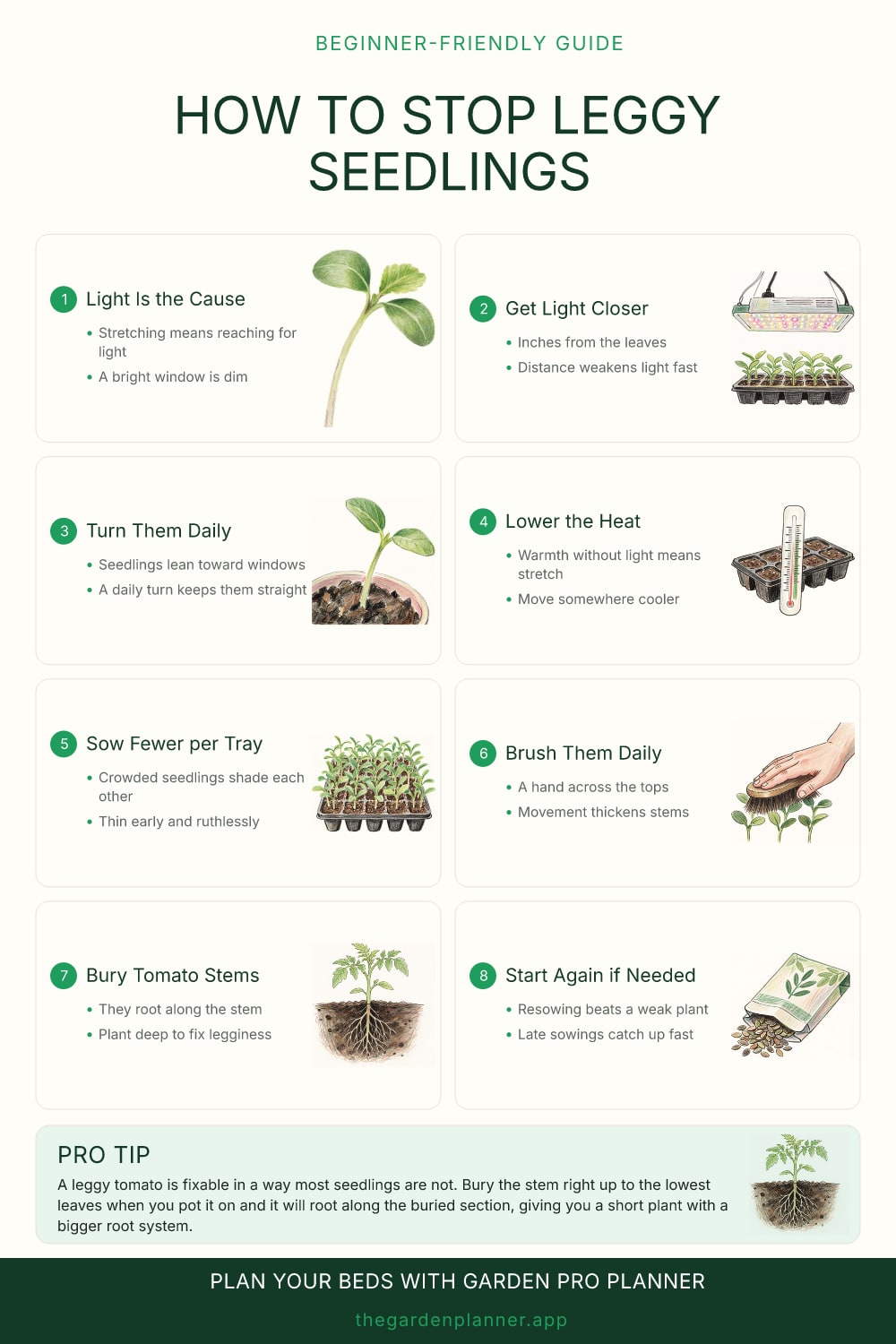
A leggy seedling is a plant that has decided it is in the shade and is spending everything it has on getting taller. Long pale stem, small leaves, a tendency to fall over and lie on the compost.
There is essentially one cause, and it is almost never the one people reach for first. It is not overwatering, or bad compost, or sowing too early. It is light.
A bright windowsill is much darker than it looks
Human eyes adjust so well to indoor light that we are terrible judges of it. A windowsill that feels bright to you can be delivering a small fraction of what the same seedling would get outdoors on the same day, and light falls off far more sharply with distance than intuition suggests.
That is why the classic windowsill seedling stretches toward the glass and leans hard in one direction. It is not being dramatic. It is behaving exactly as it should when it detects it is being shaded by something, and its strategy for escaping shade is to grow tall fast. The fix is more light, closer. If you use a grow light, it usually wants to be a few inches above the leaves, not a couple of feet. If you are relying on a window, pick the brightest one you have, and accept that late winter sowings will struggle no matter what you do.
Heat without light makes it worse
There is a common setup that produces the worst possible result: a heated propagator or a warm airing cupboard used to germinate seed, and then the tray left in that same warm spot afterwards. Warmth drives fast growth, and if there is not enough light to support that growth the plant puts it all into stem length.
So separate the two jobs. Warmth is for germination, and the moment the seedlings are up, they want the brightest and often cooler place you can give them. Slightly cool and very bright produces short, sturdy, dark green seedlings. Warm and dim produces pale stretched ones every time. This also applies to sowing dates. Sowing six weeks earlier than your light can support gives you a taller, weaker plant than sowing at the right time, and the later sowing usually overtakes it outdoors anyway.
Movement builds stem strength
Plants thicken their stems in response to being moved, the same process that matters during hardening off. Indoors there is no wind, so nothing triggers it.
You can supply it yourself. Run your open hand lightly across the tops of the seedlings once or twice a day, just enough to bend them over and let them spring back. It takes about five seconds and it makes a visible difference over a couple of weeks. A small fan on a low setting for a few hours a day does the same job and has the added benefit of moving air across the compost surface, which discourages the fungal problems that flatten seedlings overnight.
What can be rescued and what cannot
Tomatoes, and to a lesser extent members of the cabbage family, can be rescued by burying the stem. Tomatoes will grow roots from any buried section of stem, so potting a stretched seedling on deeply, right up to the lowest leaves, turns a liability into a bigger root system. This works well enough that some growers deliberately plant tomatoes deep regardless.
Most other things cannot be fixed this way. Beans, peas, cucumbers, squash and most flowers will not root from the stem, and burying them just rots the buried part. For those, a mildly leggy seedling will usually still grow into a fine plant if you get it into good light now and support it when you plant it out. A badly leggy one is worth abandoning. Sow again with better light and you will have a stronger plant within weeks, and a late sowing catches up faster than almost anyone expects.
Pro tip. A leggy tomato is fixable in a way most seedlings are not. Bury the stem right up to the lowest leaves when you pot it on and it will root along the buried section, giving you a short plant with a bigger root system.