
How to Sow a Cover Crop: A Beginner's Guide in 8 Steps
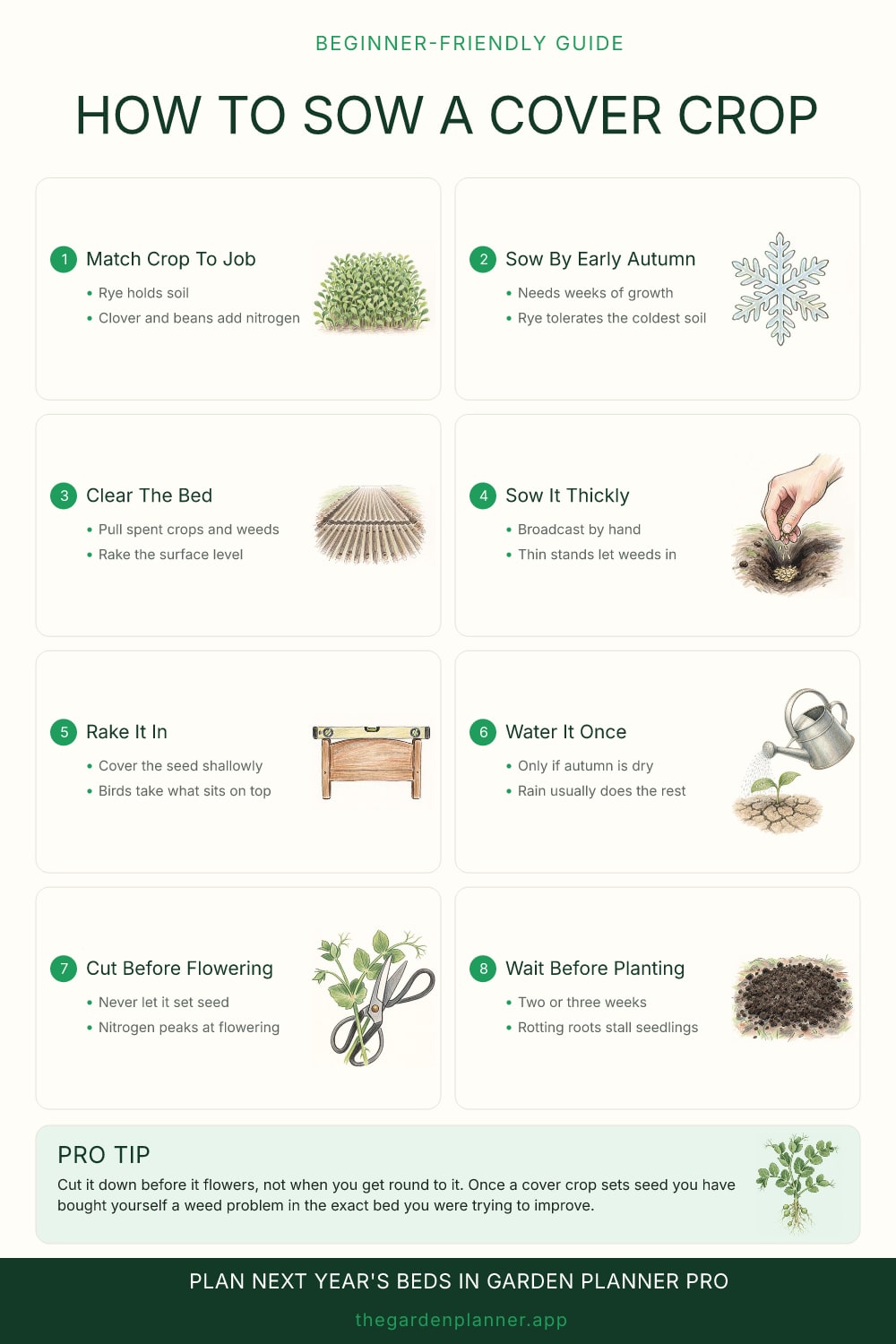
A cover crop is a crop you grow for the soil rather than for the kitchen, sown into a bed you are not using so that something is living in it over winter.
It is the cheapest soil improvement there is, and the whole thing hinges on two dates: when you sow it and when you cut it.
Pick the one that does the job you need
They are not interchangeable, and the choice comes down to what the bed’s problem is.
Cereal rye is the workhorse for holding soil. It germinates in colder soil than almost anything else, so it is the one to reach for if you are late, and it makes a dense fibrous root system that stops winter rain washing structure out of a bare bed. It adds no nitrogen.
Legumes do add nitrogen, because they host bacteria in root nodules that fix it out of the air. Crimson clover and field beans are the usual choices, and they want sowing earlier than rye because they are slower to establish. Follow them with something hungry: brassicas, or sweetcorn.
Mustard and phacelia grow fast and smother weeds, and phacelia is good for early bees if any of it flowers. Mustard is a brassica, though, so keep it out of a rotation where clubroot is a worry, and out of beds that grow cabbages next year.
Sowing is deliberately crude
Clear the bed of spent crops and weeds and rake the surface roughly level. Then scatter the seed by hand across the whole bed, much more thickly than you would sow a vegetable, and rake it lightly in so most of it is covered.
There is no spacing and no rows. A thin patchy stand is worse than useless, because the gaps fill with winter weeds and you have done the work without getting the benefit. Err heavy.
Water it in if the autumn is dry, and after that leave it. Most years the rain handles everything. The one job left is to look at it occasionally through the winter and note whether it actually established, because a bed where the birds took the lot is one you would rather mulch than discover bare in February.
Cutting it down is where people get it wrong
The timing rule is simple: cut it before it flowers.
With a legume, the nitrogen stored in the plant peaks around flowering and then moves into making seed, so cutting at early flowering is when you get the most out of it. With anything, letting it set seed turns a soil improver into a weed you will be pulling out of that bed for two years.
Cut it at the base with shears or a sharp spade and leave the tops lying on the surface as a mulch, or turn them shallowly into the top few inches. There is no need to dig them deeply in, and on a no-dig bed leaving them on top and covering with compost works fine.
Then wait. Fresh green material rotting in the soil ties up nitrogen temporarily while it breaks down, and seedlings planted straight into it sulk and yellow. Two or three weeks between cutting down and sowing is the usual advice, and it is worth honouring.
When not to bother
If the bed is going to be planted with garlic or overwintering onions, it does not need a cover crop, because it already has a crop in it.
If you are sowing in December in a cold area, you have missed it. A cover crop that germinates and then sits at two leaves all winter holds very little soil and adds almost nothing. Put mulch on instead and sow the cover crop earlier next year.
And if the bed is small and you already have leaves to spare, a good thick mulch does most of the same job with none of the spring timing to get right. The cover crop earns its place on bigger beds, on slopes, and where you specifically want the nitrogen.
Pro tip. Cut it down before it flowers, not when you get round to it. Once a cover crop sets seed you have bought yourself a weed problem in the exact bed you were trying to improve.