
Bare Soil Is Costing You Water Every Single Day
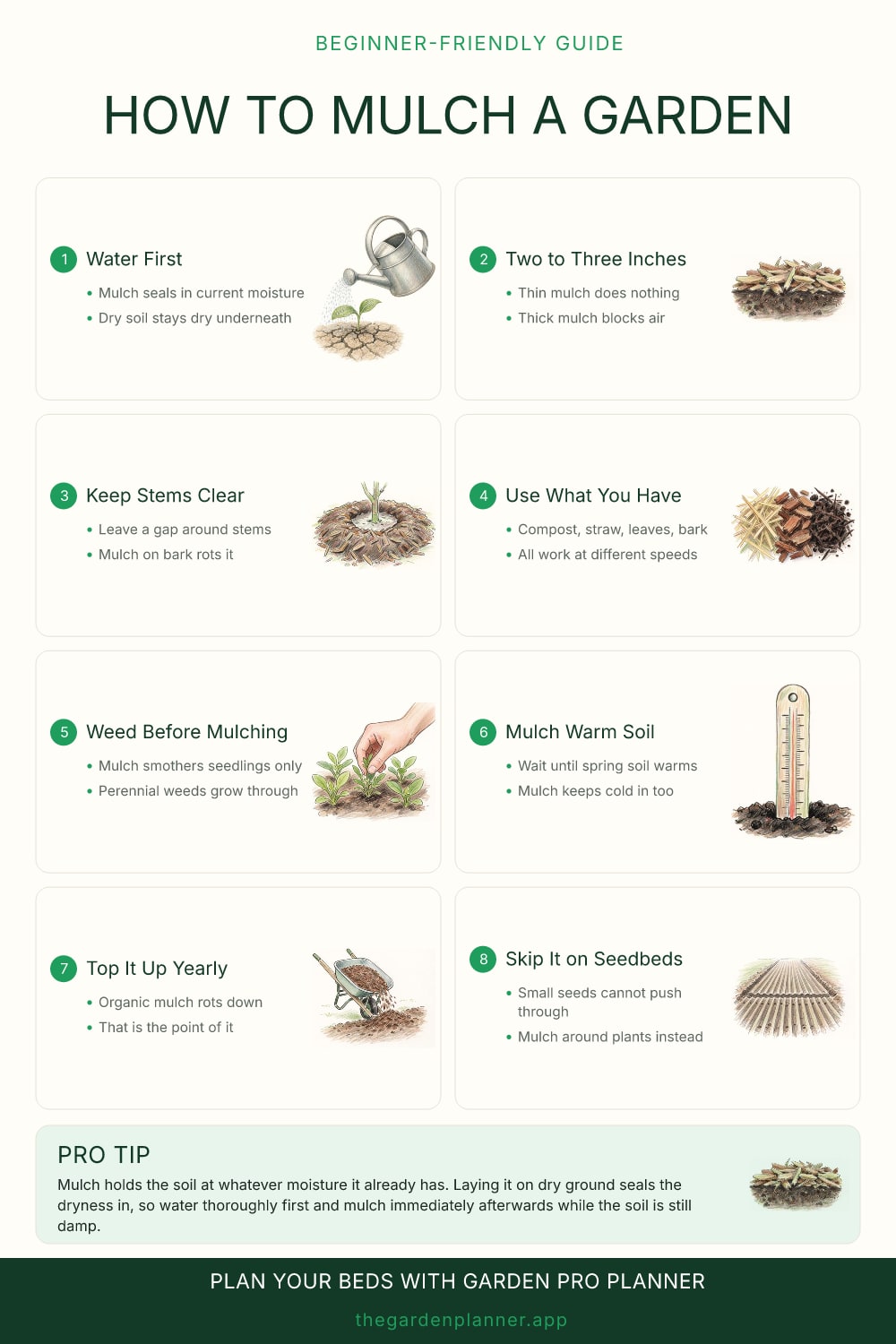
Mulch is a layer of material laid on the surface of the soil and left there. That is the entire idea, and it does more for a garden per hour of work than almost anything else you can do.
It slows evaporation, smothers weed seedlings, stops rain compacting the surface, moderates soil temperature, and as it rots it feeds the soil. The reason it sometimes disappoints is that two details get skipped.
Mulch does not add moisture, it holds what is there
This is the detail that matters most and the one most often missed. A mulch layer is a barrier. It slows water moving out of the soil through evaporation, and it also slows light rain getting in. So whatever state the soil is in when you mulch, that is roughly the state you are committing to for a while.
Mulching dry soil in the middle of a hot spell seals the dryness in and can leave plants worse off than bare ground would. The right sequence is to water deeply first, or better, to mulch the day after real rain, and get the layer down while the soil underneath is properly damp. The same logic applies to timing in spring. Mulch keeps cold in as well as heat out, so a thick layer laid on cold soil in early spring will delay it warming up and slow everything you planted.
Thickness, and keeping it off the stems
Too thin and it does nothing. An inch of bark chips looks tidy and will not suppress a single weed. Aim for two to three inches of organic material, more like four for a coarse material like straw that settles a lot.
Too thick, especially with fine material like grass clippings or pure compost, and you get a dense airless mat that sheds water rather than letting it through. Grass clippings in particular should go on thinly and in layers, not as one heap, or they turn into a slimy seal.
The other rule is to keep mulch away from stems and trunks. Material piled against a stem holds moisture right where the plant least wants it, and on trees and shrubs it softens the bark and invites rot and rodents. Leave a clear ring of a few inches around anything woody, and a smaller gap around soft stems.
Choosing a material for the job
Compost and rotted manure are the best all-round choice for vegetable beds. They break down within a season, feed the soil directly, and worms pull them down for you.
Straw is cheap, light, and excellent around strawberries, squash and potatoes, though it can carry weed seed if it is actually hay rather than straw. Leafmould is free if you have trees and is the gentlest of the lot. Bark and wood chip last far longer and are better suited to paths, shrubs and perennial borders than to annual vegetable beds, because they rot slowly and get in the way of sowing and planting.
One concern comes up repeatedly and is mostly a myth: wood chip on the surface does not rob the soil beneath of nitrogen in any meaningful way. That happens when woody material is dug in and mixed through the soil, not when it lies on top.
Where mulch is the wrong tool
A mulch smothers small weed seedlings and stops new weed seed germinating, which is most of its weed control value. What it will not do is deal with established perennial weeds. Bindweed, couch grass, docks and dandelions will push straight through several inches of mulch and may even enjoy the conditions. Clear those out first, or you are just hiding them.
Mulch also does not belong on a freshly sown seedbed. Carrot, lettuce and radish seedlings have no chance of pushing through a mulch layer. Sow bare, let the plants get established, and mulch around them afterwards. On a bed you have finished with for the year, the best mulch of all is often a cover crop, which does everything a mulch does and adds living roots underneath at the same time.
Pro tip. Mulch holds the soil at whatever moisture it already has. Laying it on dry ground seals the dryness in, so water thoroughly first and mulch immediately afterwards while the soil is still damp.