
Why Your Compost Heap Is Cold, Slimy and Going Nowhere
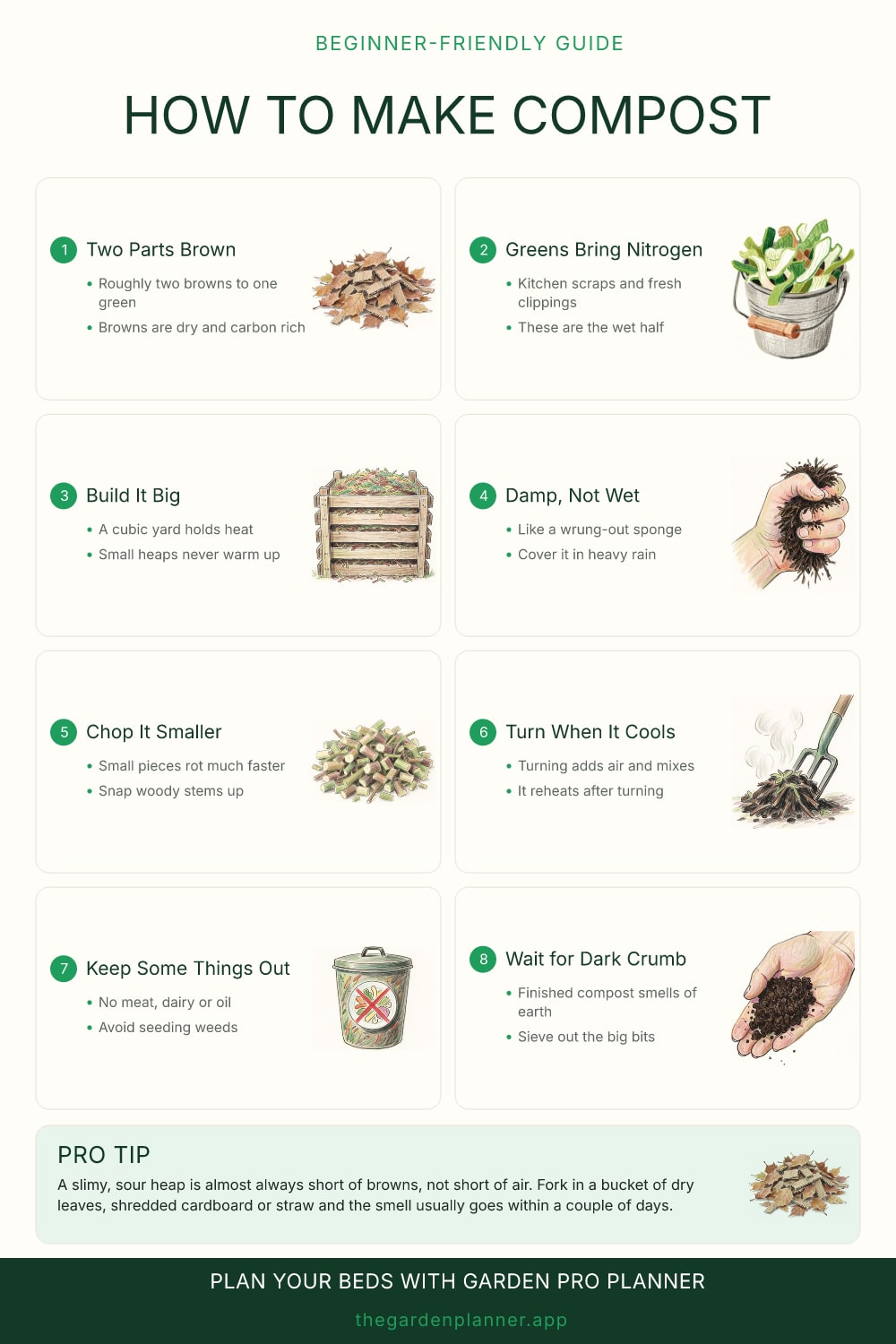
Almost every failed compost heap has the same thing wrong with it, and it is not a lack of effort. It is too much wet green material and not enough dry brown material.
A heap of grass clippings and kitchen peelings turns into a cold, grey, sour mat that could sit there for two years. Fix the ratio and the same ingredients rot down in a few months.
Browns and greens, and what those words actually mean
Greens are the wet, soft, nitrogen rich things: kitchen scraps, grass clippings, annual weeds, spent bedding plants. Browns are the dry, tough, carbon rich things: autumn leaves, straw, shredded cardboard, paper, woody prunings, old bedding straw.
The words are about chemistry rather than colour, which is why fresh green grass is a green and dry brown grass hay is a brown. Aim for something like two parts brown to one part green by volume. Nobody measures this and you do not need to. What you need is the habit of adding a handful of dry material every time you add a bucket of wet material, and the easiest way to do that is to keep a bag of shredded cardboard or dead leaves right next to the bin. If you only ever walk out with kitchen scraps, the heap will always be too wet.
Size and moisture are doing more than you think
A compost heap heats up because the mass of it insulates the middle while microbes work. Below about a cubic yard there is not enough bulk to hold that heat, and the heap composts slowly and cold. It still works, it just takes a year or more instead of a season. If you want speed, build bigger and fill the bin in one go rather than adding a trowelful at a time.
Moisture should be like a wrung-out sponge. Squeeze a handful and you want it to feel damp with maybe a drop or two coming out. If water runs out, it is too wet, and the airless conditions produce that sour smell. If it feels dry and dusty and nothing is happening, it needs watering, which surprises people who assume rain handles it. A heap under a tree or against a fence can stay bone dry through a wet month.
Turning is optional but it is the accelerator
You do not have to turn a heap. Left completely alone, it will still become compost eventually. Turning is what takes it from a year to a few months, because it reintroduces air and moves the cool outside material into the hot centre.
The useful signal is temperature. A working heap is noticeably warm in the middle, sometimes steaming on a cold morning. When it stops being warm, the easily available material in the centre has been used up, and turning it will usually start it heating again. Two or three turns over a season is plenty. If you have two bins side by side, turning simply means forking the contents of one into the other, which is much easier than trying to turn a heap in place.
What to leave out, and why
Keep meat, fish, dairy and cooked oily food out of an ordinary garden heap. Not because they will not rot, but because they attract rats and they go genuinely unpleasant in a way plant material does not. Those need a sealed digester if you want to deal with them at all.
Be careful with weeds that have gone to seed and with the roots of perennial weeds like bindweed and couch grass. A hot heap will kill both, but most garden heaps never get hot enough for long enough to be reliable, so you are effectively storing them and spreading them back on the garden later. Put those in the council green waste instead. Everything else is fair game, and cardboard, in particular, is the free brown material that most gardens are short of.
Pro tip. A slimy, sour heap is almost always short of browns, not short of air. Fork in a bucket of dry leaves, shredded cardboard or straw and the smell usually goes within a couple of days.