
The Week That Kills More Seedlings Than Frost Ever Does
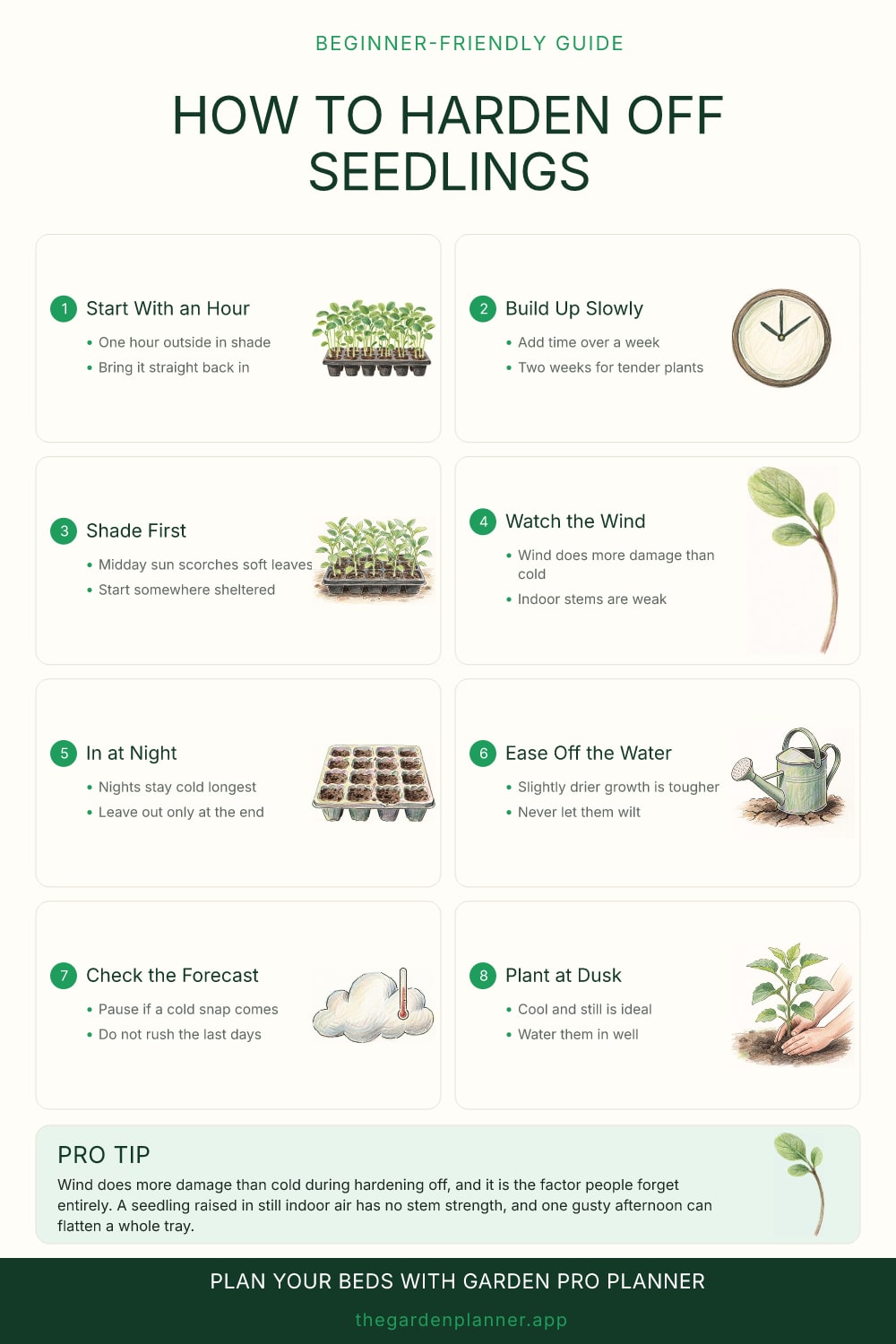
Hardening off is the least interesting job in the seed-raising calendar and the one that wastes the most work. People spend eight weeks nursing tomato seedlings on a windowsill and then lose half of them in four days by putting them straight outside.
The plants are not weak. They have simply been grown in conditions that do not exist outdoors, and they need time to build the equipment for the real thing.
What is actually different outside
An indoor seedling has grown in still air, filtered light, and steady warmth. Three things change the moment it goes out, and each affects it differently.
Light is the obvious one. Window glass removes a lot of ultraviolet, so indoor leaves have no protective pigmentation, and direct midday sun bleaches them to pale patches within hours. Temperature is the one people plan for, and it is the least dangerous if you are bringing plants in at night. Wind is the one that gets forgotten. A stem grown in still air has never had to resist anything, so it is thin and soft. Outdoor plants develop thicker, stronger stems specifically in response to being moved around. That process takes days, and until it has happened a strong gust will simply lay a tray flat.
A schedule that works
There is nothing precise about this, and plants are more forgiving than the strictness of most guides suggests. A rough version: day one, an hour outside in full shade, somewhere sheltered from wind. Day two, two or three hours. By the middle of the first week, most of the day in dappled light. Toward the end, some direct morning sun, still coming in at night.
At the start of the second week, start leaving them out overnight if the forecast is mild, ideally against a house wall which stays warmer than open ground. Tender things like tomatoes, courgettes and basil want the full two weeks. Hardy things like brassicas, onions and lettuce are usually fine in a week. If a cold snap arrives partway through, just pause and hold where you are for a few days. Nothing is lost by going slower.
Water and feed a little less
A seedling that is being pushed hard with water and fertiliser makes soft, sappy growth, which is exactly the growth that suffers outdoors. Easing back slightly during hardening off produces tougher tissue and a better root system, because roots chase moisture rather than sitting in it.
This is a matter of degree. Do not let anything wilt, because a wilted seedling is checked and a checked seedling can bolt or stall for weeks. Aim for letting the surface of the compost dry between waterings rather than keeping it constantly damp, and stop feeding entirely for the last week.
Plant out at the right time of day
The final move deserves as much thought as the week before it. Plant out in the evening, or on a dull overcast day, and give the plants a settled night to recover before they face any sun. Planting at eleven in the morning on a bright day means the roots are damaged and disconnected at exactly the moment the leaves are losing the most water.
Water them in properly, which means enough to settle soil around the roots rather than a light sprinkle. If the following days turn hot or windy, a temporary shade of fleece, an upturned pot for a few hours, or even a leafy branch stuck in beside them will carry them through. Once they have put out one set of new leaves in the ground, they are away and you can stop worrying about them.
Pro tip. Wind does more damage than cold during hardening off, and it is the factor people forget entirely. A seedling raised in still indoor air has no stem strength, and one gusty afternoon can flatten a whole tray.