
How to Grow Thyme Without Drowning It With Kindness
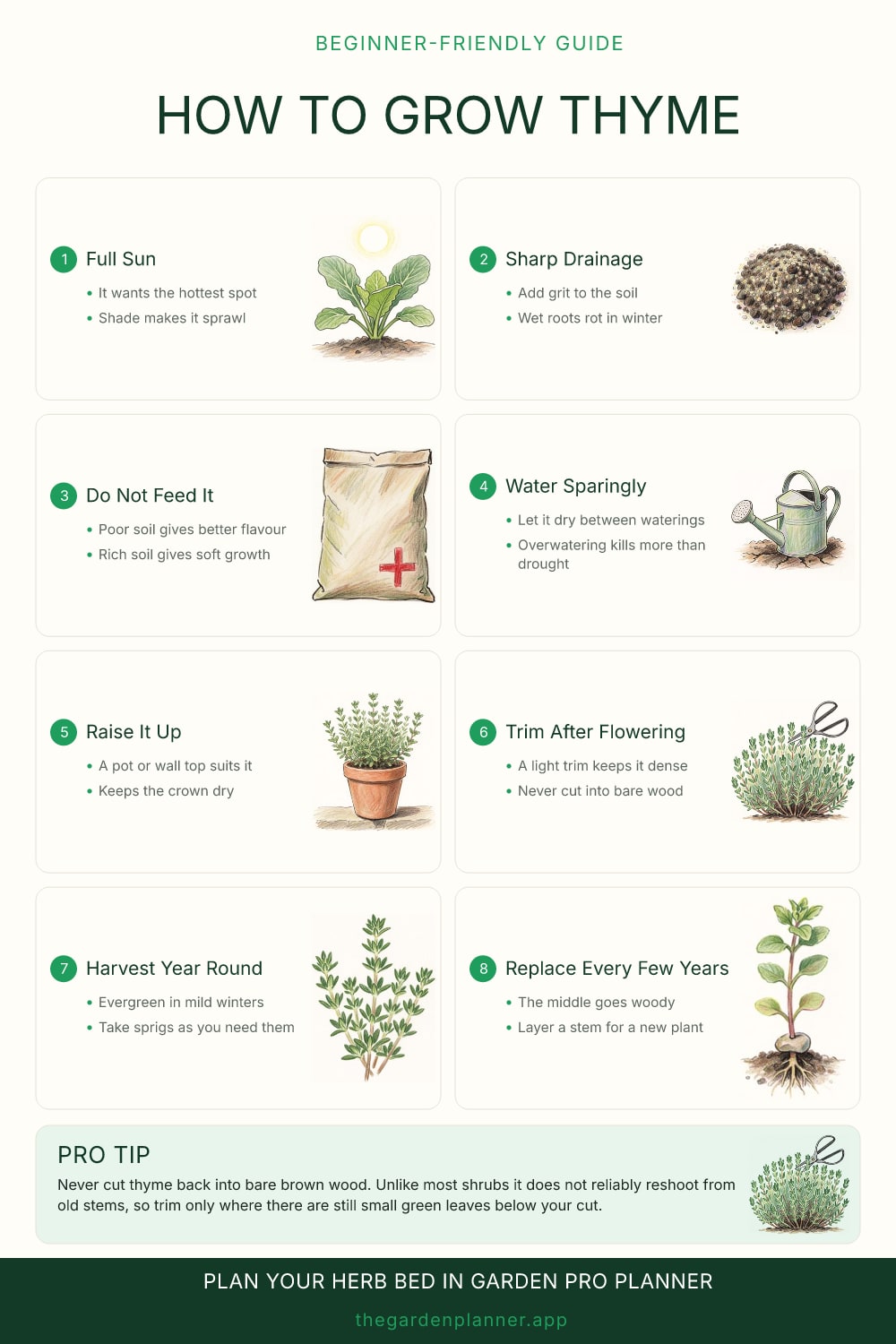
Thyme comes from dry, stony hillsides where the soil is thin and nothing waters it. Almost everything that goes wrong with thyme in a garden comes from treating it better than that.
It is a plant you succeed with by doing less. That is genuinely hard, because a thyme plant that is struggling looks like it needs help, and the help is usually what finishes it off.
Drainage matters more than anything else
Thyme will survive drought, poor soil and neglect. What it will not survive is sitting wet, particularly through a cold winter. Roots in cold waterlogged soil rot, and the plant goes grey and brittle and dies from the base.
So the single most useful thing you can do is get water away from it. Mix grit or coarse sand into the planting hole. Plant it on a slope, on top of a wall, at the edge of a raised bed, or in a terracotta pot that breathes. If your garden soil is heavy clay, a pot is a much better bet than trying to fix a whole bed for one plant. And if you grow it in a pot, resist putting a saucer under it. A saucer keeps the roots standing in water, which is the exact condition you are trying to avoid.
Feeding it makes it worse
Rich soil and fertiliser push thyme into soft, leafy, fast growth. That sounds good and is not. Soft growth is floppier, more prone to rot, less able to cope with winter, and noticeably weaker in flavour, because the aromatic oils concentrate in plants grown a bit hard.
This is true of most Mediterranean herbs, and it is why they do so well in the neglected corner of a garden where nothing else is happy. Plant thyme, water it while it settles in, and then largely forget about it. In the ground, an established thyme plant needs watering only in a genuine extended drought.
Trim it, but not into old wood
A thyme plant left entirely alone gets tall, opens out in the middle, and turns into a ring of green stems around a patch of bare brown wood. Once that has happened it is difficult to reverse.
The way to delay it is a light trim every year, right after it finishes flowering. Take off the spent flower stems and an inch or so of growth, shaping the plant into a dome. The key rule is to always leave green leaves below your cut. Thyme is unreliable at reshooting from bare old wood, so a hard renovation prune that works fine on lavender or rosemary can simply kill a thyme. When in doubt, cut less.
Make new plants before you need them
Even well trimmed, thyme is not a plant that lasts forever. After three or four years the centre usually goes woody and thin, and the sensible move is replacement rather than rescue.
The easiest way is layering, and it costs nothing. Pick a low flexible stem, press it down against the soil, put a small stone on it to hold it there, and leave it. Within a few months it will have rooted where it touches. Cut it free from the parent, lift it, and you have a young plant. Do this a year before you think you will need it and you never have a gap. Cuttings work too, taken in early summer from soft new growth, but layering is close to foolproof.
Pro tip. Never cut thyme back into bare brown wood. Unlike most shrubs it does not reliably reshoot from old stems, so trim only where there are still small green leaves below your cut.