
How to Grow Swiss Chard: A Beginner's Guide in 8 Steps
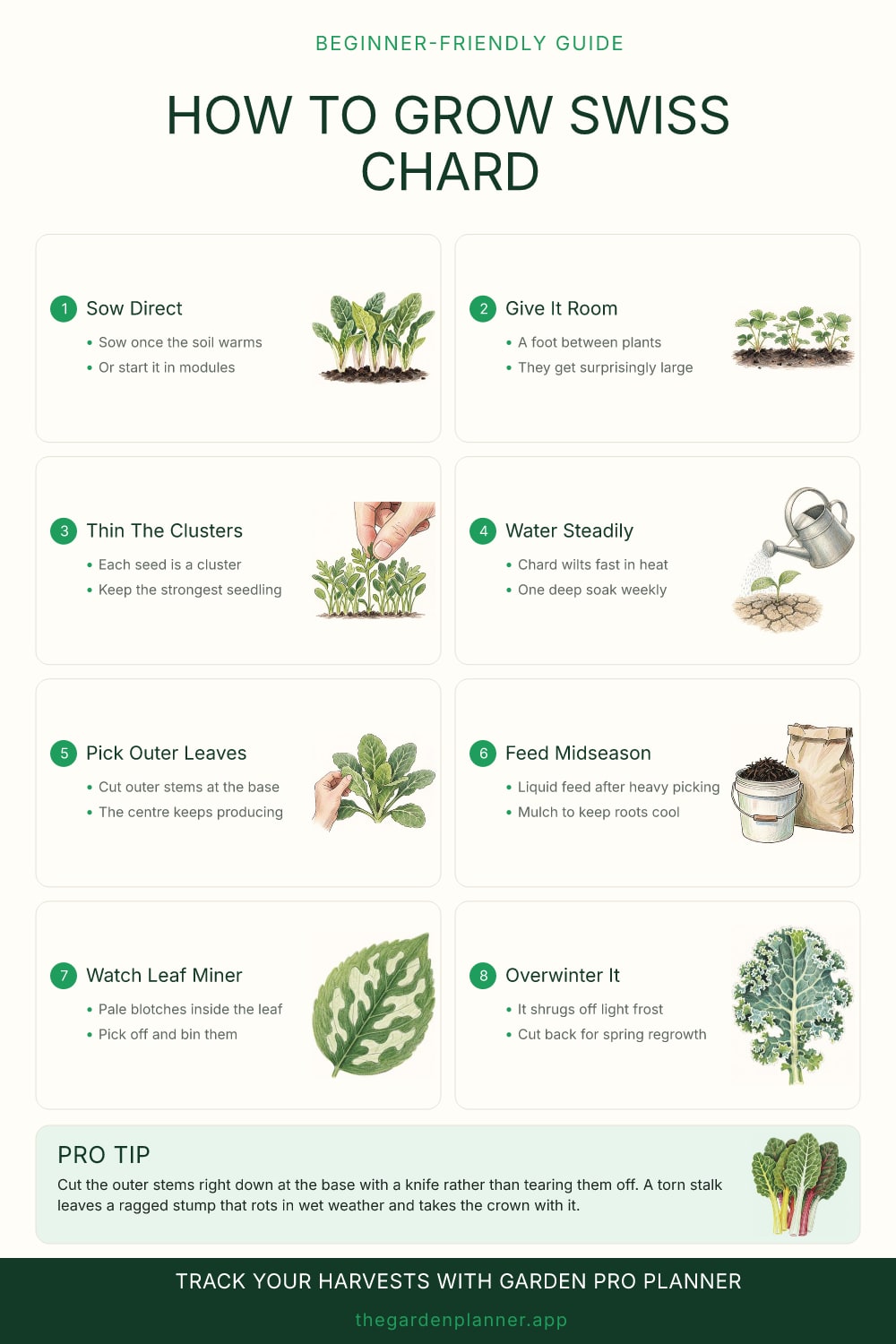
Chard is spinach that does not bolt the moment summer arrives. Same family, same use in the kitchen, and a great deal less drama in July.
One spring sowing, kept picked, will hand you leaves through summer, slow down over winter, and then throw out a flush of tender new growth in early spring before anything else in the garden is ready.
Why it beats spinach in a hot summer
Spinach is programmed to run to seed as the days lengthen and the soil warms. You can slow it with shade and water, but you cannot argue it out of the idea for long.
Chard is biennial and holds its nerve. It sits there through heat that would have flowered a spinach bed weeks earlier, and it only bolts in its second spring, which is a fair trade for a year of leaves. If you have given up on spinach in summer, grow chard from May onwards and keep spinach for the cool ends of the year.
The leaves are thicker and the stalks are substantial enough to cook separately, so give the stems a few minutes head start in the pan.
Thin it, then space it properly
Chard seed is a cluster like beetroot seed, so every station comes up as a little tuft. Snip out all but the strongest, and do it early, while you can still see which one that is.
Then be more generous with spacing than the packet makes you feel is necessary. A well fed chard plant is a foot across and more, and plants packed at six inches make small leaves, sulk in dry weather, and hold damp air around their crowns. A dozen plants is a lot of chard for most households.
It will grow in part shade, which is useful. Give it the bed that gets four or five hours of sun and save the full sun for the tomatoes.
Picking is the whole management plan
Take the outer leaves, always, and leave the small ones at the centre alone. That is the entire technique. A plant picked this way is on a cycle you control, and it will keep pushing new leaves from the middle for months.
Strip a plant bare and it stalls for weeks while it rebuilds. Leave old leaves on and they yellow, flop, and give slugs somewhere to live, so take those off even if you are not going to eat them.
A plant that has been picked hard appreciates a liquid feed and a mulch. Neither is essential, but both show up in the size of the next flush.
Getting it through the winter
Chard takes light frost without much complaint. Hard frost knocks the top growth flat, and the crown usually survives anyway if the soil is not waterlogged.
In a cold garden, cut the tatty leaves off in late autumn and throw a cloche or some fleece over the row. Even without cover, plants that look finished in January are often the first thing producing in March.
When it does finally bolt in spring, the flower stem is edible while it is still tender, a bit like sprouting broccoli. Once it toughens, pull the plant. Leave one to flower and set seed if you want a self sown patch, because chard is generous about that and the volunteers are usually stronger than anything you sow deliberately.
Pro tip. Cut the outer stems right down at the base with a knife rather than tearing them off. A torn stalk leaves a ragged stump that rots in wet weather and takes the crown with it.