
How to Grow Spinach Without It Bolting in a Week
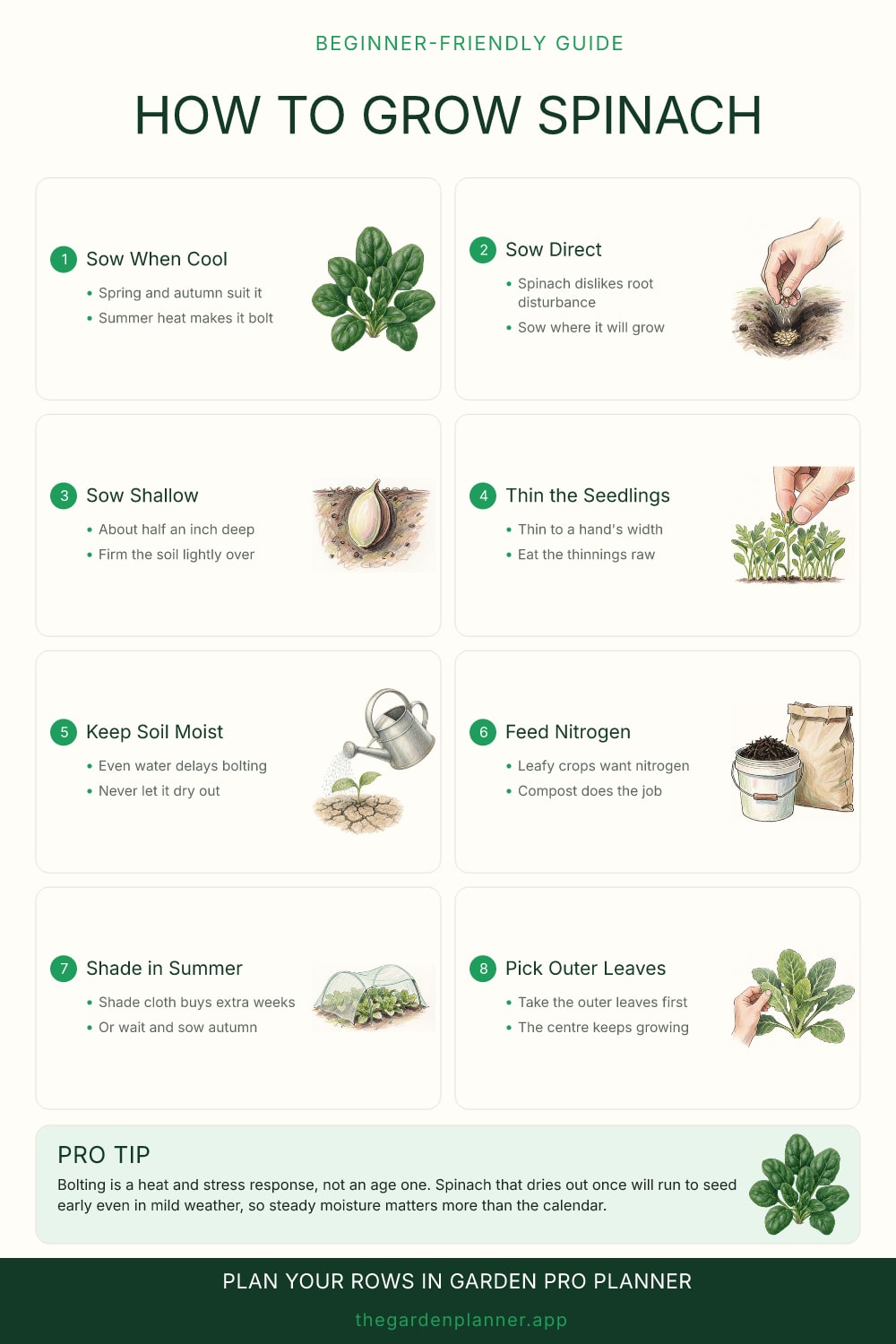
Spinach is a cool season crop that most people try to grow in summer, which is the whole problem in one sentence. Sown in June it germinates unevenly, sits there looking reluctant, and sends up a flower stem before you have picked anything worth eating.
Sown in the cool of spring or early autumn, the same seed produces thick dark leaves for weeks.
What bolting actually responds to
Spinach runs to seed in response to a combination of long days and heat, and it is triggered further by any stress that makes the plant think its life is under threat. Drying out is the big one, and it is the factor you control most directly.
A plant that wilts once, even briefly, will very often bolt within a week or two afterwards, regardless of how carefully you water it from then on. This is why steady moisture matters more than total water. A deep soak twice a week beats a light sprinkle every evening, because the sprinkle wets the surface and leaves the roots dry underneath. Mulching between the rows once the plants are up holds moisture in and keeps the soil cooler, which addresses both triggers at once.
Autumn is the better sowing
Most people sow spinach in spring, and spring works, but the crop is running into lengthening days and rising heat the whole time, so the window is short.
An early autumn sowing runs the other way, into shortening days and falling temperatures, which is exactly what spinach wants. It grows more slowly but it stands for far longer, and in a mild winter or under a cloche it will keep going and then put on a burst of new growth in early spring before finally bolting. If you only sow spinach once a year, sow it in autumn. And in the height of summer, grow chard or New Zealand spinach instead, both of which handle heat and can be used much the same way.
Sow direct, and thin properly
Spinach has a taproot and does not enjoy being transplanted, so sow it where it is going to grow. It germinates better in cool soil, and a summer sowing into hot ground often comes up patchy for that reason alone.
Thin the seedlings to about a hand’s width apart. This feels brutal when the row looks lovely and full, and it matters: crowded plants compete, stay small, and bolt earlier because competition is a stress. The thinnings are the best baby leaf salad you will get all year, so nothing is wasted. If you want a cut-and-come-again baby leaf patch rather than large plants, you can sow more thickly and skip the thinning, but then treat it as a single short-lived crop and resow rather than expecting it to last.
Picking, and the nitrogen point
Take outer leaves individually at the base and leave the growing centre alone, and one plant will keep producing for weeks. Shearing the whole plant works too but sets it back much further each time.
Spinach is a leaf crop, so nitrogen is what it wants, and a plant that is short of it goes pale and stalls. Well rotted compost dug in before sowing is usually enough. If plants look yellowish and slow despite decent moisture, a liquid feed will visibly improve them within a week. Do not overdo it late in the season though, because soft nitrogen-rich growth going into cold weather is more prone to mildew, which is the other thing that ends a spinach patch.
Pro tip. Bolting is a heat and stress response, not an age one. Spinach that dries out once will run to seed early even in mild weather, so steady moisture matters more than the calendar.