
How to Grow Raspberries: A Beginner's Guide in 8 Steps
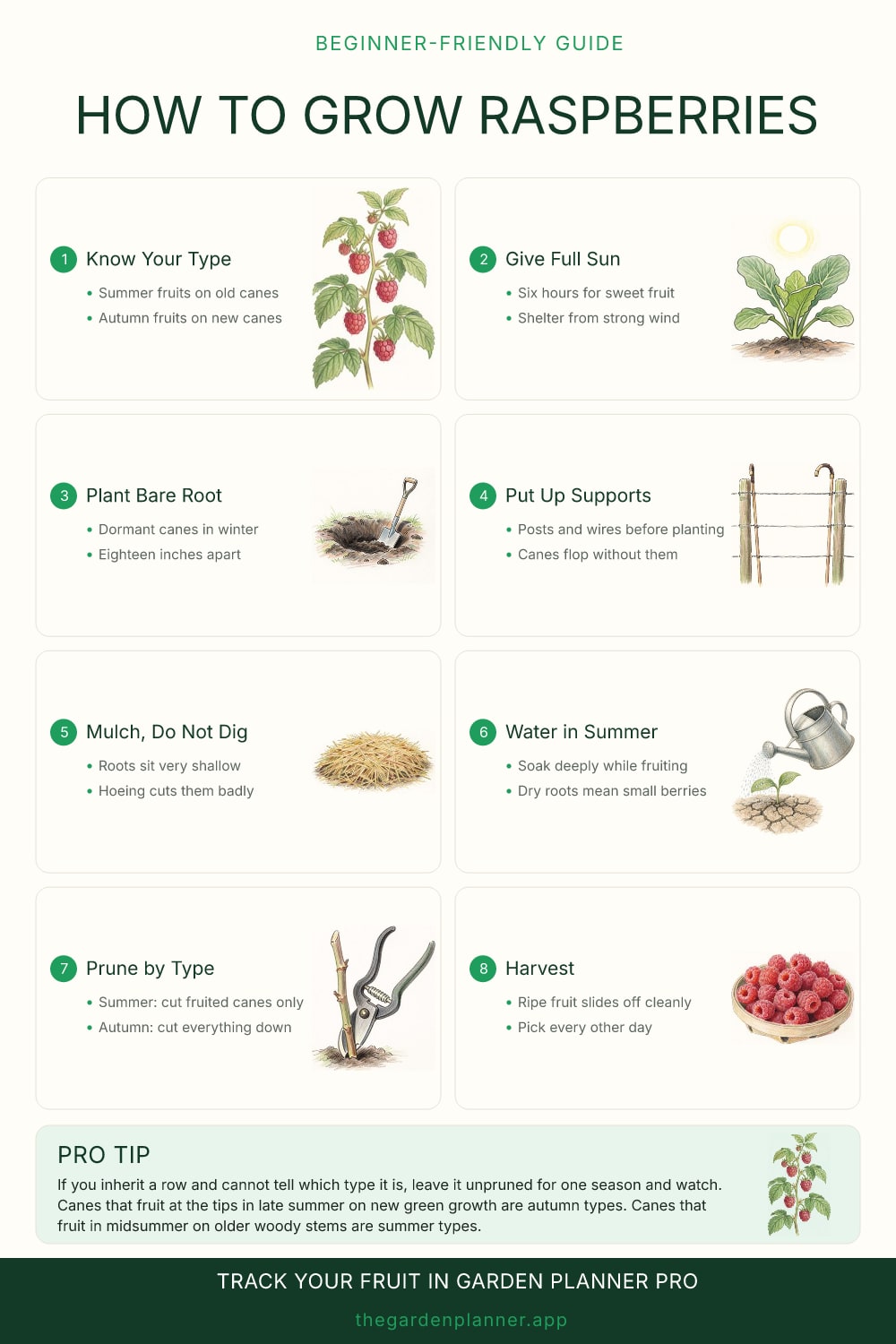
Raspberries are one of the best deals in a garden. Plant them once, and with very little work you get fruit every year for a decade or more, in quantities that make the supermarket price look absurd.
There is really only one thing you have to get right, and it is not planting or feeding or watering. It is knowing which of the two kinds you have, because they are pruned in opposite ways and getting it backwards costs you a whole year of fruit.
Summer and autumn are two different plants
Summer fruiting raspberries grow canes one year and fruit on those same canes the following summer. So at any time the row holds two generations: this year’s new green canes, and last year’s woody ones which are carrying the crop.
Autumn fruiting raspberries do the whole thing in a single season. Canes come up in spring and fruit at their tips from late summer onwards.
That difference decides the pruning. For autumn types, cut every cane in the row to the ground in late winter. It feels brutal and it is correct, and the plant sends up a fresh set in spring. For summer types, cutting everything down removes exactly the canes that were about to fruit, and you get nothing at all that year.
With summer types you instead cut out only the canes that have just fruited, right after harvest, leaving the new green ones standing to carry next year’s crop. Tie those in as they grow.
Put the supports in before the plants
Raspberry canes reach five or six feet and are top heavy when loaded with fruit. Unsupported, they arch over into the path, the fruit sits in the mud, and picking becomes an argument.
Two sturdy posts with two or three horizontal wires strained between them is all it takes. Do this before you plant, because banging posts in afterwards means driving them through a root system that is already spreading.
Space the canes about eighteen inches apart along the row, and leave a good four to six feet between rows if you plant more than one. They will fill it.
Never dig around them
Raspberry roots run within the top few inches of soil and spread well beyond the row. A hoe or a fork anywhere near them cuts through feeding roots, and it also slices the underground runners in a way that encourages a forest of suckers coming up where you do not want them.
So weed by hand and control everything else with mulch. A thick layer of compost, well rotted manure or straw laid over the row each spring keeps the weeds down, holds moisture through summer, and feeds the plants slowly as it breaks down. That single job in March covers most of the year’s care.
Suckers will still come up in the paths. Pull them rather than hoeing them, and if a row starts creeping outward, cut a clean edge with a spade once a year.
Picking, and what to do with a glut
A ripe raspberry separates from its core with almost no pull, leaving the white plug behind on the cane. If you have to tug, it is not ready. Go along the row every other day once fruiting starts, because raspberries go over quickly and a missed few days turns into mush and fruit flies.
They do not keep. Two days in the fridge is optimistic, so plan for it. Spread them in a single layer on a tray and freeze them solid before bagging, and they stay separate instead of freezing into one block.
Pro tip. If you inherit a row and cannot tell which type it is, leave it unpruned for one season and watch. Canes that fruit at the tips in late summer on new green growth are autumn types. Canes that fruit in midsummer on older woody stems are summer types.