
How to Grow Radishes in About a Month
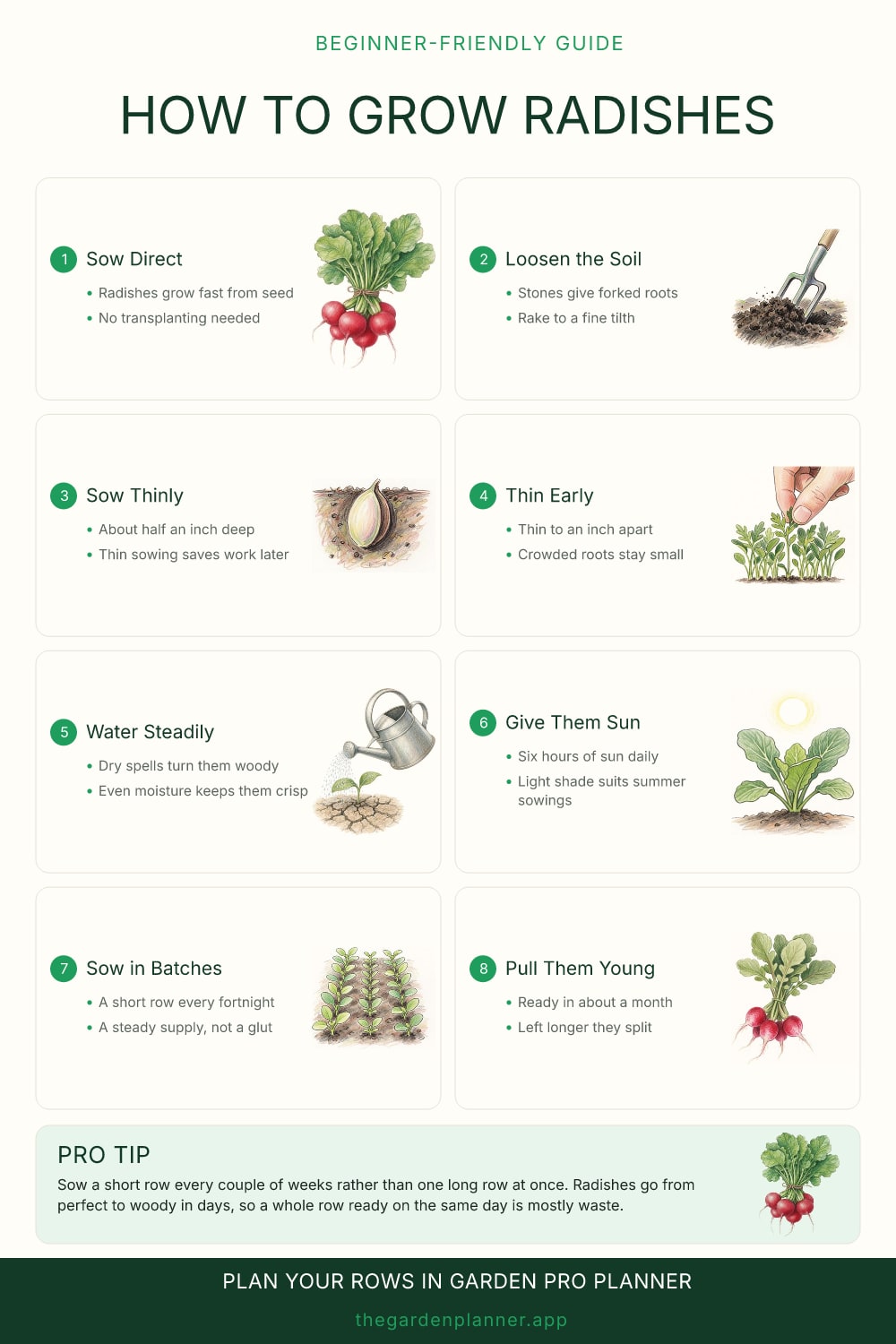
Radishes are the crop people recommend to children because they are fast, and that speed is also the reason they so often disappoint. A month is not long, and almost every radish failure comes from something that went wrong in a matter of days.
Too hot, too dry, too crowded, or left in the ground three days past ready.
All top and no root
The classic radish failure is a row of healthy leafy tops with nothing underneath. There are two usual causes and they are easy to tell apart.
The first is crowding. Radish seed is large enough to handle and small enough to over-sow, and if the seedlings are touching each other there is simply no room for a root to swell. Thin to about an inch apart as soon as the seedlings are up. It feels wasteful and it is the difference between radishes and leaves.
The second is too much nitrogen. A bed heavily manured for a leafy crop pushes radishes into producing foliage at the expense of the root. Radishes want ordinary soil that has been fed for a previous crop rather than a freshly enriched bed, which makes them an ideal thing to sow between rows of something hungrier.
Heat and water decide the flavour
The unpleasantly hot, woody radish is a plant that has been stressed, and the two stresses are heat and irregular water. Radishes grown fast and evenly are mild and crisp; the same variety grown in a dry hot spell turns fibrous and sharp.
So water steadily rather than heavily, and in summer sow somewhere with a little afternoon shade rather than the hottest bed you have. Radish is genuinely a spring and autumn crop in most places, which is worth accepting rather than fighting. Summer sowings can work but they need attention, and they are the ones that go woody. A row sown in early autumn is often the best of the year, growing into cooling weather with plenty of moisture.
Sow a little, often
A full packet sown in one row gives you far more radishes than anyone can eat in the few days they are at their best, and radishes do not hold. This is the single most useful habit with them: sow a very short row, perhaps a foot or two, every couple of weeks through spring and again in autumn.
They are also ideal for filling gaps. Radishes are up and gone before slower crops need the space, so a row of them between parsnips or brassicas is essentially free food. Traditionally they were sown along with slow-germinating things like parsnip specifically to mark the row, and they still do that job well.
Pull them young, and use the pods
Most varieties are ready roughly three to four weeks after sowing. Check by scraping a little soil from the shoulder of one rather than pulling. Left past their moment they turn pithy, split, and eventually the whole plant runs up to flower.
If that does happen, do not pull them all out in disgust. A bolted radish produces green seed pods that are crisp, peppery and genuinely good raw or pickled, and some varieties are grown specifically for them. Let a few of the plants that got away run on and you get a second crop out of a row you had written off, and if you leave those pods to dry on the plant you have next season’s seed for nothing.
Pro tip. Sow a short row every couple of weeks rather than one long row at once. Radishes go from perfect to woody in days, so a whole row ready on the same day is mostly waste.