
How to Grow Pumpkins Worth Carrying Indoors
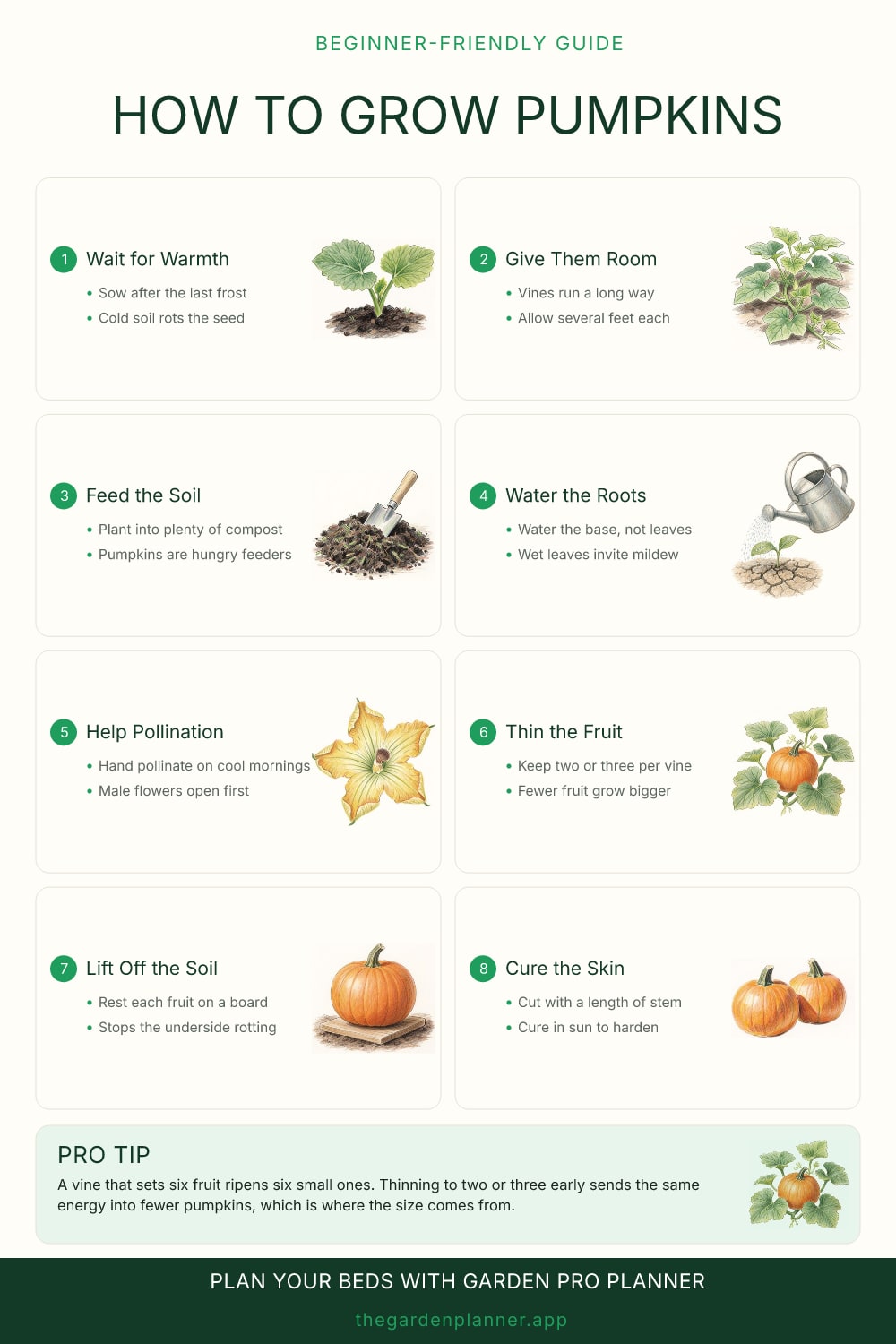
Pumpkins take up an enormous amount of room for a crop most people grow a handful of, and they are worth it anyway. They are also one of the few vegetables where the gardener’s main job is subtraction: taking fruit off so the remaining ones get big.
The other job is keeping the fruit off wet soil, which is where most disappointments come from.
Warm soil, and no rush
Pumpkin seed rots in cold wet ground and germinates readily in warm ground, so sowing early gains you nothing. A sowing made two weeks after the last frost routinely overtakes one made two weeks before it, because the later one never sits in the soil checked and vulnerable.
If you want a head start, sow indoors in individual pots three or four weeks before planting out, and plant them into warm soil once the risk of frost has gone. Do not start them earlier than that. A pumpkin seedling grows fast and becomes pot-bound and stressed very quickly, and a checked seedling never really catches up. Warming the bed under black plastic for a couple of weeks beforehand helps in a cold spring.
Room, and feeding the soil rather than the plant
A single vine can run several yards in every direction, and crowding is the most common cause of a poor crop. Trailing varieties want a great deal of space; if you do not have it, look for bush varieties, which are bred to stay compact and are a much better fit for a small garden.
Pumpkins are hungry and thirsty. The traditional approach of planting into a heap of half-rotted manure or compost works well because it provides both nutrition and moisture retention right where the roots are. Water the base of the plant thoroughly rather than sprinkling the foliage. Wet leaves in the humid conditions under a pumpkin canopy invite powdery mildew, which will eventually arrive anyway but is worth delaying as long as possible.
Pollination, and why early fruit drop off
Pumpkins carry separate male and female flowers on the same plant. The female ones are easy to identify: there is a tiny immature fruit behind the flower. Male flowers appear first, often a week or two before any females, so a plant flowering with no fruit setting is usually just normal timing rather than a problem.
What does happen is that tiny fruit start to swell, then yellow and drop. That is failed pollination, and it is common in cool or wet weather when bees are not flying. You can do the job yourself in a few seconds: pick a male flower, strip its petals off, and brush its centre against the centre of an open female flower. Do it in the morning while the flowers are open, and one male will pollinate several females.
Thinning, lifting, and curing
A vine that sets six fruit will ripen six small pumpkins. If you want size, remove all but two or three per plant while they are still small, choosing the best placed and best shaped. It feels wasteful and it is the single biggest lever on final size.
Once the fruit are swelling, slide something underneath each one. A piece of wood, a tile, a thick layer of straw. Anything that keeps the skin off damp soil, because the underside is where rot starts and a pumpkin can look perfect from above while collapsing beneath.
Harvest before the first hard frost, cutting the stem several inches from the fruit and carrying it by the body rather than the stem. A pumpkin carried by its stem often loses it, and a fruit with no stem rots at the crown within weeks. Then cure it in the sun for a week or two to harden the skin, which is what allows a pumpkin to store for months.
Pro tip. A vine that sets six fruit ripens six small ones. Thinning to two or three early sends the same energy into fewer pumpkins, which is where the size comes from.