
How to Grow Parsley When the Seed Refuses to Come Up
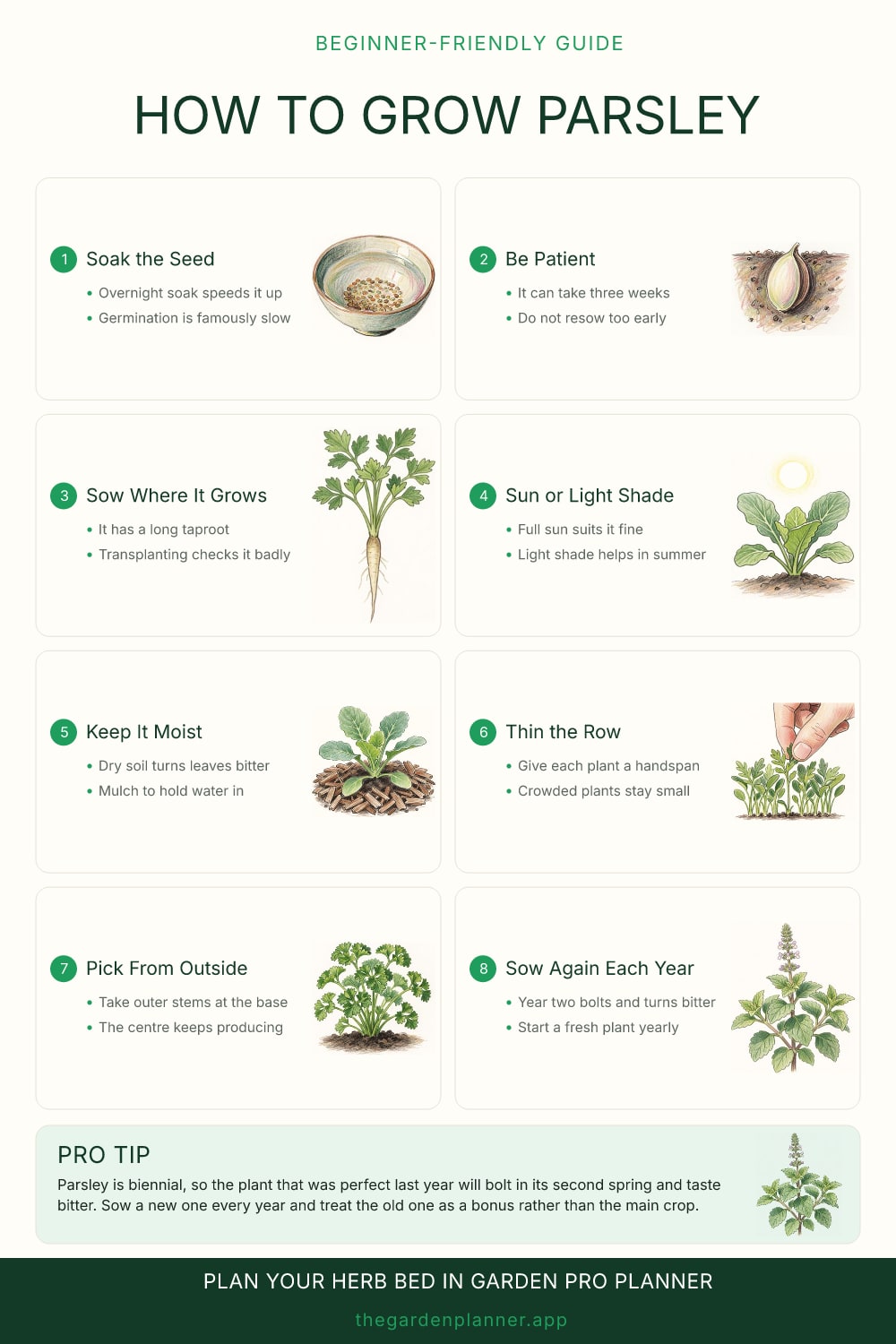
Parsley has a reputation for being difficult, and it is not, quite. It is slow. Those are different problems, but they feel identical when you are standing over a seed tray three weeks later looking at bare compost and wondering what you did wrong.
Usually the answer is nothing. Parsley seed simply takes its time, and most of the parsley that gets thrown away was about to come up.
Slow is normal, not a failure
Parsley routinely takes two to three weeks to germinate, and it can take longer in cold soil. Radish is up in four days, so parsley next to it in the same bed looks like a total failure by comparison. It is not. It is just parsley.
Soaking the seed overnight before sowing helps, and sowing into warm soil helps more. The seed carries compounds in its coat that slow germination, and a soak washes some of that away. What matters most is not resowing too early. I have dug over a row and started again, and then found the original seedlings coming up through the disturbed soil a week later, thinned to nothing by my own impatience. Mark the row, write the date somewhere, and leave it alone for a month before you give up on it.
It resents being moved
Parsley makes a taproot, a single thick root going straight down rather than a spreading mat. That is why it copes well with dry spells once established, and also why it hates being transplanted. Break the taproot and the plant sulks for weeks or bolts outright.
So sow it where it is going to grow, if you can. If you are buying a plant or raising it in modules, use a deep module rather than a shallow tray, and plant it out young before the root hits the bottom and starts circling. A pot-bound parsley plant almost never turns into a good one.
The second year is a trap
This is the part that catches everyone. Parsley is biennial. It spends its first year making leaves and its second year making seed, and the seed year starts early. A plant that was generous and tender all last summer will send up a flower stem in its second spring, and from that point the leaves turn bitter and coarse and it never comes back.
Nothing you do stops this. You can delay it slightly by cutting the flower stem out, but the plant has switched over and it is finished as a leaf crop. The fix is to sow a fresh plant every single year, so you always have a first-year plant coming along behind. Let the old one flower if you like. It is very good for hoverflies, and it will seed itself around, which is free parsley for next year.
Pick it like a leafy crop
Take outer stems at the base and leave the growing centre alone. Parsley regrows from the middle, so shearing the top off the whole plant is the slowest way to get it back.
Pick it more often than you think you should. A parsley plant that gets harvested regularly stays productive and tender; one that is left alone gets tall, woody at the base, and starts thinking about flowering. If you have more than you can use, it freezes better than it dries. Chop it, pack it into an ice cube tray with a little water, and use the cubes straight from frozen.
Pro tip. Parsley is biennial, so the plant that was perfect last year will bolt in its second spring and taste bitter. Sow a new one every year and treat the old one as a bonus rather than the main crop.