
How to Grow Oregano That Actually Tastes of Something
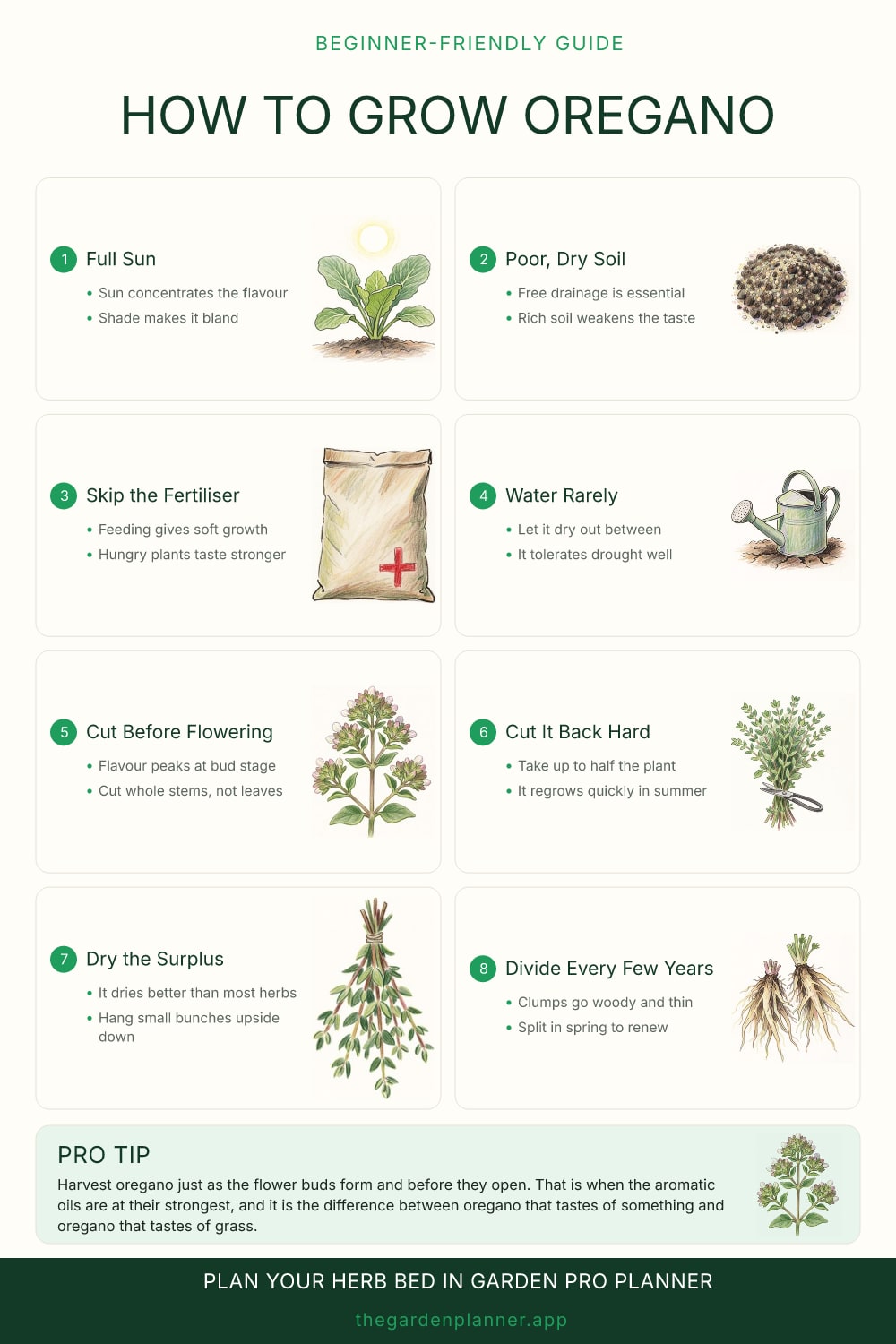
Most homegrown oregano is disappointing, and it is almost never the plant’s fault. It is usually growing somewhere too comfortable and getting picked at the wrong moment.
Oregano is one of the herbs where growing conditions change the flavour dramatically rather than just the size of the plant. A well fed, well watered oregano in part shade will produce a lot of leaf that tastes of very little.
Hard living makes strong flavour
The aromatic oils that make oregano taste like oregano are produced most heavily by plants growing in full sun, in poor soil, with limited water. This is a plant from dry Mediterranean hillsides, and everything about its flavour is adapted to that.
Give it rich compost, regular feeding and a shady spot and it responds by growing fast and soft. You get more leaf and much less taste. So put it in the sunniest, driest, most neglected spot you have, ideally with grit worked through the soil, and then genuinely leave it alone. Established oregano in the ground rarely needs watering at all in a normal summer.
The harvest window is narrow and it matters
This is the part that makes the biggest difference and the part almost nobody is told. Oregano’s oil content rises steadily as the plant approaches flowering, peaks right as the flower buds form and are still closed, then falls away once the flowers actually open.
So watch for the buds appearing at the stem tips and cut then. Not in spring when the plant is young and lush, and not in late summer when it is in full flower and the bees are on it. Cut whole stems rather than stripping individual leaves, taking up to about half the plant, and it will push out fresh growth for a second cut later in the season. If you only ever harvest a few leaves at a time as you cook, you will never catch that peak and the plant slowly gets leggy as well.
It dries better than almost anything
Oregano is one of the few herbs that is genuinely as good dried as fresh, and in some dishes better. The oils are stable and the leaf dries quickly without going brown, which is not true of basil or parsley.
Cut stems at bud stage, tie them into small loose bunches, and hang them upside down somewhere warm, dark and airy. Small bunches matter, because a thick bundle stays damp in the middle and goes musty. After a week or two the leaves will crumble off the stem between your fingers. Store them whole rather than crushed and crush them as you use them, because the moment you break the leaf the oils start escaping.
Renew the clump every few years
Oregano spreads outward by creeping stems and, like chives and thyme, eventually goes woody and bare in the middle. Around year three or four you will see the centre thinning while the edges look fine.
Dig it up in spring, pull or cut the clump into sections making sure each piece has roots and some green growth, and replant the best of them. Discard the woody heart. It is the same job as dividing any perennial and it takes ten minutes. You can also just let it layer itself, since stems that touch the ground often root on their own, and simply lift a rooted section and move it.
Pro tip. Harvest oregano just as the flower buds form and before they open. That is when the aromatic oils are at their strongest, and it is the difference between oregano that tastes of something and oregano that tastes of grass.