
How to Grow Kale That Stands All Winter
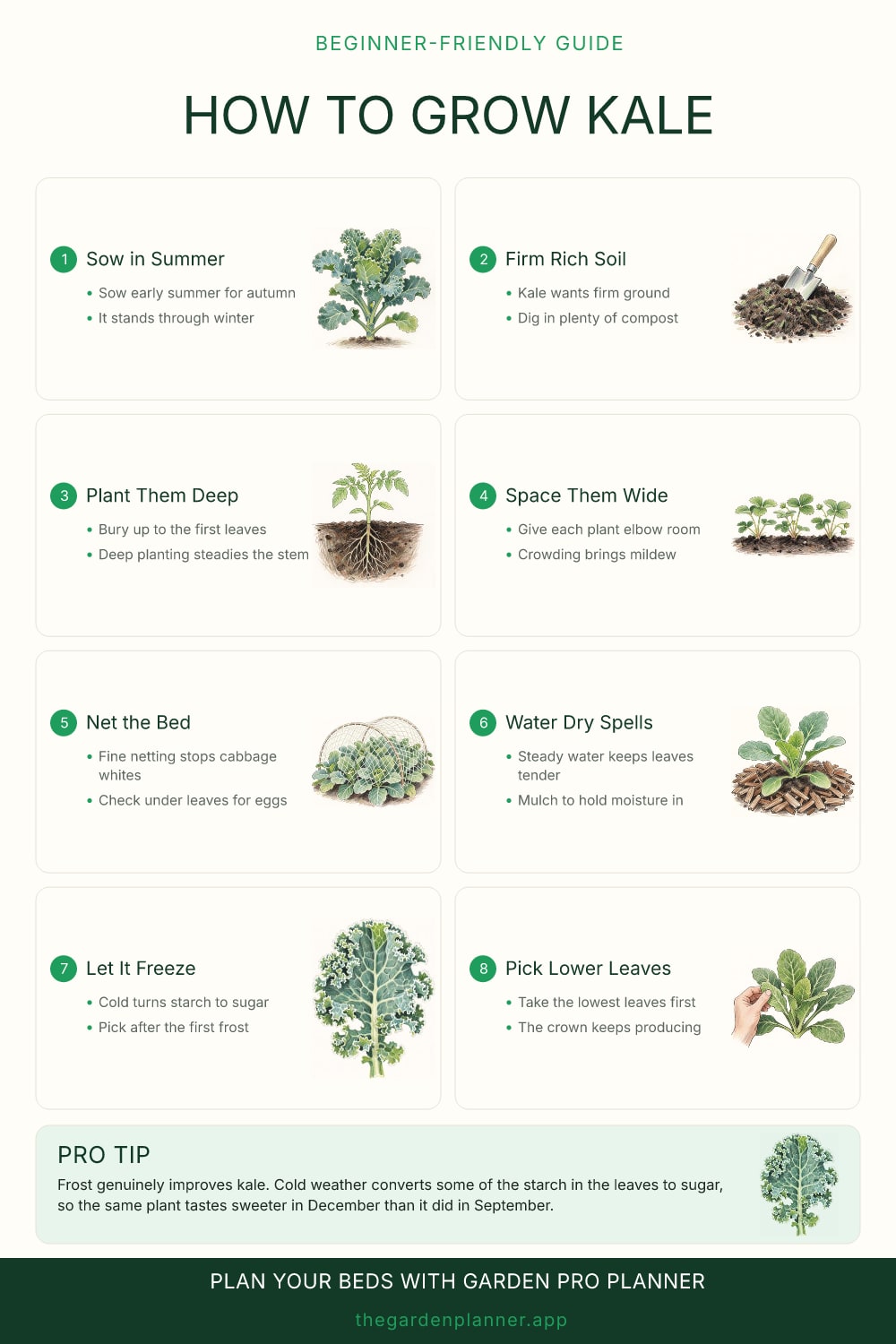
Kale is the crop that keeps a vegetable garden going through the months when nothing else is happening. Sown in early summer, it stands through autumn, winter and into spring, and it improves in cold weather rather than merely tolerating it.
The two things that ruin a kale bed are both preventable, and neither is the weather.
Firm soil and deep planting
Kale is a brassica, and brassicas want firm ground. They grow tall and heavy and catch a lot of wind, and a plant in loose fluffy soil rocks back and forth in every gale until the stem is loose in a socket of its own making. Once that happens the plant sulks and never bulks up properly.
So do not plant into freshly dug, recently fluffed soil. Let a bed settle for a few weeks after digging, or tread it down before planting, which feels wrong after years of being told not to compact soil and is genuinely correct for this family. Then plant deep, right up to the lowest pair of leaves, and firm the soil around each plant hard with your knuckles or your heel. Deep planting buries more stem and gives the plant a much better anchor.
Netting is not optional
Cabbage white butterflies will find kale, and the caterpillars can reduce a healthy plant to bare ribs in under a week. Pigeons will strip the same plant to stalks over a winter, and they do the most damage exactly when there is least else to eat.
Fine mesh netting over hoops deals with both, and it needs to be in place before you see any problem rather than after. The mesh must not touch the leaves, because a butterfly will happily lay eggs through netting resting on foliage. Check under the leaves every week or so during summer regardless, because a few eggs always get through, and clusters of small yellow eggs are far easier to deal with than the caterpillars they become. Squashing them by hand takes a couple of minutes.
Why frost improves it
This is the genuinely pleasant part of growing kale. When temperatures drop toward freezing, the plant converts some of its stored starch into sugars, which act as a natural antifreeze in the leaf tissue.
The practical effect is that the same plant tastes noticeably sweeter and less harsh after a frost than it did in mild autumn weather. Kale picked in September can be coarse and slightly bitter; the same leaves in December are milder and sweeter. So if the first pickings disappoint you, wait. This is also why kale is worth leaving in the ground through winter rather than harvesting it all in autumn, and it applies to Brussels sprouts and parsnips for the same reason.
Picking from the bottom, all winter
Kale grows from a central crown at the top of the stem, adding new leaves upward while the lower ones age. So harvest the lowest leaves first, taking them cleanly at the stem, and leave the crown and the young leaves around it untouched.
Done this way, a single plant keeps producing for months and gradually develops a bare stem with a tuft of growth on top, which is exactly what it should look like by February. Never strip a plant bare, because it needs a reasonable canopy to keep growing.
In spring the plant will start to run up to flower. That is the end of the leaf crop, but do not pull it immediately. The flowering shoots, picked while still in tight bud, are excellent eaten like sprouting broccoli, and they arrive in the hungry gap when very little else is ready.
Pro tip. Frost genuinely improves kale. Cold weather converts some of the starch in the leaves to sugar, so the same plant tastes sweeter in December than it did in September.