
How to Grow Eggplant: A Beginner's Guide in 8 Steps
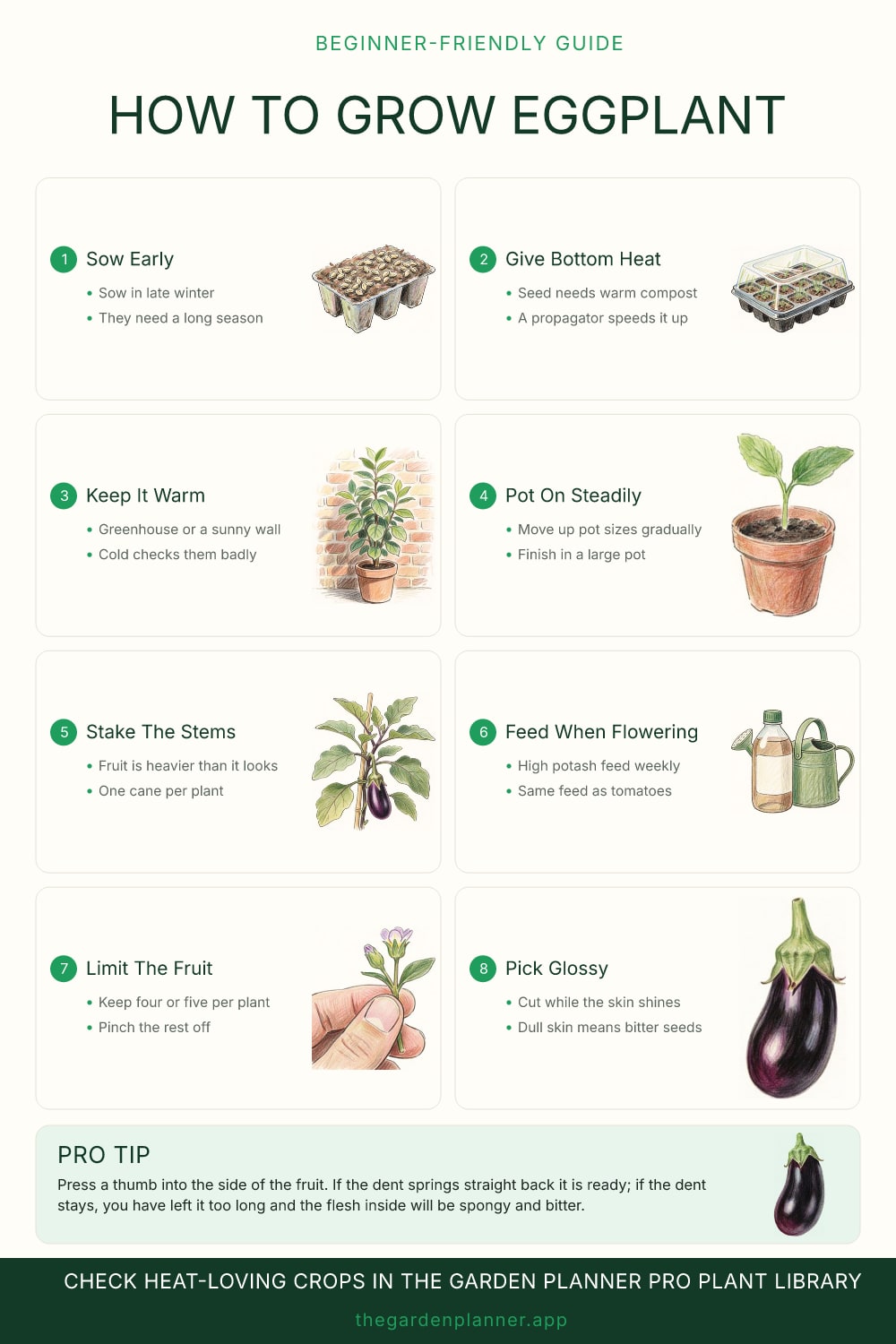
Eggplant is a tomato that wants more heat and has less patience. Everything you already know about growing tomatoes applies, and then the thermometer decides whether it works.
In a cool summer outdoors you will get flowers and no fruit. Under glass, or against a hot wall in a good year, the same plant is straightforward.
Heat at both ends of the season
The seed will not germinate reliably below about twenty degrees, and it is slow even then. A heated propagator or the top of a fridge makes the difference between a week and a month, and a seedling that takes a month has already lost time it cannot get back.
Sow in late winter, because from sowing to first fruit is a long stretch. Then keep the young plants warm and out of draughts. A cold night on a windowsill will not kill an eggplant, but it will stop it, and a checked plant sulks for weeks.
Outdoors, they need the warmest, most sheltered spot you have, ideally against a south facing wall that holds heat overnight. In most cool climates a greenhouse or a polytunnel turns this from a gamble into a crop.
Pots suit them well
Eggplant grows happily in a large container, which is useful because a pot can be moved into the sun and brought under cover on a cold night.
Pot on in stages rather than putting a small plant straight into a big pot, where the unused compost stays wet and sours. Finish in something around ten inches across with good drainage.
Once they are growing, treat them exactly like tomatoes: a stake or cane from the start, steady water so the compost never swings from dry to soaked, and a high potash liquid feed every week once the first flowers open. Tomato feed is the right feed. Inconsistent watering causes the same problems it causes in tomatoes, including flowers that drop before setting.
Fewer fruit, better fruit
This is the step most people skip. A plant will happily set a dozen small fruit and then ripen none of them properly in a short season.
Once four or five fruit have set on a plant, pinch out any further flowers. It feels wasteful and it is the difference between a handful of full sized glossy fruit and a plant covered in undersized ones. Pinch out the growing tip at the same time to stop the plant putting energy into height.
Watch for red spider mite under cover, which is the one pest that really punishes eggplant in a dry greenhouse. It shows as fine pale speckling on the leaves and webbing in the joints, and damping the floor down to raise the humidity does more to hold it back than anything you can spray.
Picking, and why bitterness happens
Pick while the skin is tight and shining and the fruit is smaller than the ones in the shops. That is the whole rule.
A glossy skin means the seeds inside are still soft. As the fruit matures the skin dulls, the seeds harden and darken, and the flesh turns spongy and bitter. Modern varieties are far less bitter than old ones, so if you have picked a bitter eggplant it is nearly always because it was left on the plant too long rather than because of the variety.
Cut with secateurs, leaving a bit of stalk. Do not pull, because the calyx is tough and you will take a branch with it. Most varieties have small spines on the calyx, so pick with your fingers underneath rather than wrapping your hand around the top.
Pro tip. Press a thumb into the side of the fruit. If the dent springs straight back it is ready; if the dent stays, you have left it too long and the flesh inside will be spongy and bitter.