
How to Grow Dill for Both the Leaf and the Seed
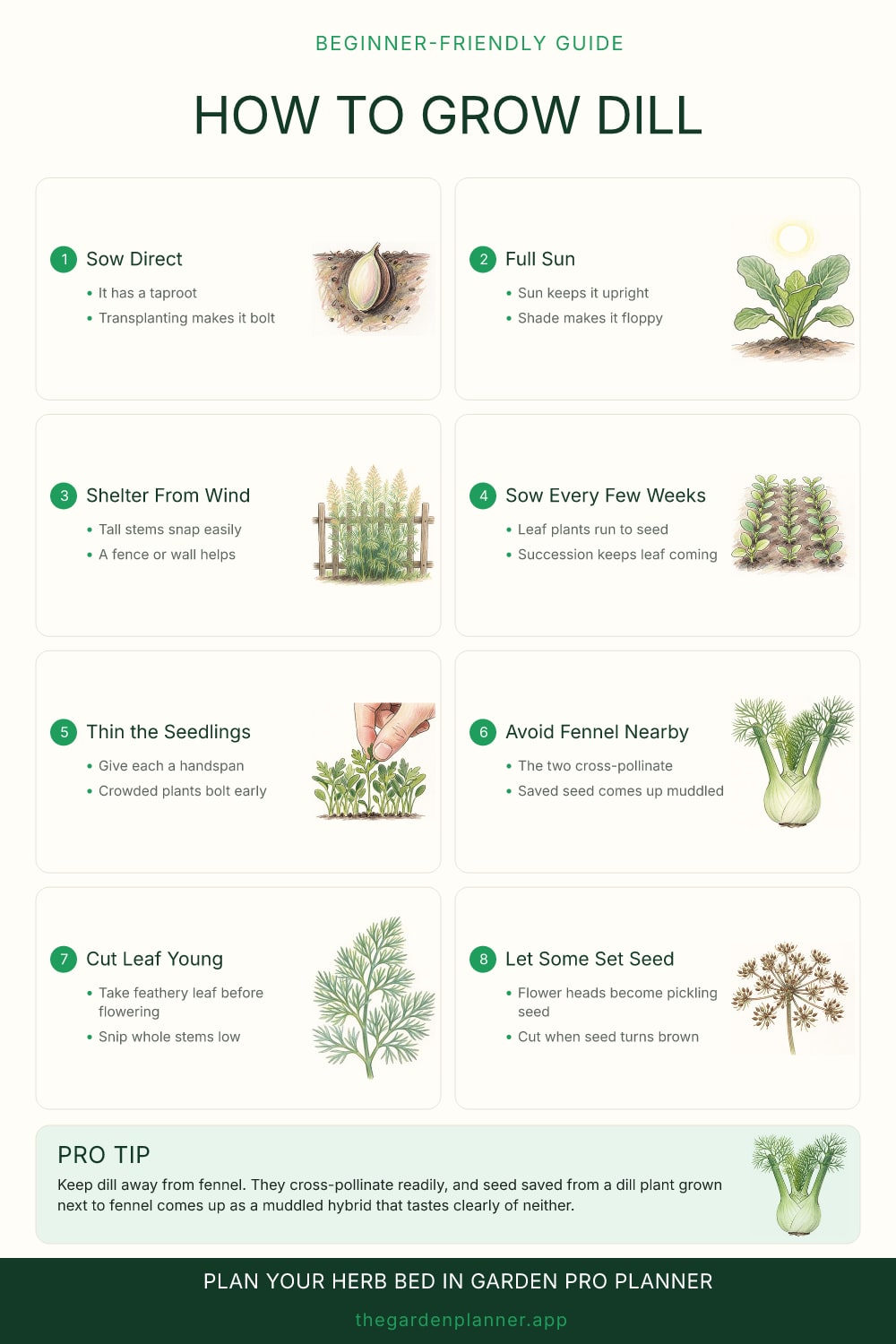
Dill is two crops growing on the same plant, and most people only ever get one of them. The feathery leaf and the flat umbels of seed have different uses, different harvest windows, and they compete with each other.
Once you decide which one you actually want from a given sowing, dill becomes a straightforward plant. Trying to get both from one patch is what makes it frustrating.
Decide leaf or seed before you sow
A dill plant makes leaf until it starts to flower, and then it puts everything into the flower head and the leaf thins out and loses flavour. So a sowing is either a leaf sowing that you harvest young and replace, or a seed sowing that you let run all the way to brown ripe seed.
For leaf, sow a short row every three or four weeks from spring onward and cut it while the plants are still bushy and low. For seed, sow once in late spring, leave it entirely alone, and let it get on with flowering. Doing both at once from a single patch means constantly cutting leaf off plants that are trying to flower, and getting a poor version of each.
It will not tolerate being moved
Dill makes a taproot and reacts badly to root disturbance, in the same way parsley and cilantro do. A transplanted dill seedling very often responds by flowering while it is only a few inches tall, which ends its usefulness as a leaf crop before it has really started.
Sow it where it is going to grow, thinly, and thin the seedlings to about a handspan apart rather than moving them. If you want it in a container, sow directly into the final pot. And choose a deep pot, because that taproot goes further down than the plant’s size suggests.
Give it shelter, not a stake
Dill grows tall and hollow-stemmed and it snaps in wind. A plant that has been knocked over rarely straightens up properly, and a bed of collapsed dill is difficult to harvest from and starts to rot where the stems lie on the soil.
The practical answer is position rather than support. Put it against a fence, a wall, or behind something sturdier that will break the wind. Sowing in a block rather than a thin line also helps, because the plants hold each other up. If it does go over, cut the affected stems out rather than trying to prop them back up.
Keep it well away from fennel
Dill and fennel are close enough relatives to cross-pollinate freely, and the seed you save from a dill plant that flowered next to a fennel plant will grow into something in between. It looks a bit like both and tastes clearly of neither, which is a slow disappointment because you do not find out until the following season.
If you are growing both and want to save seed, keep them at opposite ends of the garden, or let only one of them flower each year. If you buy fresh seed every year and never save your own, this does not matter at all and you can plant them side by side. The seed itself is worth having: cut the heads when the seed has turned pale brown and is starting to loosen, dry them in a paper bag, and shake out the seed for pickling.
Pro tip. Keep dill away from fennel. They cross-pollinate readily, and seed saved from a dill plant grown next to fennel comes up as a muddled hybrid that tastes clearly of neither.