
How to Grow Chives That Come Back Every Single Year
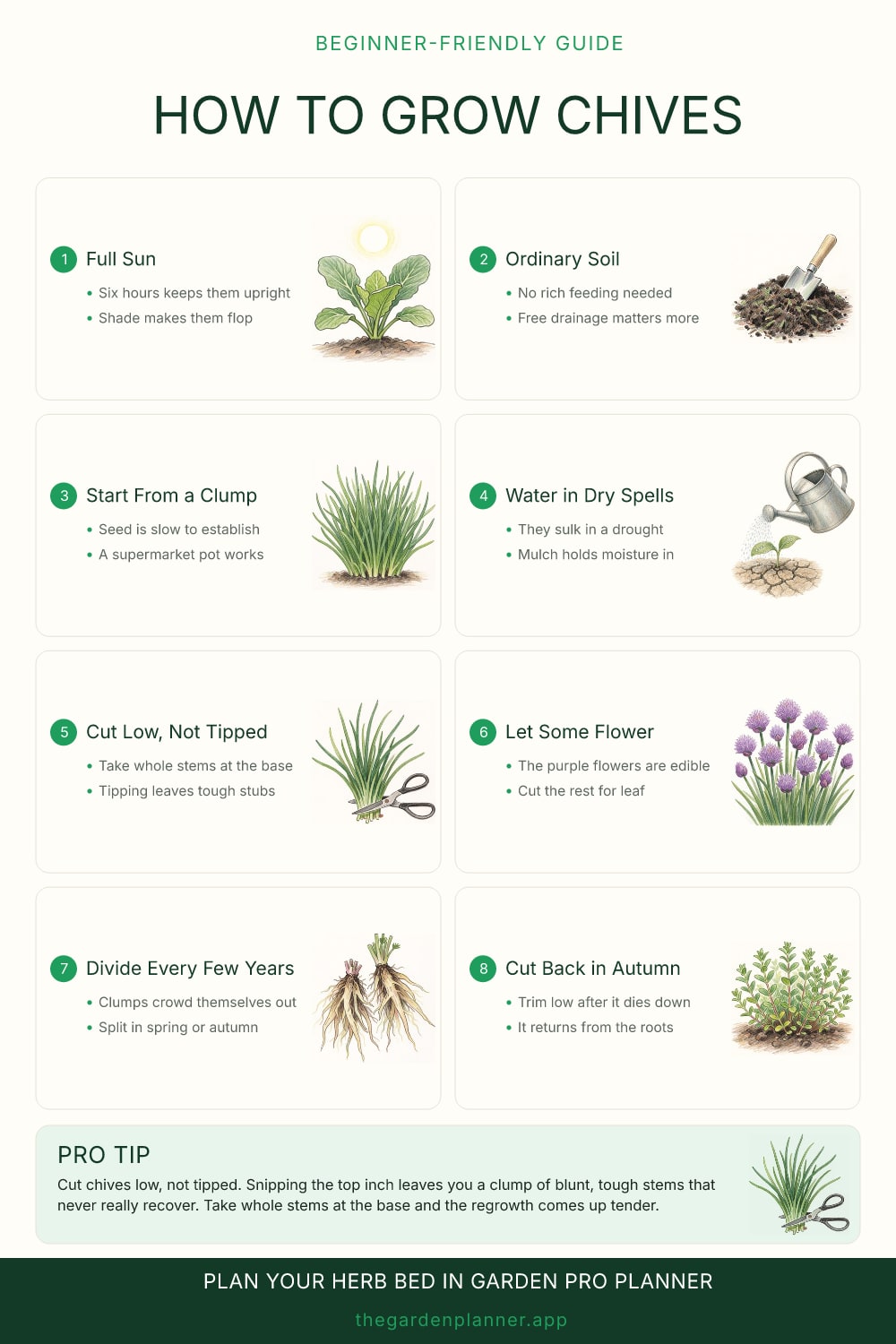
Chives are the herb I would put in first if someone was starting a herb bed from nothing. They come back on their own every spring, they survive being forgotten, and they are one of the very few things in the garden that genuinely prefer to be cut hard.
That last part is where most people go wrong with them, and it is worth getting right early, because a badly cut clump stays badly cut for the rest of the season.
Cut the whole stem, not the tip
The instinct with chives is to lean over with scissors and take the top inch off the clump, the way you would trim a hedge. It works once. After that you have a clump of blunt stems that have lost their growing point, and they do not push new growth from a cut tip the way a bushy herb does.
Chives grow from the base. Every stem is a hollow tube that came up from the roots and will not branch. So take whole stems right down at soil level and leave the rest standing. You get full length stems to cook with, and the clump replaces them from below with new tender ones. If the clump has already gone tough on you, cut the entire thing to about an inch and let it start over. It will look drastic for a week and be better for the rest of the summer.
The flowers are a real decision
Chives throw up round purple flowers in early summer, and they are genuinely good to eat, pulled apart into individual florets over a salad. They also taste mildly of onion, which surprises people.
The catch is that a stem that flowers stops making leaf, and the flower stem itself is tough and wiry in a way the leaves never are. So it is a straight trade. If you want chives mainly for cooking, cut the buds off as they appear and the clump stays productive for months longer. If you like the flowers, let a section of the clump bloom and keep cutting the rest. They also seed around freely once they flower, which is charming in a gravel path and less charming in the middle of a lettuce row.
Divide before the middle dies out
A chive clump expands outward every year and slowly exhausts the soil in the middle of itself. After three or four years you notice the centre going thin and brown while the edges are still fine. That is the signal to divide, and it is easier than it sounds.
Dig the whole clump up in spring or early autumn, drop it on the path, and pull it apart into fists. Each fist has plenty of roots and will grow on happily. Replant one where the original was, give the others away, and compost the tired middle. I have never once managed to kill a chive division by being rough with it, and I have been quite rough with them.
In a pot they need more from you
Chives do well in containers, which is why they turn up in supermarket herb pots. But a pot dries out fast and chives are shallow rooted, so a hot week can crisp the whole clump while a plant in the ground would barely notice.
Use a pot wider than it is deep, keep it somewhere you will actually see it, and water it before it wilts rather than after. A pot clump also exhausts itself faster than one in the ground, so plan on dividing and refreshing the compost every second spring rather than every fourth.
Pro tip. Cut chives low, not tipped. Snipping the top inch leaves you a clump of blunt, tough stems that never really recover. Take whole stems at the base and the regrowth comes up tender.