
How to Grow Cabbage: A Beginner's Guide in 8 Steps
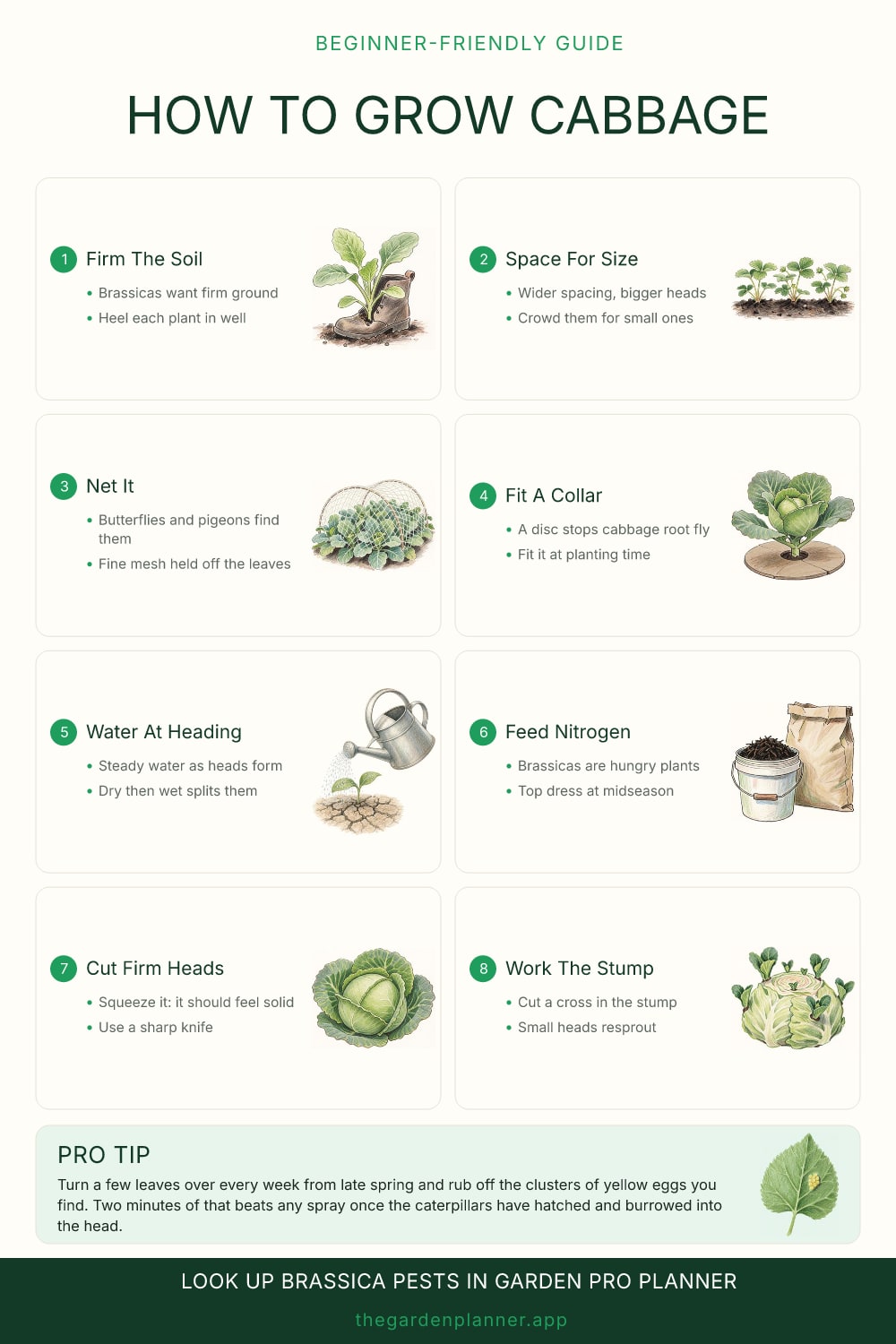
Cabbage is not a difficult plant. It is a plant with three specific enemies and one specific requirement, and gardeners who lose a crop have almost always lost it to one of those four things rather than to bad luck.
The requirement is firm soil. The enemies are caterpillars, pigeons and root fly. Deal with all four at planting and the rest of the season is mostly waiting.
Firm ground, not fluffy ground
Brassicas are top heavy and they anchor badly in loose soil. A cabbage that rocks in the wind tears its own fine roots and stalls, and a stalled cabbage makes a loose head or no head at all.
So the advice that sounds wrong is the right one: after digging in compost, tread the bed. Walk it down, rake it level, and plant into ground that feels solid underfoot. Then heel each plant in properly, pressing the soil back around the stem with your knuckles or your boot until a tug on a leaf tears the leaf rather than lifting the plant.
This is also why cabbage does better following a crop that has already settled the bed than in freshly dug ground.
Netting is not optional
Cabbage white butterflies will find a bed of brassicas in a garden they have never visited before, and pigeons will strip young plants to the ribs in an afternoon.
Use a fine mesh, not a bird net with wide holes, because that stops pigeons and lets every butterfly through. Hold it off the foliage on hoops. Netting laid straight onto leaves is a menu: a butterfly simply lands on the mesh and lays through it onto the leaf pressed against it.
Go on at planting and stay on. There is no point in the season where the plants stop being worth eating to something else.
The third enemy goes on at the same time. Cabbage root fly lays at the base of the stem and the maggots eat the roots, and the plant wilts on a sunny day for no reason you can see. A collar, which is any disc of cardboard, carpet underlay or plastic sitting flat on the soil around the stem, stops her reaching the ground.
Spacing decides the size of the head
This is the lever most people do not realise they are holding. Cabbage responds to room. Plant a variety at eighteen inches and you get the big head on the packet, plant the same variety at ten inches and you get tidy small heads that suit a small kitchen better and are ready sooner.
Decide which you want before you plant, because you cannot change your mind later. If you are unsure, plant at the wide spacing and cut alternate plants young as greens.
Feeding follows the same logic. Cabbage wants nitrogen while it is building leaf, so work compost in before planting and give a top dressing once the plants have taken hold and started to grow away.
Cut it before it cracks
A head is ready when it feels solid under a squeeze rather than when it looks big. Leave a solid head in the ground through a heavy rain after a dry spell and it takes up water faster than the outer leaves can stretch, and it splits from the inside.
If you can see rain coming and the heads are ready, cut them and store them somewhere cool. If you cannot get to them, half lifting a plant with a fork to break some roots slows the uptake enough to buy a few days.
After cutting, leave the stump in the ground and score a shallow cross into the cut surface. Most spring and summer types will push out a handful of small loose heads from that cut, which is a free second picking for no work at all.
Pro tip. Turn a few leaves over every week from late spring and rub off the clusters of yellow eggs you find. Two minutes of that beats any spray once the caterpillars have hatched and burrowed into the head.