
How to Grow Brussels Sprouts: A Beginner's Guide in 8 Steps
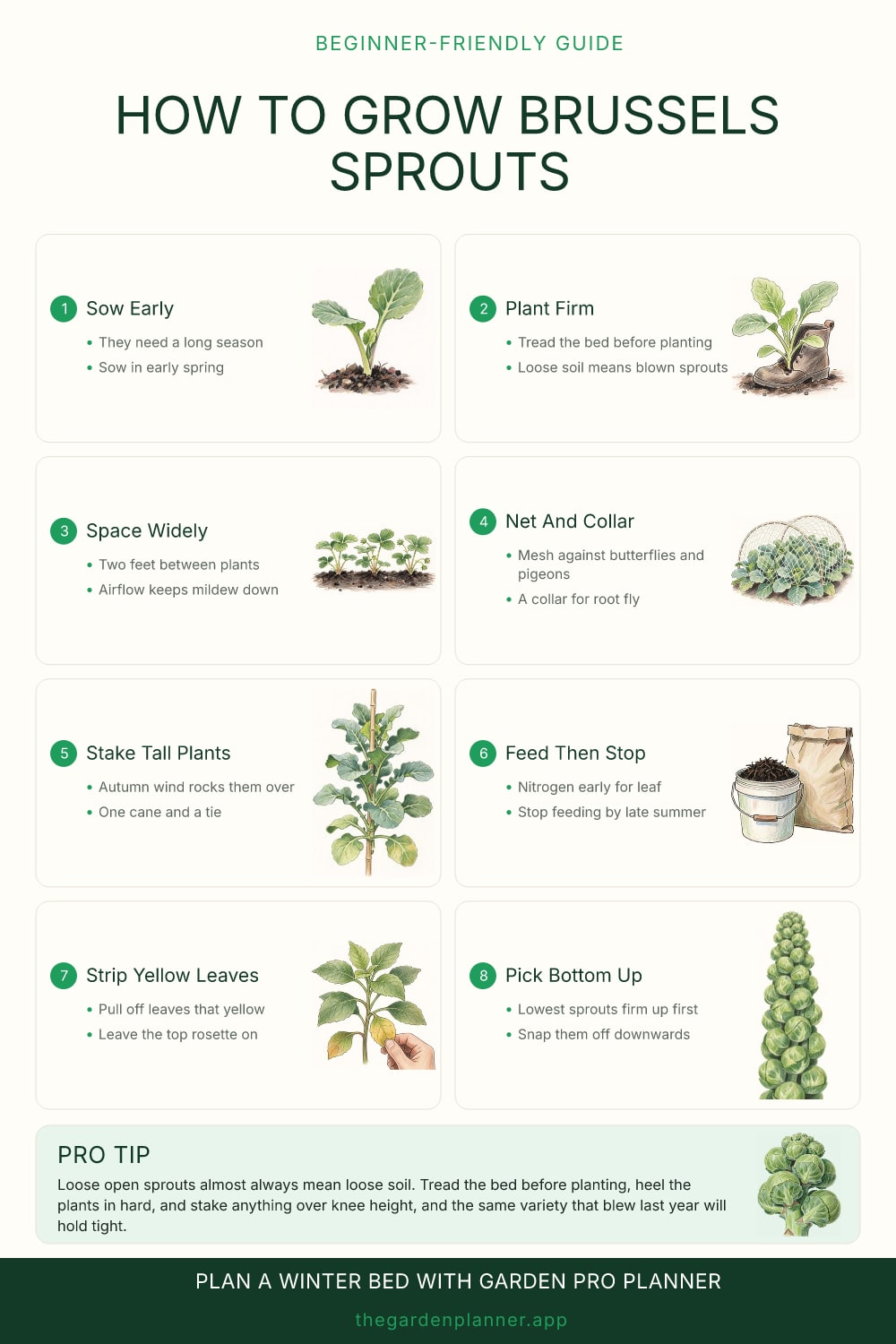
Brussels sprouts ask for two things almost nothing else in the garden asks for: most of the year, and ground firm enough to stand a five foot plant up in a November gale.
Give them both and they are easy. Skip the second and you get the classic failure, a tall plant hung with loose leafy rosettes instead of tight buttons.
Blown sprouts are a soil problem
A sprout is a bud in a leaf axil, and it packs tightly only if the plant is stable and growing steadily. A plant rocking in loose ground is constantly damaging its own roots, and the buds open out instead of buttoning up.
That is why every old gardening book tells you to tread the bed, and it is not nostalgia. Dig in your compost in autumn or winter so it has settled, then before planting walk over the whole bed with your weight on your heels and rake it level. Plant deep, right up to the lowest leaves, and heel each one in until it takes a real tug to move it.
In an exposed garden, add a cane per plant by late summer. It looks fussy in August and looks obvious in November.
They need almost the whole year
Sow in early spring, plant out in early summer, and pick from autumn until late winter. That is eight or nine months of the bed occupied, which is worth planning for rather than discovering.
The upside is that the picking window is enormous. A row does not come ready all at once, which makes sprouts one of the few crops where a household actually eats the whole harvest. The plants stand through frost quite happily, and most people find the flavour improves after the first proper cold snap.
Because the season is so long, they follow a spring crop badly. Give them a bed you can commit to.
Feed early, then leave them alone
Nitrogen builds the tall leafy stem the sprouts will sit on, so work compost in and top dress in early summer while the plant is growing upwards.
Then stop. Feeding into autumn pushes soft growth at exactly the point where you want the plant to firm up and harden off, and soft sprouts are looser and more prone to rot in wet winter weather.
Housekeeping matters more than feeding from midsummer on. Pull off any leaves that yellow, both to keep air moving through the stem and because leaving them there gives whitefly and slugs somewhere to sit. Leave the leafy top rosette in place, because the plant is still using it. You can cut and eat that top once you have picked most of the stem, and it is very good.
Picking from the bottom up
Sprouts firm up in order from the base of the stem upwards, so start at the bottom and work your way along over the weeks. Push a sprout downwards with your thumb and it snaps off cleanly, or use a knife if the stem is woody.
Take the lowest ones as soon as they are firm even if you do not need them all, because a sprout left too long opens up and there is no going back.
If you want a whole stem ready at once, for a particular meal, cut out the growing point at the top of the plant in early autumn. That stops upward growth and evens the sprouts up considerably. Do it too early and you cap the size of the plant, so wait until it is close to full height.
Pro tip. Loose open sprouts almost always mean loose soil. Tread the bed before planting, heel the plants in hard, and stake anything over knee height, and the same variety that blew last year will hold tight.