
How to Grow Broccoli That Makes a Head Worth Cutting
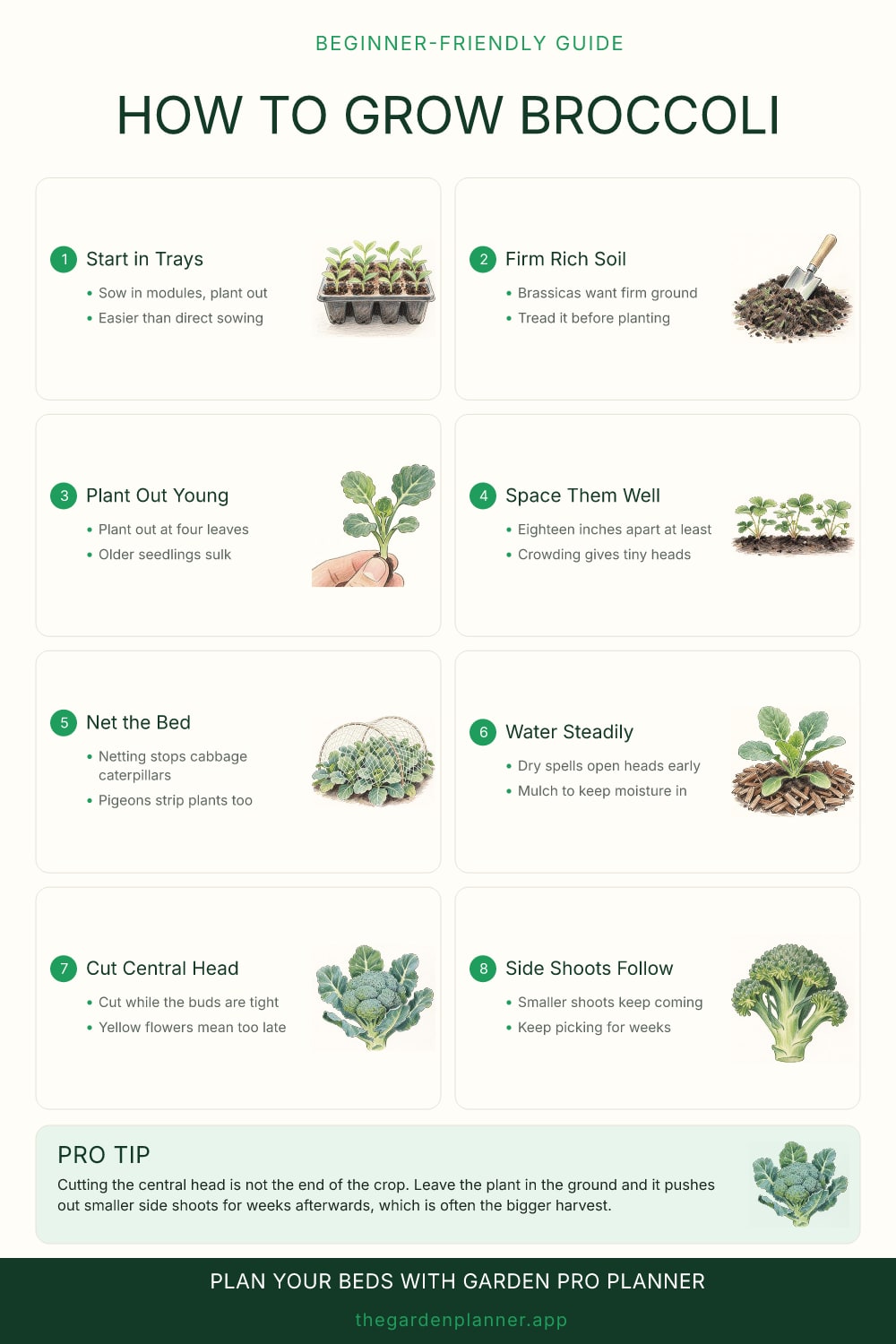
Broccoli is more demanding than most vegetables and it rewards the effort with a crop that keeps coming long after you have cut the head you were waiting for.
Most broccoli disappointments are one of two things: heads the size of a coin, or heads that opened into yellow flowers before anyone noticed they were ready.
Small heads are a spacing and soil problem
A tiny head almost always means the plant did not have the resources to build a big one, and the two usual causes are crowding and loose soil.
Broccoli plants need a surprising amount of room, around eighteen inches apart at minimum and more for large varieties. It looks absurd when you are planting out small seedlings into what appears to be an empty bed, and by midsummer the plants will be touching. Plants set closer compete for light and nutrients and each produces a head a fraction of the size.
Like all brassicas, broccoli also wants firm, rich ground. Compost worked in well before planting, then allowed to settle, then trodden firm. A plant rocking in loose soil never develops the root system it needs, and the head is the first thing to suffer.
Plant out young and keep them moving
Broccoli raised in modules should go out while it is still small, at around four true leaves. A seedling left in a small module until it is large becomes root-bound and checked, and a checked brassica frequently responds by producing a premature miniature head, called buttoning, which is the end of that plant’s usefulness.
The same principle applies through the season. Anything that stalls the plant, particularly drought, tends to trigger early or poor heading. Water thoroughly in dry spells rather than lightly and often, and mulch around the plants once they are established to hold that moisture. Steady uninterrupted growth from seedling to harvest is what produces a large tight head.
Netting, and the pests that matter
Cabbage white caterpillars will strip the leaves, and pigeons will take the growing point out of a young plant entirely. Both are dealt with by fine mesh netting over hoops, put up at planting time rather than after the first damage.
Keep the net off the foliage, since butterflies lay through netting resting on leaves. Check under the leaves weekly through summer and rub off any clusters of yellow eggs you find, because a few always get through.
Cabbage root fly is the other one worth knowing about. The larvae eat the roots and the first sign is a plant wilting in sunshine for no obvious reason. A collar of cardboard or felt laid flat on the soil around each stem at planting stops the adult laying at the base, and it costs nothing to do.
Cut at the right moment, then keep cutting
The head is a cluster of unopened flower buds, and it should be cut while those buds are still tight and dark. Once you can see individual buds beginning to loosen and show yellow, the texture and flavour are already going. In warm weather a head can go from perfect to flowering in two or three days, so check daily as it approaches size rather than waiting for it to get bigger.
Cut the central head with a few inches of stem, and then leave the plant exactly where it is. This is the part people miss. Most varieties respond by producing a succession of smaller side shoots from the leaf joints below the cut, and those keep coming for weeks. Cumulatively they often outweigh the original head, and they are the same thing sold as tenderstem. Keep picking them, because a side shoot left to flower signals the plant to stop.
Pro tip. Cutting the central head is not the end of the crop. Leave the plant in the ground and it pushes out smaller side shoots for weeks afterwards, which is often the bigger harvest.