
How to Grow Beets: A Beginner's Guide in 8 Steps
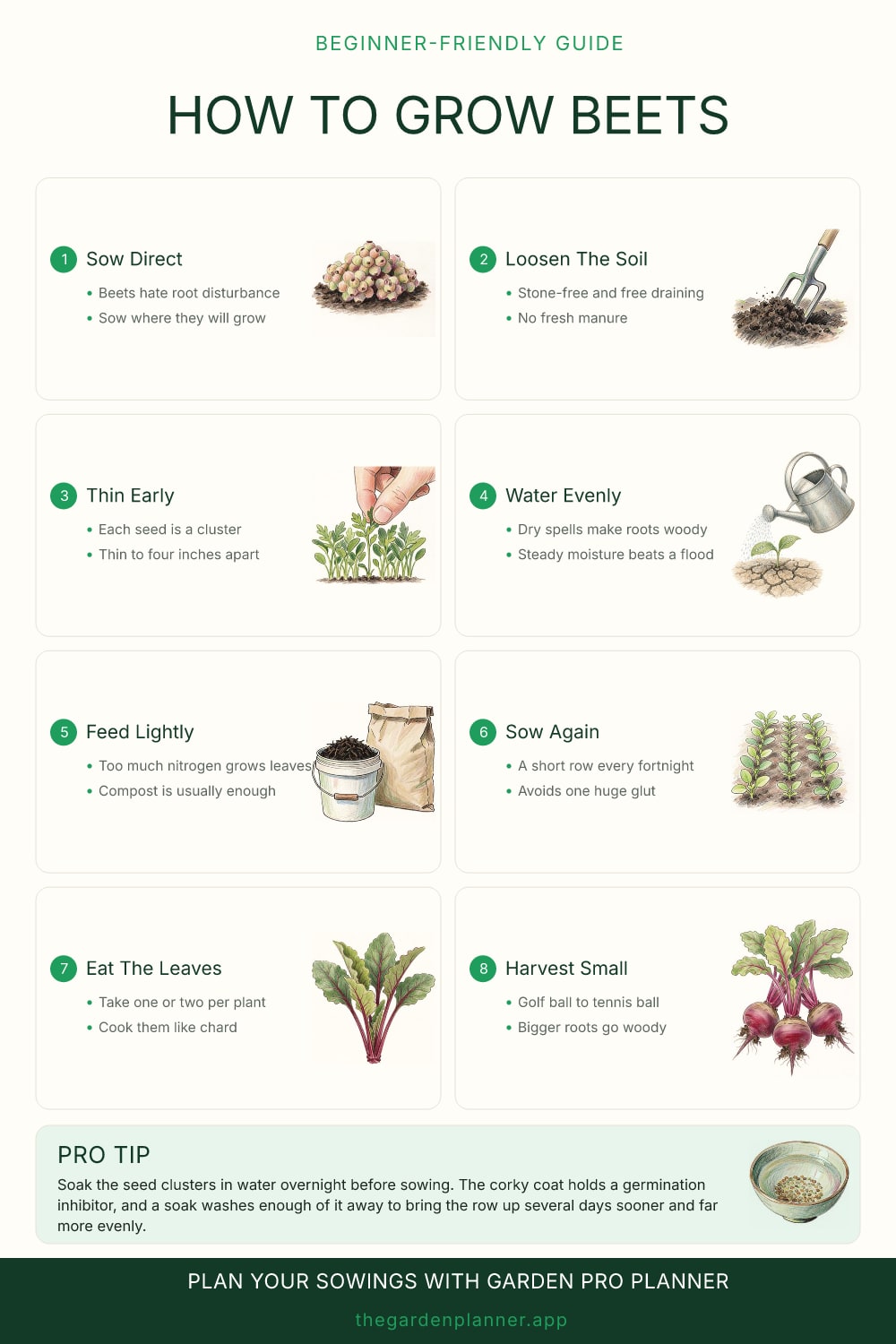
Beetroot is one of the few crops that is genuinely hard to get badly wrong. It germinates in cool soil, it takes about two months, and it does not need staking, netting or pruning.
The two things that separate a tender beet from a woody one are thinning and water, and both happen in the first month. Everything else is patience.
That seed is not one seed
What you sow is a corky cluster holding several seeds, which is why a beetroot row comes up in tufts rather than as single plants. Most gardeners see a healthy looking row, decide it looks fine, and leave it.
Those tufts then compete with each other all season and you get a row of small, hard, misshapen roots. Thin as soon as you can handle the seedlings: pinch or snip the extras off at soil level rather than pulling, so the roots of the one you keep stay put. Four inches between plants is right for a normal beet, three if you want small tender ones for roasting whole.
Some varieties are sold as monogerm, with a single seed per cluster. Those still need a little thinning, just less of it.
Water is what keeps them tender
A beet that dries out hard, then gets watered, does not simply carry on. It puts on a burst of growth that the older tissue cannot match, and you end up with a root that is either split down the side or fibrous all the way through.
Steady is the whole trick. A deep soak once or twice a week in dry weather does far more than a daily splash, which only wets the top inch and encourages shallow roots. Mulch between the rows once the plants are a few inches tall and the soil holds that moisture much longer.
This is also why beetroot in containers is fussier than beetroot in the ground. A pot dries out from all sides, so it needs checking most days in summer.
Poor soil is not the problem you think
Beetroot is a light feeder. Dig in compost the autumn before if you can, and otherwise leave it alone. Fresh manure or a general fertiliser high in nitrogen gives you a magnificent leafy top and a disappointing root underneath.
Stones and lumps matter more than richness. A root that meets an obstruction forks around it, so a bed that has been forked over and raked to a reasonable tilth is worth more than any feed.
One real deficiency does show up on light or very chalky soils: boron. It shows as brown or black corky patches inside the root. If you have seen that before in the same bed, a seaweed feed through the season usually settles it.
Pull them earlier than feels right
The temptation is always to leave them another week to get bigger. Resist it. Somewhere past tennis ball size most varieties turn woody and lose their sweetness, and no amount of cooking brings that back.
Start pulling at golf ball size, taking every other one and leaving the rest more room. Twist the tops off rather than cutting them close, and leave an inch of stalk, or they bleed colour into the pan.
Sow a short row every couple of weeks from spring through midsummer instead of one long row in May. Beetroot stores reasonably well in a box of sand, but a fresh young root is a different vegetable entirely, and succession sowing is how you get those from June to the first hard frost.
Pro tip. Soak the seed clusters in water overnight before sowing. The corky coat holds a germination inhibitor, and a soak washes enough of it away to bring the row up several days sooner and far more evenly.