
How to Grow Asparagus: A Beginner's Guide in 8 Steps
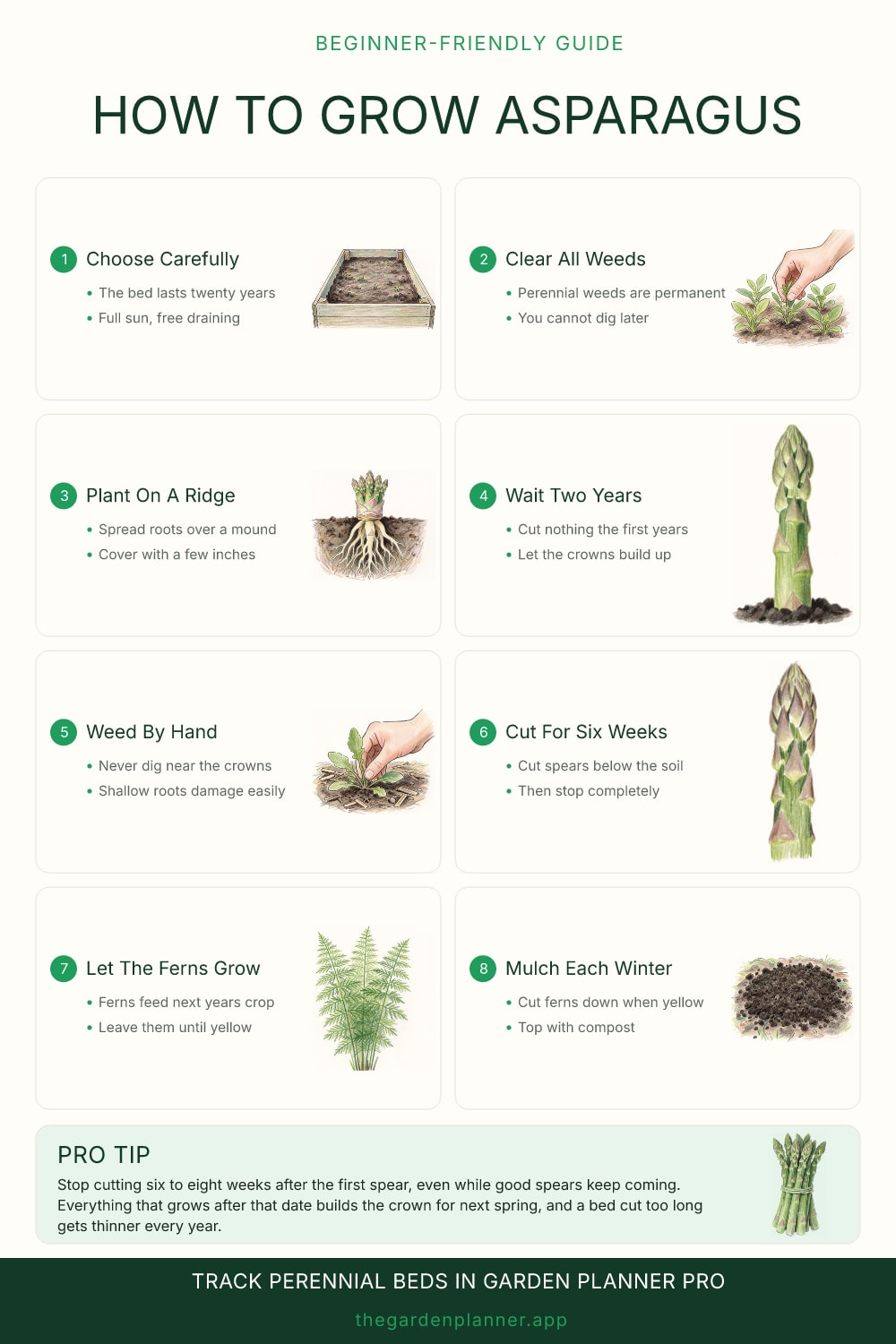
Asparagus is the longest bet in the vegetable garden. You plant it, you look after it for two years while it gives you nothing, and then it feeds you every spring for twenty years or more.
Almost every failure comes from rushing one of the two waiting periods: the two years before the first cut, and the six weeks after which you have to stop.
Choose the site as if it were permanent
Because it is. You will not be able to dig this bed again, rotate it, or improve the soil underneath it once the crowns are in.
Asparagus wants full sun and drainage above all else. Crowns sitting in wet ground over winter rot, and that is the commonest way a young bed is lost. On heavy clay, build a raised bed rather than fighting the soil.
Then clear the ground completely. Any perennial weed left in there, couch grass or bindweed especially, becomes a permanent resident, because from the moment the crowns go in you can only weed by hand at the surface. A season spent clearing the site first is not lost time.
Crowns, ridges, and depth
Most people start with one year old crowns, which look like a dead spider: a flat pad with long fleshy roots hanging off it. Plant them in early spring, as soon as they arrive, and do not let them dry out in the meantime.
Dig a trench, make a low ridge of soil along the bottom, and sit each crown on top of the ridge with the roots spread down both sides. That shape stops water pooling under the crown. Space them a foot or more apart with wider gaps between rows.
Cover with a few inches of soil, and fill the trench gradually over the first season rather than all at once. Growing from seed is cheaper and adds a year, and modern all male varieties give heavier crops than the old mixed ones because male plants put nothing into berries.
The two years of doing nothing
Every spear you cut is a season of leaf the plant does not get to make. In the first two years the crown is small and needs all of it, so you let every spear grow up into fern and you cut none of them.
In the third spring take a light cut for two or three weeks. From the fourth year on, cut properly for around six weeks.
Cut spears at about six to eight inches with a knife just below soil level, and cut everything of that size in the picking window, thin ones included. Leaving thin spears standing does not help the crown, and cutting cleanly keeps the bed productive.
Knowing when to stop
The hard part is stopping while good spears are still coming up. Six weeks from the first spear, or eight in an established bed, and then you put the knife away.
What grows after that turns into tall feathery fern, and that fern spends the whole summer feeding the crown for the following spring. A bed cut into midsummer yields less every year until it gives up.
Support the ferns in a windy garden, because a rocking fern loosens the crown. Leave them until they yellow in autumn, then cut them down to a couple of inches and mulch the bed with compost or rotted manure. Asparagus beetle, small and black with cream blocks on its back, is the pest to look for on the ferns in summer, and picking them off by hand is usually enough.
Pro tip. Stop cutting six to eight weeks after the first spear, even while good spears keep coming. Everything that grows after that date builds the crown for next spring, and a bed cut too long gets thinner every year.