
How to Build a Cold Frame: A Beginner's Guide in 8 Steps
A cold frame is a box with a clear lid, and that is genuinely all it is. No heat, no power, no glazing skills.
What it buys you is a few weeks at each end of the year and somewhere to harden seedlings off without carrying trays in and out every evening.
Where it goes matters more than what it is made of
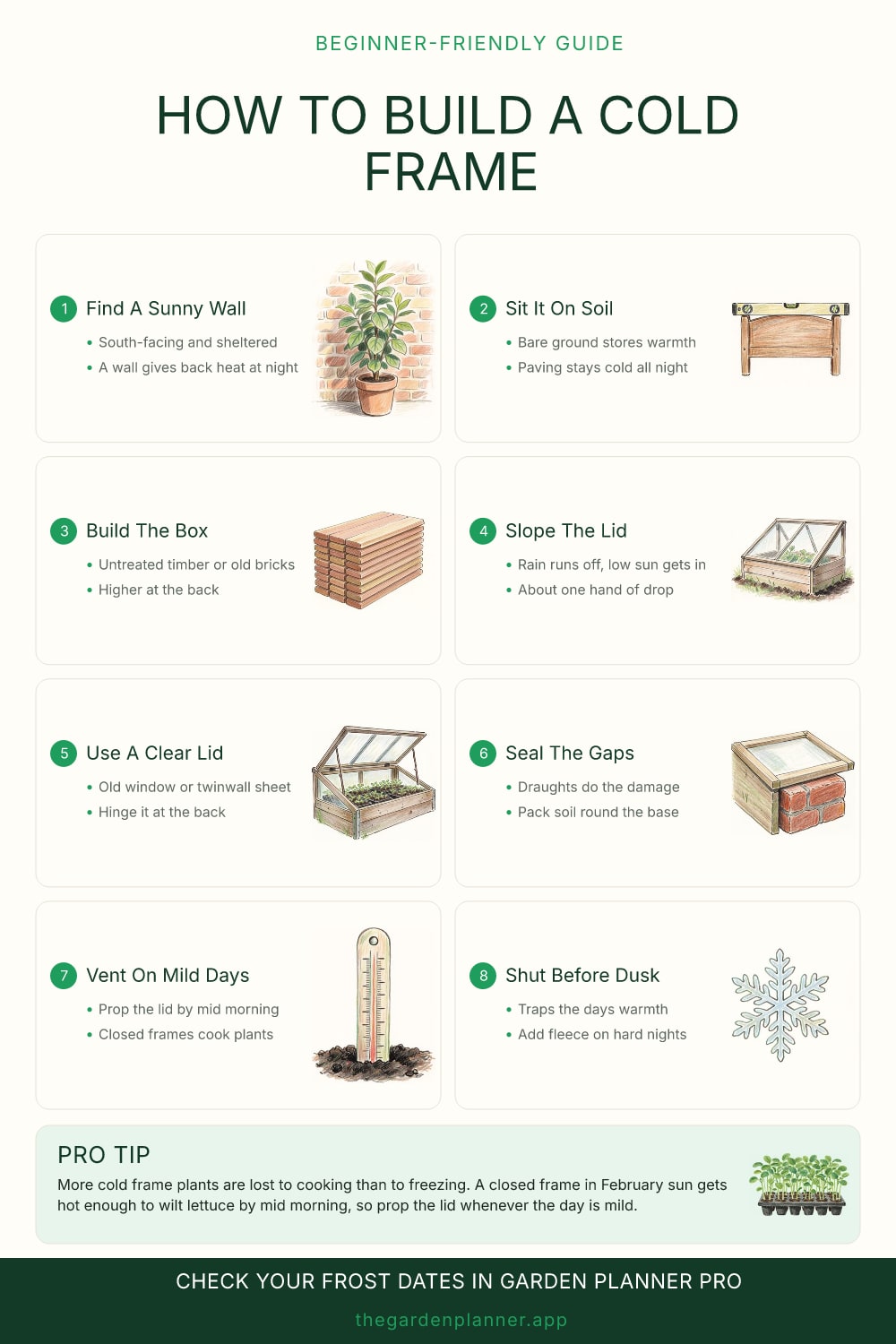
Put it against a south-facing wall if you have one. A wall absorbs sun all day and releases it slowly overnight, and a frame tucked against one runs measurably warmer than the same frame in the open.
Sit it on bare soil rather than on a patio. Soil is the frame’s storage heater: it takes in warmth through the day and gives it back after dark, which is the whole mechanism by which an unheated box keeps plants alive. A frame on paving loses most of that.
Somewhere sheltered from the prevailing wind, too. Wind strips heat off the lid faster than anything else, and it is what lifts an unlatched lid off in February and breaks it.
The box itself can be old scaffold boards, reclaimed bricks, or a stack of straw bales with a window on top. None of it is precious. Skip pressure-treated timber for anything you grow food in if it is the older kind, and use untreated softwood or cedar instead.
The lid is the only part with rules
It has to be clear, it has to slope, and it has to be easy to open one-handed.
Clear so light gets through: an old single-glazed window, a sheet of twinwall polycarbonate, or a timber frame with heavy clear plastic stapled to it. Polycarbonate is lighter and will not shatter, which matters if the frame is where a child walks past.
Sloping so rain and snow run off rather than pooling, and so that the low winter sun, which comes in at a shallow angle, strikes the glazing closer to square. Build the back of the box a hand’s width higher than the front and the lid takes care of both at once. Face the low side toward the midday sun.
Hinge it at the back so it opens like a lid rather than lifting off, and fit something to prop it at two or three heights. You will be opening and shutting it most days, and any frame that is awkward to vent ends up never vented.
Using it through the year
From autumn it holds winter salads, corn salad, spinach, winter lettuce and hardy herbs, all cropping slowly through the cold months. In late winter it becomes the place seed trays go to get used to real weather before planting out. By late spring it can simply have the lid taken off and grow something.
The daily job is venting. On any mild sunny day, prop the lid open in the morning and close it in the late afternoon while there is still warmth to trap. The temperature inside a shut frame on a bright February day climbs far higher than the air outside, and a tray of seedlings wilts in an hour.
On a hard frost night, throw an old blanket or a sheet of fleece over the closed lid. It is a box, not a greenhouse, and on the coldest nights it needs the help.
What it will not do
A cold frame does not make a frost-free space. Everything in it still goes below freezing on a cold night, and tender plants will still die. What it does is take the edge off, keep rain and wind off the foliage, and raise the soil temperature enough that hardy crops keep growing slowly instead of stopping.
So stock it with things that were going to survive anyway and want a better winter, rather than with things that need rescuing. The list of what genuinely overwinters in an unheated frame is short and worth learning by trying it for a year.
Pro tip. More cold frame plants are lost to cooking than to freezing. A closed frame in February sun gets hot enough to wilt lettuce by mid morning, so prop the lid whenever the day is mild.